
Quick Answer: Is Tibet Worth Visiting?
Yes—if you want high-altitude landscapes, Tibetan cultural heritage, monasteries, lakes, and plateau scenery. A first trip is most manageable when you plan around the permit, sleeping altitude, and one main regional route.
- Before booking: Foreign visitors need a Tibet Travel Permit (TTP) in addition to any mainland China visa or visa-free entry eligibility. Arrange organized travel through a specialist travel agent in China.[1][2]
- 4–5 days: Focus on Lhasa. Keep the first 48 hours light and avoid strenuous activity while acclimatizing.[1][5]
- About 8 days: Consider Lhasa, Yamdrok Lake, Gyantse, and Shigatse.
- 10–12 days: Add one extension—Everest, Namtso, or Nyingchi—not several distant routes.
- 15 days or more: Consider western Tibet and Ngari, subject to current access and additional permits.
- Altitude and transport: Lhasa is about 3,700 meters high. Flights are faster but create a rapid ascent; the Xining–Lhasa train takes about 20–21.5 hours and does not eliminate altitude risk.[5][16][17]
For most first-time visitors, start in Lhasa, allow time to acclimatize, and choose one regional extension that fits your approved itinerary.

Tibet is not a simple add-on to a China itinerary. Foreign visitors must plan around a separate permit, organized travel, altitude, long road journeys, and regional access. First-time visitors are usually better served by Lhasa and one regional route.
This guide uses Tibet to mean the Tibet Autonomous Region (TAR). It helps you choose a region, trip length, and arrival option while understanding altitude and seasonal trade-offs. It is a regional planning guide, not a permit manual or day-by-day itinerary.
What Foreign Visitors Need to Know Before Planning a Tibet Trip
A Tibet Travel Permit Is Separate From China Entry Permission
Foreign visitors need a separate Tibet Travel Permit (TTP) for tourist travel in the Tibet Autonomous Region (TAR). A Chinese visa, where required, does not replace it. The U.S. Department of State says U.S. travelers need a special permit in addition to a valid Chinese visa and can obtain it through a travel agent in China. The UK Foreign, Commonwealth & Development Office (FCDO) likewise says visitors must arrange a permit through a specialist travel agent in China.[1][2]
Your mainland entry document depends on your nationality and travel date. A visa-free entry arrangement, if you qualify, does not remove the Tibet permit requirement. See our China visa guide, China visa-free travel guide, and Tibet Travel Permit guide.
What Does Organized Travel Mean for Foreign Visitors?
Official U.S. and UK advice describes visits to the TAR as organized travel arranged through a specialist travel agent in China. This does not automatically mean a large coach tour: operators may offer shared or private arrangements, but group size, guides, vehicles, and route availability vary. Confirm the accepted format in writing. A private tour is still organized travel, not independent backpacking.[1][2]
Can You Travel Everywhere With One Permit?
No. A TTP does not guarantee that every county, border area, road, or scenic site will be open on your dates. Authorities may suspend permit issuance or restrict access at short notice, and neighboring Tibetan Autonomous Prefectures have separate regional conditions.[2][4] Some border-area itineraries, including the Everest corridor and Ngari, may require an additional border-area permit. Other route-specific approvals may also apply. Ask the operator to list every required document and confirm who obtains it.
Some specialist agencies advise allowing about 15–20 working days for standard TTP coordination; remote or border-sensitive routes may need longer. Treat this as an operator planning estimate, not an official processing deadline or guarantee. Do not book nonrefundable flights on the assumption that a permit will be issued by a particular date.[15]
Where Is Tibet, and What Makes It Different?
The Tibet Autonomous Region occupies a large part of the Qinghai-Tibet Plateau, and much of the region lies above 4,000 meters (13,100 feet). High mountains, valleys, lakes, and long distances create very different travel conditions from China’s lower-elevation cities. Lhasa is about 3,700 meters (12,100 feet) above sea level, and many popular excursions rise substantially higher.[5][12]
Tibet is also used in broader cultural and geographic contexts. Tibetan autonomous prefectures and counties in Sichuan, Qinghai, Gansu, and Yunnan are administratively part of those provinces, not the TAR. The permit rules in this guide should not be applied automatically to every Tibetan cultural destination elsewhere in China. Official travel advice distinguishes the TAR from Tibetan autonomous prefectures in neighboring provinces and warns that restrictions can change.[1][2][4]
The eight groupings below are practical travel-planning areas, not official administrative divisions.
| Planning area | Main places | Best fit |
|---|---|---|
| Lhasa and nearby sites | Potala Palace, Jokhang Temple, Barkhor Street, major monasteries | First-time visitors and cultural sightseeing |
| Central and southern corridor | Yamdrok Lake, Gyantse, Shigatse | Lake scenery, historic towns, monasteries |
| Everest corridor | Tingri, Rongbuk, Tibet-side Everest visitor area | Very high altitude and Himalayan views |
| Northern plateau | Namtso Lake, Nagqu | Open plateau and high-altitude lake scenery |
| Nyingchi and eastern Tibet | Nyingchi, Basum Tso, forested valleys | Greener landscapes and spring blossoms |
| Shannan and Yarlung Valley | Tsetang, Samye, Yungbulakang | Early Tibetan history |
| Ngari and western Tibet | Mount Kailash, Lake Manasarovar, Guge ruins | Long-distance travel and pilgrimage interests |
| Chamdo and other remote areas | Remote grasslands, valleys, cultural sites | Specialist trips with more time |
UNESCO’s Historic Ensemble of the Potala Palace, Lhasa is one World Heritage property with three components: the Potala Palace, Jokhang Temple, and Norbulingka. Jokhang and Norbulingka were added through extensions in 2000 and 2001. Sera, Drepung, Tashilhunpo, and Samye are important sites, but are not components of this UNESCO property.[6]
Best Places to Visit in Tibet
Lhasa: The Cultural and Practical Starting Point
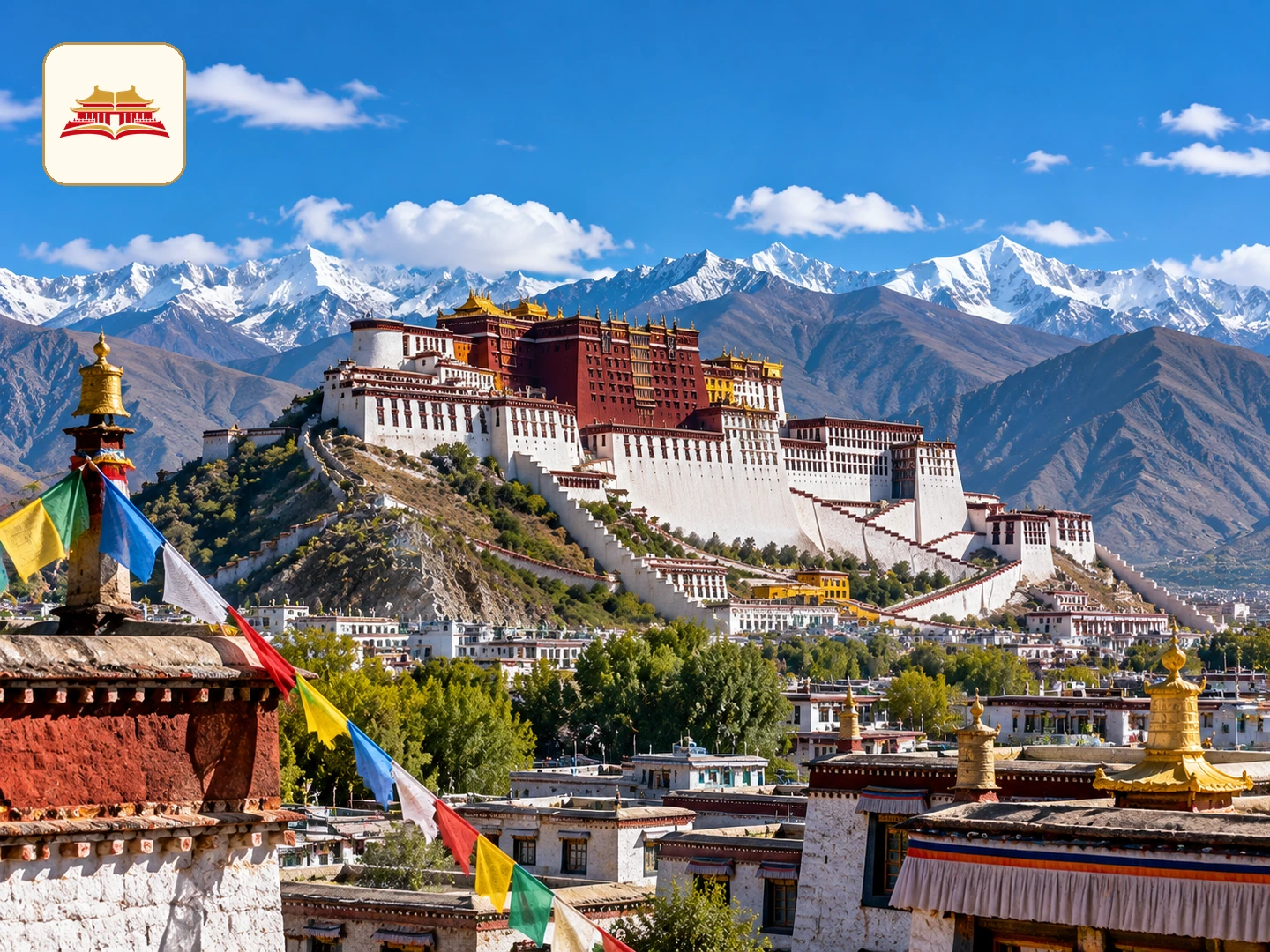
Lhasa is the most useful base for many first-time visitors, with the region’s broadest choice of accommodation, restaurants, and visitor services. Main cultural stops include the Potala Palace, Jokhang Temple, Barkhor Street, Sera and Drepung monasteries, and Norbulingka.
Start with the Lhasa Travel Guide and the separate Potala Palace and Jokhang Temple guides.
Yamdrok Lake, Gyantse, and Shigatse
The route linking Yamdrok Lake, Gyantse, and Shigatse is a natural extension of a Lhasa stay. Yamdrok’s lake surface is about 4,441 meters above sea level. Gyantse is around 4,020 meters and Shigatse about 3,840 meters, so confirm which town is a sightseeing stop and which is an overnight base. Gyantse adds historic architecture and Pelkor Chode Monastery; Shigatse is a regional center and home to Tashilhunpo Monastery.[9][12]
Treat this as a connected overland route, not three easy day trips from Lhasa. Stops, road conditions, and overnight locations affect the schedule. See the Shigatse Travel Guide, Gyantse Travel Guide, and Yamdrok Lake guide.
Everest Base Camp on the Tibet Side
The Tibet-side Everest visitor area is reached by road through the Shigatse region, usually via Tingri and Rongbuk. The visitor base is around 5,200 meters (17,060 feet), so this is a very high-altitude excursion, not a casual add-on from Lhasa.[11]
This is not the Nepal-side Everest Base Camp trek, which commonly begins with a flight to Lukla and continues on foot through the Khumbu. The Tibet-side visit is primarily road-based. Overnight arrangements vary: some tours use a lower stop such as Tingri, while others may stay near Rongbuk at a much higher elevation. Ask for the exact property and sleeping altitude before booking. See the Everest Base Camp in Tibet guide.
Namtso Lake and the Northern Plateau
Namtso is a high-altitude lake at about 4,718 meters and a substantial northern excursion from Lhasa. Returning to a lower sleeping altitude can be less demanding than staying beside the lake, but the long drive and time at altitude still matter. Plan it separately from the southern Shigatse route.[5][10] See the Namtso Lake visitor guide.
Nyingchi and Eastern Tibet
Nyingchi contrasts with the drier, higher landscapes often associated with Tibet. Its valleys, forests, rivers, and mountain scenery appeal to travelers who want a greener environment. The city area is around 3,000 meters, lower than Lhasa; nearby Basum Tso is about 3,480 meters, and excursions can climb higher.[20]
Spring is known for peach blossoms, generally from March into April, but the local bloom window varies by valley, elevation, and year.[13] Nyingchi can be a separate regional focus or an extension to Lhasa; check the road journey and overnight plan before adding it. See the Nyingchi Travel Guide.
Shannan and the Yarlung Valley
Shannan, based around Tsetang (Zedang), suits travelers interested in early Tibetan history. Zedang is about 3,560 meters above sea level.[12][12] Samye Monastery and Yungbulakang are key sites and can add depth to a longer trip. See the Tsetang Travel Guide and Samye Monastery guide.
Ngari and Western Tibet
Ngari is a major commitment. Mount Kailash, Lake Manasarovar, and the Guge ruins involve long distances, sparse services, and sustained exposure to high elevations. Lake Manasarovar is about 4,588 meters above sea level; Mount Kailash’s summit is about 6,638 meters, although ordinary visitors do not climb it.[18][19][18][19] The U.S. Department of State advises travelers to use a reputable, licensed tour group experienced with Mount Kailash and to discuss prolonged high-altitude travel with a health professional.[14]
Do not treat Ngari as a simple extension to an eight-day first visit. It is better suited to a longer, carefully organized trip with flexibility for road conditions and local restrictions. Start with the Ngari Travel Guide and Mount Kailash guide.
Chamdo and Other Remote Extensions
Chamdo and other remote areas are specialist destinations rather than default stops on a first trip. Distances, service availability, and foreign-visitor access make them harder to add casually. If you are considering either area, build the trip around it rather than squeezing it between better-known stops.
How Many Days Do You Need in Tibet?
Count the full trip period, including arrival and departure days, rather than sightseeing days alone. These ranges are planning frameworks, not guarantees that every route will be approved or suitable for every traveler.
| Total trip length | Practical focus | Main trade-off |
|---|---|---|
| 4–5 days | Lhasa and nearby cultural sites | Short, Lhasa-focused visit |
| About 8 days | Lhasa, Yamdrok Lake, Gyantse, Shigatse | Classic central route with road time |
| 10–12 days | Classic route plus one extension | More variety, higher altitude or longer transfers |
| 15 days or more | Longer western Tibet or multi-region trip | More complex logistics and remote accommodation |
Four or Five Days: Keep the Trip in Lhasa
A short visit should focus on Lhasa rather than distant attractions. Keep the first two days light, allow time for the main cultural sites, and do not treat arrival day as a full sightseeing day. A nearby excursion may be possible if your health, operator, and access conditions allow it, but the priority is a manageable pace.
About Eight Days: Choose the Classic Central Route
An eight-day framework can allow about three days in Lhasa for a gentle start, followed by the connected route from Lhasa to Yamdrok Lake, Gyantse, and Shigatse before returning to Lhasa. It balances city culture, lake scenery, and monasteries without automatically adding the long western route or the highest-altitude Everest extension.
The 8 Days in Tibet itinerary develops this route in more detail. Check actual overnight towns and elevations; a scenic stop and a sleeping stop are not the same thing.
Ten to Twelve Days: Add One Main Extension
With more time, consider adding Everest to the central route, or choose a separate northern or eastern extension: Namtso or Nyingchi. Avoid automatically combining Everest and Namtso: they are in different directions, and adding both can create long road days and more high-altitude exposure. Choose one extension that matches your interests and health considerations.
Fifteen Days or More: Consider Western Tibet
A longer trip may allow a route through the central region and onward to Ngari, including Mount Kailash, Lake Manasarovar, and the Guge ruins. Fifteen days is a broad planning threshold, not a promise that every western route fits comfortably. Ask for the driving schedule, overnight elevations, rest opportunities, and contingency days.
How to Plan a Realistic Route Through Tibet
Start With Your Arrival Point and Sleeping Altitude
Lhasa is the main cultural and transport base for many itineraries, but flying there directly from a low elevation means a rapid ascent to about 3,700 meters. The CDC’s 2026 Yellow Book identifies the first three to five days after ascent as a key acclimatization period. It advises avoiding strenuous activity until acclimatized and avoiding alcohol for the first 48 hours at high altitude. Once above 3,000 meters, general guidance is to increase sleeping altitude by no more than about 500 meters per night and allow an extra acclimatization night for every additional 1,000 meters gained. These are guidelines, not a guarantee that altitude illness can be prevented.[1][5]
Fitness does not protect against altitude illness. A daytime excursion followed by a return to a lower sleeping altitude can be less stressful than sleeping higher, but it is not risk-free. Discuss personal risk with a travel-medicine professional before booking, especially if you have heart, lung, or other medical conditions. For detailed health planning, see Altitude Planning for Tibet Travel.[5]
Choose One Main Extension
For a first visit, choose one principal direction beyond Lhasa: the Yamdrok–Gyantse–Shigatse corridor, Everest, Namtso, Nyingchi, or Shannan. Ngari is a separate long-distance project. Trying to include every region usually means less time at each place, more transfers, and less flexibility if weather or access changes.
Compare Door-to-Door Time, Not Map Distance
A short map distance can still take most of a day after pickup, stops, checks, and the final hotel transfer. Planning estimates: Lhasa–Shigatse via Yamdrok and Gyantse, 5.5–6.5 hours; Lhasa–Nyingchi, about 4 hours; Shigatse–Everest road leg, 4.5–5.5 hours. Some Ngari days exceed 8 hours. These are not guarantees; ask for a hotel-to-hotel schedule. See Getting to Tibet as a Visitor.
How to Get to and Around Tibet
Flying to Lhasa
The airport-bus journey between Lhasa Gonggar International Airport (LXA) and central Lhasa takes about 70 minutes on the published route. Allow extra time for traffic, pickup point, and road conditions. Arrange a vehicle in advance through your operator or confirm current airport-bus details before arrival.[8]
Flying is usually the fastest way to reach Lhasa from major mainland Chinese cities, but it also means a rapid arrival at high elevation. Do not schedule a demanding excursion immediately after landing. See the Lhasa Airport Guide and Transfers.
Taking the Qinghai-Tibet Railway
The Qinghai-Tibet Railway connects Xining with Lhasa. The journey commonly takes about 20–21.5 hours, depending on the train and date, and the line reaches about 5,072 meters at Tanggula Pass. Passenger cars have oxygen-supply provisions, but the train does not eliminate altitude risk; passengers still need a conservative plan after arrival.[16][17]
Foreign passengers can use valid foreign passports for real-name railway ticketing. The identity document associated with the ticket must be available for check-in and boarding.[7] Compare the full journey—including reaching Xining, station waiting time, the train, arrival, and hotel transfer—not only time on board. See the Qinghai-Tibet Train Travel Guide, Xining-to-Lhasa route guide, and 12306 guide for foreign visitors.
Road Transfers Within Tibet
For foreign visitors on organized itineraries, intercity road transfers are generally arranged by the operator. A private vehicle makes remote routes more practical, but it does not remove long distances, weather delays, road checks, or altitude exposure. Ask where rest stops are planned, which legs include sightseeing, and which town you will sleep in.
Best Time to Visit Tibet
There is no single best month for every part of Tibet. The plateau has strong regional and seasonal differences. The Tibet government describes a broad dry season from October to April and a rainy season from May to September, while local conditions vary with elevation and geography.[8]
| Season | What to expect | Planning considerations |
|---|---|---|
| Spring (March–May) | Nyingchi blossoms, warming days, cold nights | Blossom timing varies; high routes may still have snow |
| Summer (June–August) | Peak travel demand, greener valleys, rainy season | Rain, cloud, landslides, and road disruption can affect routes |
| Autumn (September–October) | Often drier and clearer in many central and western areas | Nights cool quickly; remote routes may see early snow |
| Winter (November–February) | Fewer visitors; cold, bright days in Lhasa | Remote routes may be difficult; confirm current operations |
Nyingchi’s peach blossoms are associated with spring, but the window changes by year, valley, and elevation. Summer can offer greener scenery, but the rainy season makes flexibility important. Autumn can bring clearer views, but cold nights and early snow affect high-altitude routes. Winter can suit a Lhasa-focused cultural stay; remote trips need extra checks.
For month-by-month detail, see Best Time to Visit Tibet and Best Time to Visit Lhasa.
Where to Stay in Tibet
Choose accommodation around the route and planned sleeping elevation, not only hotel category.
- Lhasa: The widest choice of hotels and visitor services; the most practical first-visit base.
- Shigatse: A useful base for the central and southern corridor and onward travel toward Everest.
- Nyingchi: A lower-elevation regional base with a greener landscape.
- Tingri and the Everest corridor: More limited and simpler options; confirm the exact overnight location and facilities.
- Ngari and other remote routes: Accommodation can be basic and widely spaced. Ask about heating, hot water, power, and backup plans.
Before paying, ask your operator to confirm that each property can accept and register foreign passport holders under current local procedures and is available to your group. Do not independently book hotels and assume approved travel arrangements can be added afterward. See Where to Stay in Lhasa.
Tibetan Food, Culture, and Monastery Etiquette
Tibetan food commonly includes butter tea, tsampa (roasted barley flour), yak meat, Tibetan noodles, barley-based breads, and yogurt. Lhasa and Shigatse offer more restaurant choices; on remote routes, menus are often simpler, so discuss dietary restrictions with your operator before departure.
When visiting monasteries, dress respectfully and follow posted instructions. Ask before photographing inside Buddhist monasteries; some halls prohibit photography. Avoid touching religious objects, interrupting worship, or photographing local people without permission. The FCDO advises visitors to ask before taking monastery photographs and not to photograph public security forces or altercations.[2] See the Tibet Food Travel Guide.
Tibet Travel Costs and Booking Considerations
There is no useful single daily budget for every Tibet trip. Total cost depends on trip length, shared or private arrangements, guide and vehicle services, hotel standards, transport to the region, and how far you travel beyond Lhasa.
Main costs include organized-tour services and permit coordination, international and domestic transport, accommodation, meals, long-distance road transfers, attraction tickets, and route-specific fees or approvals. Private arrangements generally cost more per traveler than shared departures; Everest and Ngari require more road time and logistical support than a Lhasa-focused stay.
Choose an operator experienced in arranging travel for foreign visitors in the TAR. Ask for a written itinerary, permits and approvals, included and excluded costs, planned overnight elevations, and a clear policy if access is suspended. Do not choose solely on the lowest quote.
Practical Tips for First-Time Visitors to Tibet
- Keep documents accessible: Carry your passport and approved travel documents; keep secure digital copies.
- Confirm the route: Make sure named places match the permit and the operator’s current access confirmation.
- Plan for altitude: Ask a travel-medicine professional about personal risk, especially with heart, lung, or other medical conditions.
- Keep the first days light: Avoid hard hikes, strenuous sightseeing, or a rapid rise in sleeping altitude immediately after arrival.
- Pack for sun and temperature changes: Bring sunglasses, sun protection, layers, and windproof outerwear.
- Prepare offline information: Save hotel names, Chinese addresses, operator contacts, and route details.
- Check insurance: Confirm coverage for route elevations, emergency treatment, and evacuation from remote areas.
- Allow flexibility: Weather, roads, and access restrictions can change a trip. Keep a buffer before an international departure.
- Respect local safety rules: Carry your passport, follow checkpoint instructions, avoid demonstrations, and do not photograph security personnel or restricted facilities without permission. U.S. and UK authorities warn that their ability to provide consular assistance in the TAR is limited.[1][2]
For broader safety planning, see the China Travel Safety guide.
FAQs About Traveling in Tibet
Can Foreign Tourists Travel Independently in Tibet?
No. U.S. and UK advice requires a permit arranged through a specialist travel agent in China and organized travel. A private tour is not independent backpacking; confirm current operator conditions before booking.[1][2]
Do I Need a Tibet Travel Permit if I Already Have a Chinese Visa?
Yes. The TTP is a separate regional requirement. A Chinese visa or mainland visa waiver does not replace it.[1][3]
How Many Days Are Enough for a First Trip to Tibet?
Allow 4–5 days for Lhasa, about 8 for the classic central route, 10–12 for one extension, and 15 or more for western Tibet. These are planning ranges, not guarantees of access or suitability.
Is the Qinghai-Tibet Train a Good Way to Reach Lhasa?
It is a memorable route, but it does not eliminate altitude risk. You still arrive in Lhasa at about 3,700 meters, so plan a light arrival schedule.[5][7]
Is Everest Base Camp in Tibet the Same as the Nepal Route?
No. The Tibet-side visitor area is reached by road and sits at about 5,200 meters. Nepal’s Khumbu trek is a separate route, commonly beginning with a flight to Lukla.[11]
Can Foreign Tourists Visit Mount Kailash?
Potentially, through an approved organized itinerary. Confirm current access and route requirements before booking. See the U.S. Department of State’s guidance on the high-altitude pilgrimage route.[14]
Sources
[1] U.S. Department of State. China Travel Advisory. Accessed November 2, 2026.
[2] UK Foreign, Commonwealth & Development Office. China: Regional Risks.
[3] Embassy of the People’s Republic of China in the United States. Frequently Asked Questions on Visa-Free Entry into China. Updated February 22, 2026.
[4] Government of Canada. China Travel Advice and Advisories.
[5] U.S. Centers for Disease Control and Prevention. CDC Yellow Book 2026: High-Altitude Travel and Altitude Illness.
[6] UNESCO World Heritage Centre. Historic Ensemble of the Potala Palace, Lhasa.
[7] China Railway. 12306 Official English FAQ.
[8] Tibet Autonomous Region Government. Geography and Climate; and Lhasa Gonggar International Airport: Spring Festival Travel Guide.
[9] Shannan Municipal Culture and Tourism Bureau. Yamdrok Lake.
[10] Tibet Autonomous Region Department of Culture and Tourism. Namtso National Park Visitor Information.
[11] Tibet Autonomous Region Government. Everest Base Camp at 5,200 Meters.
[12] Tibet Autonomous Region Department of Culture and Tourism. Elevation information for cities and counties in Tibet.
[13] Tibet Autonomous Region Department of Culture and Tourism. Nyingchi spring peach blossom season.
[14] U.S. Department of State. Kora Pilgrimage to Mount Kailash.
[15] TibetDaily. Tibet Travel Permit: Processing and Route-Specific Documents. Specialist-operator information and planning estimates, not official service deadlines.
[16] TravelChinaGuide. Xining–Lhasa Train. Published journey-time range; check the current timetable for your date.
[17] Tourist Office of the People’s Republic of China. Qinghai–Xizang Railway. Route elevation and onboard oxygen-supply information.
[18] Government of Uttarakhand, District Pithoragarh. Mount Kailash. Published summit elevation.
[19] Yao et al. Spatial-temporal patterns of major ion chemistry and its controlling factors in the Manasarovar Basin, Tibet. Scientific study reporting the lake’s average elevation.
[20] Tibet Autonomous Region Department of Culture and Tourism. Basum Tso. Lake elevation and regional location.





