

Quick Answer: When Should You Visit Lhasa?
Choose May for milder city days or October for drier outdoor plans. Check national holiday dates before you book. September is a useful alternative if you prefer a warmer month and can keep outdoor visits flexible.[1][2]
- June to August: Warmer months for Lhasa, with substantially more rain, especially in July and August.[1]
- November through February: Dry and cold. Plan shorter walks and confirm seasonal opening, entry times and what any winter ticket offer covers.[1][3]
- For a high lake or pass: Compare current road and access conditions, and allow time to acclimatize.[4][8][10]
Check permits and transport with your agency for the actual dates. Plan your Lhasa sightseeing around a gentle arrival and a weather backup.
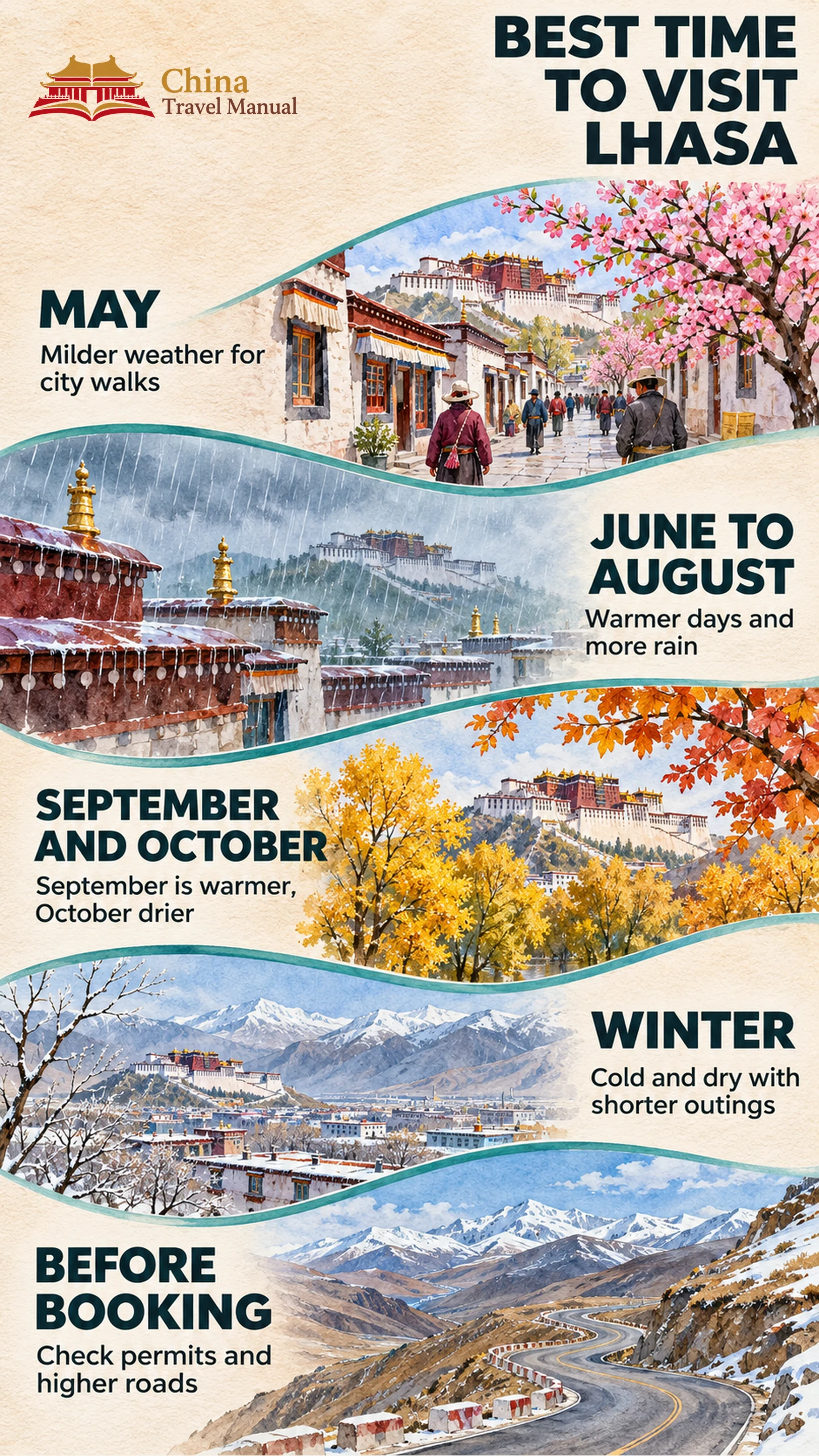
May and October are the first months to compare for a city-focused visit to Lhasa. May is milder on average, while October is much drier. September offers a warmer alternative with more rain, and winter can work for a short city stay if you are comfortable with cold mornings and evenings. If your trip includes lakes or high passes, check those routes separately from the city forecast.[1][4]
Lhasa Weather by Month
These are rounded climate normals from the Lhasa weather station at 3,650 meters. Temperature is the mean for each month, including both day and night. Rain and snow contribute to the precipitation total. Use a local forecast before you travel, especially for a trip beyond the valley.[1]
| Month | Mean temperature | Typical precipitation | Planning note |
|---|---|---|---|
| January | 0°C | 1 mm | Short city walks with enough warm clothing |
| February | 3°C | 1 mm | Dry conditions, with a Losar date check |
| March | 6°C | 4 mm | Cool city days and time indoors |
| April | 9°C | 9 mm | A drier spring visit if you can dress for cool mornings |
| May | 13°C | 30 mm | Milder city walks and a shoulder-season itinerary |
| June | 17°C | 85 mm | Warm city days with a plan for showers |
| July | 17°C | 141 mm | Wettest month in the station normals |
| August | 16°C | 128 mm | Rain gear and flexible timing |
| September | 14°C | 58 mm | Milder than October, with more rain |
| October | 10°C | 7 mm | Drier sightseeing after checking holiday dates |
| November | 4°C | 1 mm | Cold, dry city stay with shorter outings |
| December | 0°C | 1 mm | Warm layers and a limited outdoor plan |
Pack layers in every season. Use a warm layer for mornings and evenings, sun protection for clear days, and a shell and shoes with grip in wetter months. Winter calls for warmer clothing, especially if you’re waiting outdoors for an entry slot. Ask about room heating before you book, and plan long waits and transfers around the colder parts of the day.[1][8]
When to Choose a City Stay or a Higher Outing
Palace, Temples and City Walks
For Potala Palace, the old town and a monastery visit, target a week with time to rest after arrival. On a cold or rainy day, put one booked sight near the middle of the day and leave time to get warm between stops. If you arrive in the evening, count the next full day separately when booking a later palace slot. The palace publishes seasonal opening hours and normally closes on Mondays outside national holidays. Check your visit date before setting the rest of the trip around a ticket.[2][9]
High Passes and Namtso
The city weather station describes the Lhasa valley. A road over a higher pass can have wind or snow while the streets in Lhasa are dry. A September snow closure at Namtso’s Sacred Elephant Gate area in 2026 shows why the current road and sector matter. Check which shore or area your planned route reaches, and confirm the route with your agency before you go. The Namtso visitor guide and Lhasa day trips guide help compare that outing with an easier plan.[4][10]
Lhasa is already at high altitude. Keep activity mild in the first 48 hours, and avoid going higher if you have symptoms of altitude illness. Leave the high road for later and use the Tibet altitude planning guide to build in time to adjust.[8]
Holidays, Winter Rates and Reservations
The National Day break around October 1 and other public holidays can change demand and the way attractions manage entry. Check the published holiday dates against the week you want. If you’re planning around Losar, the Tibetan New Year, or the Shoton Festival, verify the local calendar and which events your tour can reach. Tibetan festival dates vary between Gregorian years.[2][5][6]
Seasonal offers can lower some entrance costs. For example, Norbulingka announced free admission between October 15, 2026 and March 15, 2027, including a passport and document procedure at the ticket window for foreign tour groups. Check whether the actual site and route qualify and whether you need a reservation. Ask the agency which entry fees are already in your quote, so you can compare tours with the same inclusions. The Lhasa travel budget guide can help compare the full trip, including the guide, transport and accommodation.[3]
How to Choose Dates for Lhasa
- Choose the main part of the trip. Compare dates for valley sightseeing first. Add the road conditions for any lake or mountain trip.
- Check permit and holiday timing. If you’re visiting as a foreign tourist, confirm the permit and organized tour arrangement with a specialist agency before paying. The getting to Tibet guide covers the travel process.[7]
- Put demanding outings later. Give yourself a gentle arrival and delay high passes until you’ve had time at altitude.[8]
- Recheck the forecast and access. Ask about the exact road, last entry and booking terms for your dates. Keep a city option you can use if a higher route closes.[4][9]
FAQs About When to Visit Lhasa
Is October better than September for Lhasa?
October is drier in the city climate data, with an average of around 7 mm of precipitation compared with around 58 mm in September. September is milder. Check holiday overlap in October, and the specific road if you plan to travel higher.[1][2][4]
Is winter a good time to visit Lhasa?
Yes, for a city-focused visit if you pack for cold conditions and check actual opening and entry. Schedule the main outdoor part of a city day when you can also take a warm break nearby. Winter discounts can help at participating sites. For travel outside the valley, confirm access separately and confirm how you will reach the destination. A site can publish winter hours while its approach road is affected by a storm.[1][3][10]
Does the season change altitude illness risk?
The city remains at the same altitude year-round. Your ascent, sleeping altitude and time to adjust help determine risk. Plan a gentle arrival in any season and get medical advice if you develop symptoms.[8]
Sources
[1] Japan Meteorological Agency. Lhasa weather station monthly climate normals
[2] Tibet Autonomous Region Department of Culture and Tourism. Lhasa holiday travel and attraction booking guidance
[3] Tibet Autonomous Region Department of Culture and Tourism. Norbulingka winter offer and foreign group entry procedure
[4] Tibet Autonomous Region Department of Culture and Tourism. September snow closure at Namtso’s Sacred Elephant Gate area
[5] Xinhua. Lhasa’s Shoton Festival holiday
[6] Xinhua. Losar and the Tibetan calendar
[7] UK Foreign, Commonwealth and Development Office. Tibet permits and travel arrangements
[8] Centers for Disease Control and Prevention. High altitude, acclimatization and altitude illness
[9] Tibet Autonomous Region Department of Culture and Tourism. Potala Palace seasonal hours and regular Monday closure
[10] Tibet Autonomous Region Department of Culture and Tourism. Seasonal guidance for Namtso’s Tashi Island area





