
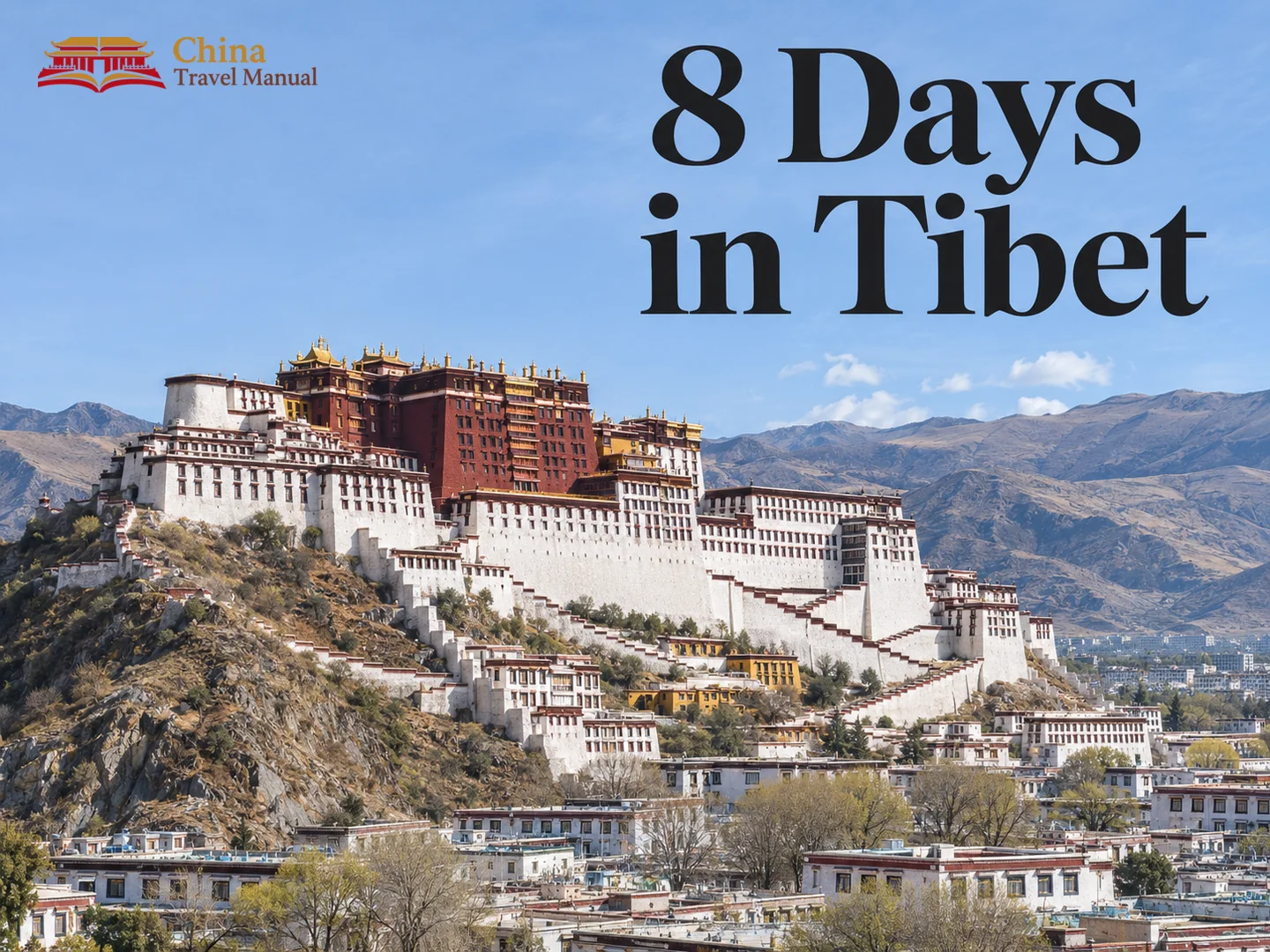
Quick Answer: How Should You Spend 8 Days in Tibet?
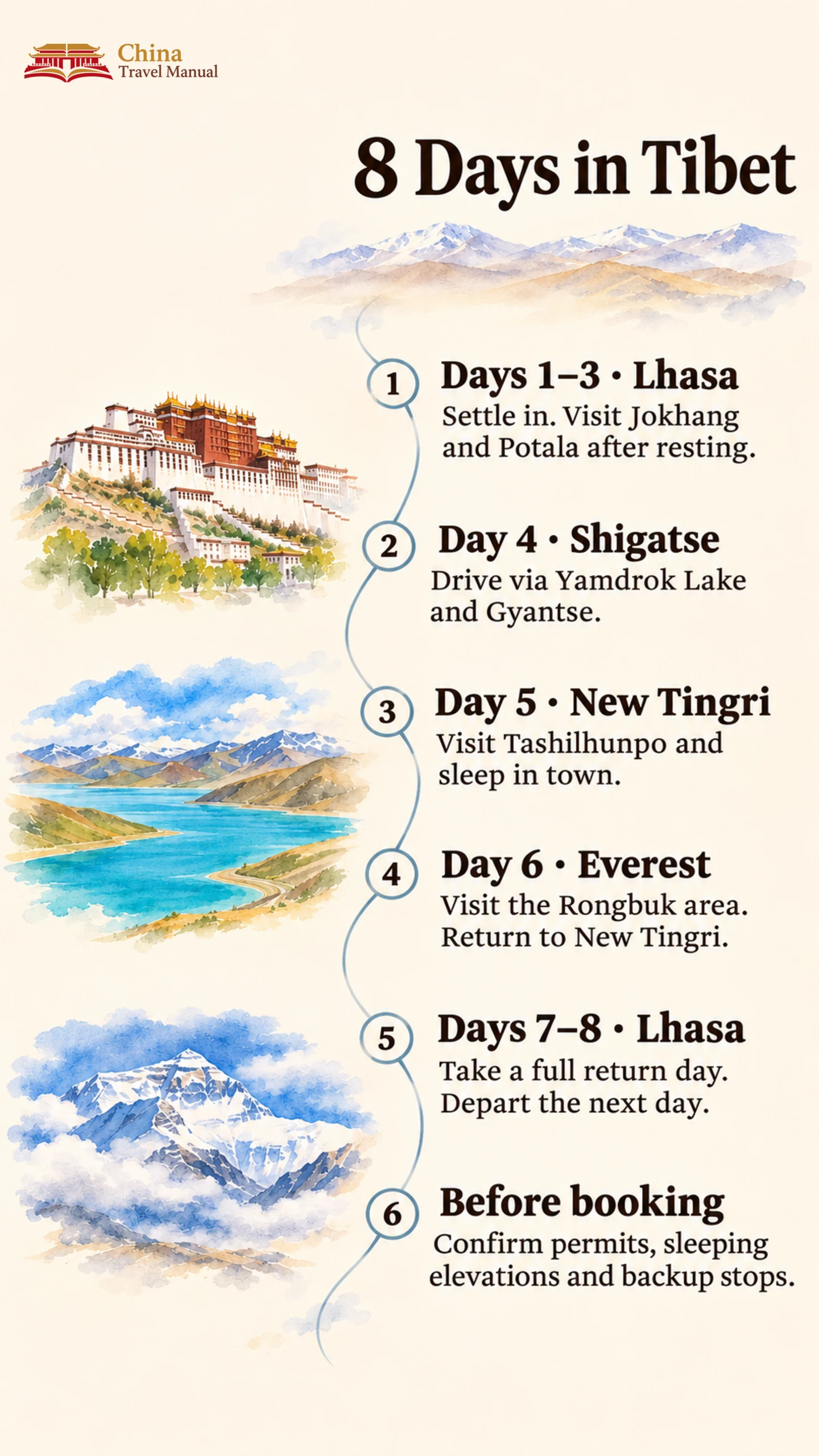
Spend the first three nights in Lhasa, then travel via Yamdrok Lake and Gyantse to Shigatse. Use New Tingri for two nights if your guided route includes the Everest visitor area. Return to Lhasa on day 7 and depart on day 8.
- Days 1–3: Keep arrival day quiet and place the more strenuous Potala Palace visit after your first two nights.
- Days 4–5: See Yamdrok Lake and Gyantse on the road to Shigatse, then continue to New Tingri.
- Days 6–8: Visit the Everest scenic area by day, sleep in New Tingri again, then spend the final night back in Lhasa.
- Before booking: International visitors on foreign passports need a permit to enter Tibet and an organized tour. Ask the operator to confirm route permits, night stops and what happens if you cannot continue higher.[1][2]
The Everest day depends on weather, current access and whether you’re ready to go higher. Ask for more time in Lhasa or Shigatse if you need a slower itinerary.
This is an eight-calendar-day route through the Tibet Autonomous Region, with seven hotel nights. It begins when you arrive in Lhasa and ends when you leave the city. If you take a long-distance train into Tibet, count the approach journey separately.
The Eight-Day Route at a Glance
| Day | Main plan | Sleep in |
|---|---|---|
| 1 | Arrive in Lhasa | Lhasa |
| 2 | Jokhang and Barkhor | Lhasa |
| 3 | Potala Palace | Lhasa |
| 4 | Yamdrok Lake and Gyantse to Shigatse | Shigatse |
| 5 | Tashilhunpo Monastery and New Tingri | New Tingri |
| 6 | Everest visitor area and back to New Tingri | New Tingri |
| 7 | Return to Lhasa | Lhasa |
| 8 | Depart from Lhasa | — |
Approximate elevations for the overnight bases are 3,660 m in central Lhasa, 3,840 m in central Shigatse and 4,320 m in Tingri. These are area elevations, so ask your operator where the hotels are and how high they sit.[5]
Days 1–3: Start in Lhasa
- Day 1: Meet your guide at Lhasa Gonggar International Airport or Lhasa Railway Station, then go to your hotel and rest. The airport is in Gonggar County, so include the airport transfer in your arrival day.[10]
- Day 2: If you feel well, walk part of Barkhor Street and visit Jokhang Temple at your reserved time. Keep the afternoon free so that your first sightseeing day can be short.[3][4]
- Day 3: Visit Potala Palace using its advance real-name booking system. Allow time for the uphill approach and stairs. Ask before taking photographs inside monasteries.[1][3][4]
Lhasa itself is already high enough for altitude illness. If you are coming from low elevation, consider a staged approach before this route. Take it easy for the first 48 hours at altitude, and use the Lhasa altitude planning guide when discussing a slower pace with your operator.[2]
Days 4–5: Yamdrok Lake, Gyantse and Shigatse
On day 4, follow the southern road toward Yamdrok Lake and Gyantse. Yamdrok’s water surface is around 4,441 m, and the approach roads can bring you higher. If the day is going smoothly, choose one substantial stop in Gyantse, such as Palcho Monastery, before continuing to Shigatse. Keep most of the day clear for the road and stops.[5][6]
On day 5, visit Tashilhunpo Monastery early if the day’s drive permits. Its assembly hall and the Maitreya hall are two places to ask your guide about. Continue west to New Tingri, also called Xegar, for a hotel night. If your guide needs to shorten the day or you need extra time at the same altitude, stay in Shigatse and adjust the mountain visit.[2][5][7]
Days 6–8: Everest Visitor Area and the Return to Lhasa
On day 6, head to the Everest visitor area in the Rongbuk area if access and conditions allow. Plan for the scenic-area shuttle. The public visitor zone sits just below 5,200 m, and regular tourism stops before the protected core zone beyond Rongbuk. Keep exertion low at the viewpoint and return to your New Tingri hotel the same day.[8][9][11][13]
On day 7, make the return to Lhasa your main task. The direct Shigatse to Lhasa road leg is roughly three hours on the expressway before city pickup and drop-off. You also have the drive east from New Tingri and stops along the way, so allow most of the day. On day 8, leave time for your airport or railway station transfer.[12]
What to Confirm Before Booking
- Permits and pickup: Read the guide to Tibet permits and confirm the paperwork for your passport and each stop. Ask where the operator will deliver the permit and whether it must be in hand before boarding.[1]
- The itinerary in writing: Ask for the town and elevation of each hotel, the road route, included meals and tickets, and who confirms the Potala and Jokhang reservations.[4][5]
- Options if you need to stay lower: Agree on how to adjust the tour if symptoms or weather interrupt the westward drive. Do not continue to a higher sleeping altitude with symptoms of altitude illness. If symptoms worsen despite resting at the same elevation, descend and seek medical help.[2]
- Weather and access: Use the guide to the best time to visit Tibet to choose dates. Before the mountain day, ask the guide to check road access, the last shuttle back and the current visitor-zone status. Snow and ice can interrupt access even before winter.[9][11]
FAQs About an 8-Day Tibet Itinerary
Can I travel this route independently on a foreign passport?
Plan it with a specialist travel agency in China. Foreign visitors need a Tibet permit and must travel on an organized tour. Ask the agency about the additional paperwork your stops may require.[1]
Can I do the trip if I only have seven nights?
Yes. This route uses seven hotel nights, including three at the start in Lhasa. If you want another day to acclimatize or two chances to see Everest, add a day or leave the Everest leg out.
Should I fly or take the train into Lhasa?
Flying usually leaves more time for the eight-day route, while the Qinghai–Tibet train makes the approach part of the trip. Both take you to an already-high city. Build in rest on arrival and discuss a lower-altitude staging stop if practical.[2]
Sources
[1] UK Foreign, Commonwealth & Development Office. Regional travel rules and permits for Tibet
[2] Centers for Disease Control and Prevention. Yellow Book: high-altitude travel and altitude illness
[3] UNESCO World Heritage Centre. Historic Ensemble of the Potala Palace
[4] Lhasa Municipal People’s Government. Real-name advance booking for Potala Palace and Jokhang Temple
[5] Tibet Autonomous Region Department of Culture and Tourism. Regional elevations for Lhasa, Shigatse, Tingri and Yamdrok
[6] Tibet Autonomous Region Department of Culture and Tourism. Yamdrok, Gyantse and Shigatse route attractions
[7] Ministry of Culture and Tourism. Tashilhunpo Monastery in Shigatse
[8] Tibet Autonomous Region People’s Government. Public visitor area and core reserve restrictions at Rongbuk
[9] Tibet Autonomous Region Department of Culture and Tourism. Mount Everest scenic area closure and ticket reopening notice
[10] Gonggar County People’s Government. Lhasa Gonggar International Airport information
[11] Tibet Autonomous Region Department of Culture and Tourism. Everest scenic-area shuttle transfer notice
[12] China News Service. Opening of the Lhasa–Shigatse expressway
[13] Shannan Municipal Bureau of Tourism Development. Location and elevation of the Everest tourist base camp





