
Quick Answer: When Should You Visit Tibet?
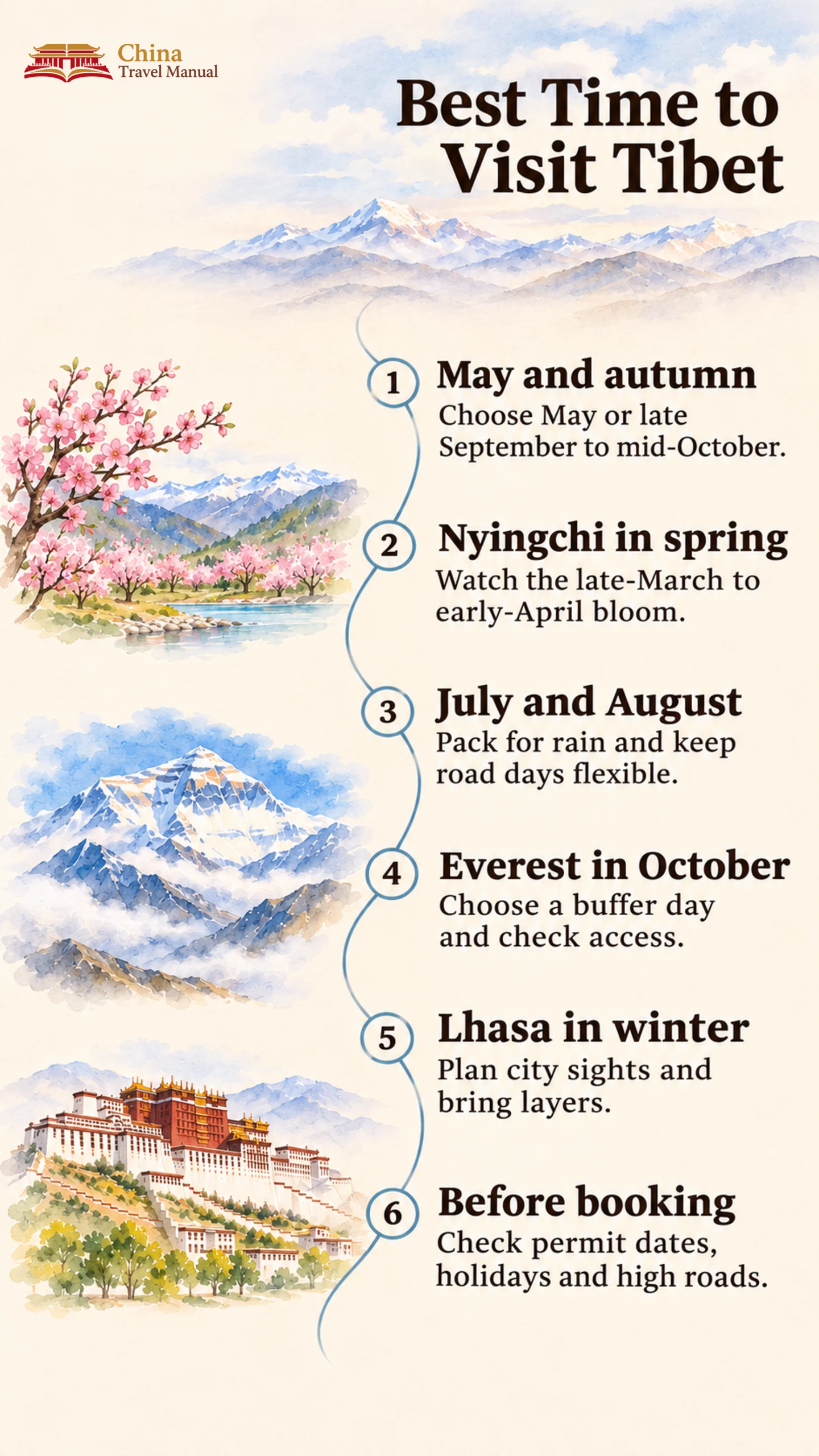
Choose May or late September to mid-October for a first trip that combines Lhasa with the central plateau. If a clear view of Everest is your priority, choose October after the National Day holiday and leave room for a change of day.[1][3][4][5][6]
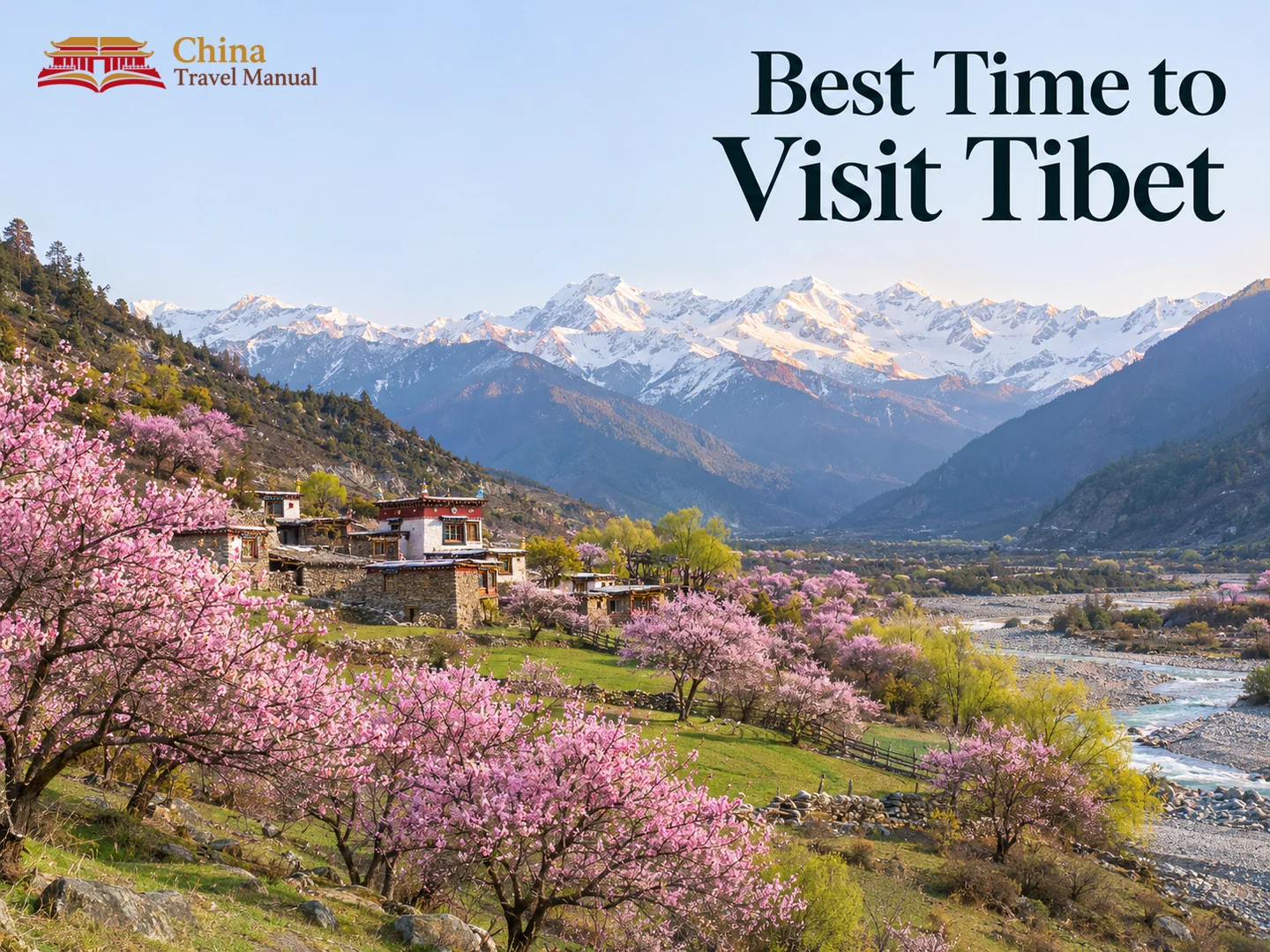
- Spring flowers: Aim for late March to early April for Nyingchi’s peach blossoms. Check that year’s bloom forecast for the valley you want to visit.[2][3]
- Summer travel: July and August work for city sights and green valleys, with more rain and more reason to keep road days flexible.[1][3]
- Mountain views: May and the autumn shoulder season are good starting points. Check the actual forecast and visitor access for Everest before heading west.[3][4][5]
- Winter city trip: Base yourself in Lhasa for palaces and museums, bring warm layers, and confirm which sights and day trips are operating.[1][7][10]
Foreign visitors need a Tibet permit and an organized tour. Ask a specialist agency to confirm your dates and the areas it can include before buying nonrefundable transport tickets.[8]
A good date for walking around Lhasa can be a poor date for a specific high pass or a valley in blossom. Start with the stop that matters most, then fit the rest of your route around it.
Tibet Weather by Month: A Lhasa Baseline
| Period | Lhasa climate normals | What to plan for |
|---|---|---|
| January–February | Monthly averages around 0–3°C and around 1 mm of precipitation | Warm layers and a city-centred itinerary |
| March–April | Monthly averages around 6–9°C and 4–9 mm of precipitation | Cold starts in Lhasa and flower trips in the east |
| May–June | Monthly averages around 13–17°C. Precipitation rises from 30 to 85 mm | May for a drier combination of city and road days |
| July–August | Monthly averages around 16–17°C and 128–141 mm of precipitation | Green scenery and room to shift outdoor plans |
| September–October | Precipitation falls from about 58 mm in September to 7 mm in October | Drier conditions in October and colder mornings |
| November–December | Monthly averages around 0–4°C and about 1 mm of precipitation or less | City sights with departure days and passes checked |
The Lhasa station’s temperature figures are monthly means across day and night. They are neither daytime highs nor forecasts for Everest or other elevations. Bring a warm layer even in summer and check conditions at your actual overnight stops.[1][3][9]
Choose a Month for the Places You Want to See
- Lhasa and Shigatse: Try May or mid-October for an itinerary built around the city sights and Shigatse. Reserve Potala Palace and Jokhang Temple in advance. The two places use separate real-name reservations, so check both before committing to a sightseeing day.[1][3][10]
- Nyingchi peach blossoms: Late March to early April gives you a starting point for Nyingchi. In the 2026 forecast, the prime viewing period was March 17–April 7 in Bayi District, including Gala Village, and March 24–April 10 in Mainling, including the Yarlung Tsangpo Grand Canyon. Compare the new forecast by district before booking the Lhasa to Nyingchi leg.[2]
- Everest views: Put the Everest visitor area in October after the holiday if you can keep a day flexible. Clouds can still hide the summit. After a snow and ice closure, the scenic area resumed ticket sales on September 26, 2026. Check the road as well as the visibility forecast.[4][5][6]
- High lakes: Consider Yamdrok Lake or Namtso in the warmer months. For winter trips, get current road and admission advice for the exact site. A seasonal discount does not establish whether your intended lakeshore or access road will be open.[3][7]
Holidays, Permits and Winter Offers
The 2027 Labor Day holiday runs May 1–5, and the National Day holiday runs October 1–7. If your dates are flexible, start after the holiday when you want those months’ weather without planning around a public break. The China public holidays guide helps you identify other periods to check.[6]
For festivals, look at that year’s local schedule. Look up the summer Shoton Festival and Tibetan New Year separately. In 2026 the Tibetan New Year began February 18, a day after the Lunar New Year used for China’s Spring Festival. Ask your operator whether the sights you want have changed their opening or visiting arrangements.[3][11]
The 2026–27 winter program is listed for October 15, 2026, through March 15, 2027. It covers free admission at participating rated scenic areas, with exceptions including temple sites. Check the specific attraction’s current reservation and admission rules. Keep the guide to Tibet permits and the Tibet eight-day itinerary handy when comparing what an operator can run in winter.[7][8]
FAQs About the Best Time to Visit Tibet
Is July a bad month to visit Tibet?
July can work for Lhasa and green scenery. It is the wettest month in the Lhasa station’s monthly normals, at roughly 141 mm. Keep a city-based alternative for a rainy day and check whether a road day can be moved.[1][3]
Is October a good time to see Everest?
Yes, if you can travel after the October holiday and give your mountain day some flexibility. Post-monsoon weather can improve visibility, while local snow or ice can still disrupt access. Check the forecast and official visitor notices for your dates.[4][5][6]
Can foreign tourists visit Tibet in winter?
A winter visit may be possible through an organized tour with an approved permit. Confirm permit availability for the exact dates, then ask what will be operating on your route. A Lhasa-only plan is less dependent on high mountain roads.[7][8]
Sources
[1] Japan Meteorological Agency, Tokyo Climate Center. Lhasa station monthly temperature and precipitation normals
[2] Nyingchi Municipal People’s Government. Peach blossom forecast by district and viewing site, 2026
[3] Tibet Autonomous Region Department of Culture and Tourism. Month-by-month regional travel guide
[4] Grey and colleagues, Weather. Everest visibility in the post-monsoon period
[5] Tibet Autonomous Region Department of Culture and Tourism. Everest road and ticket access after September 2026 snow
[6] State Council of the People’s Republic of China. Public holidays for 2027
[7] Tibet Autonomous Region People’s Government. 2026–27 winter promotions and attraction caveats
[8] UK Foreign, Commonwealth & Development Office. Tibet permit and organized-tour requirements
[9] Centers for Disease Control and Prevention. High-altitude travel and altitude illness
[10] Lhasa Municipal People’s Government. Advance reservations for Potala Palace and Jokhang Temple
[11] Tibet Autonomous Region Department of Culture and Tourism. How Tibetan New Year dates are set





