
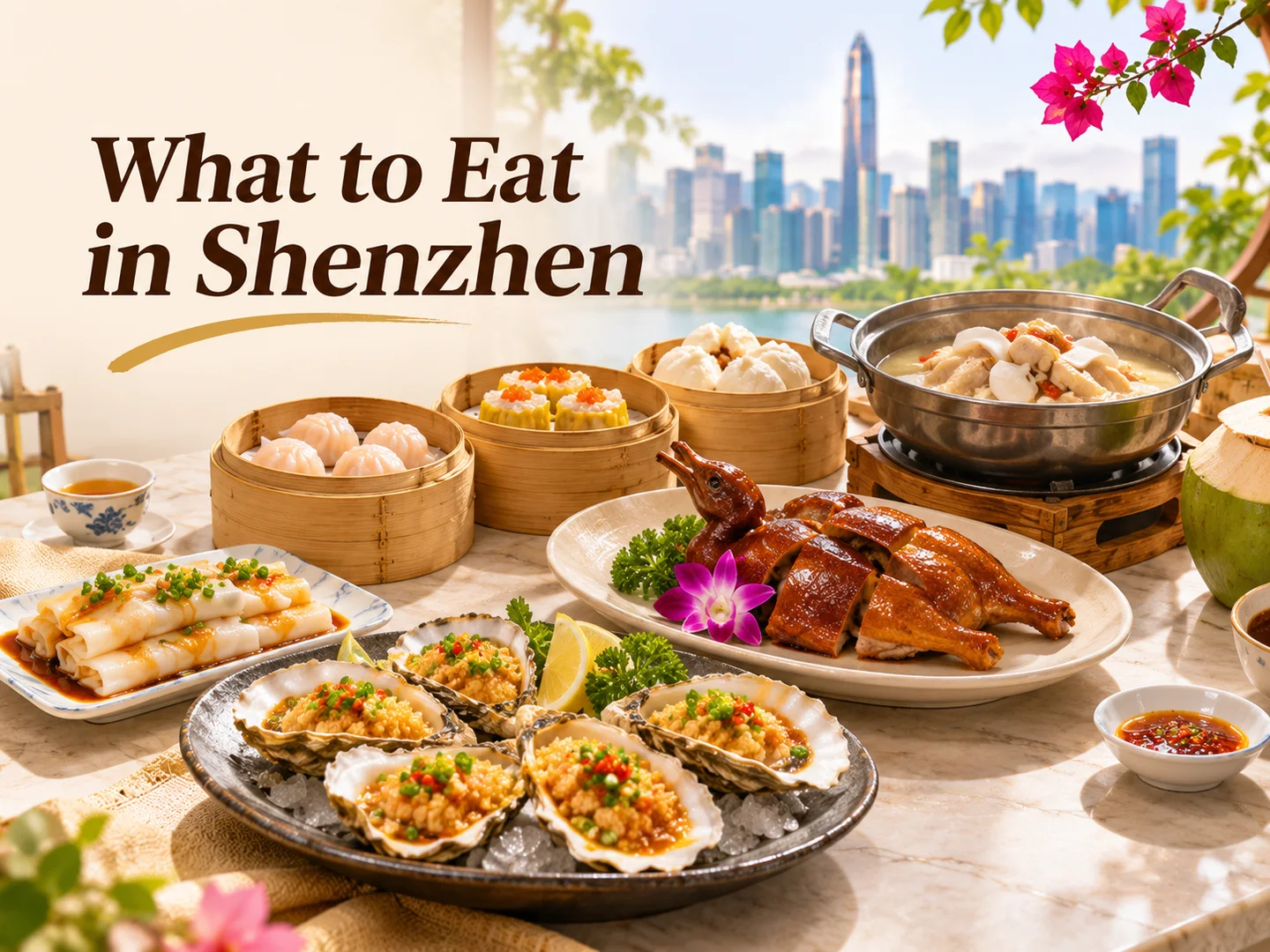
Quick Answer: What Food Should You Try in Shenzhen?
Start with Shenzhen’s local specialties, then explore the Cantonese, Hakka and Chaoshan foods that make this city such a rewarding place to eat. You can sample most styles without traveling far from your hotel.
- Local specialties: Try Shajing oysters, Guangming roast pigeon and Gongming roast goose.
- Traditional Guangdong flavors: Order Cantonese dim sum, rice noodle rolls or Hakka stuffed tofu.
- Shared dinners: Choose Chaoshan beef hotpot or coconut chicken hotpot.
- Where to eat: Start in Futian, Luohu or Nanshan; reserve Shajing, Guangming or Nan’ao for a dedicated outing.
If you have only one or two days, eat near your sightseeing route rather than crossing the city for every specialty. At seafood restaurants, confirm the weight, unit price and any cooking charge before ordering.

Shenzhen offers far more than the food courts surrounding its technology markets. Alongside traditional oyster-farming communities and Hakka villages, a huge range of regional Chinese restaurants has developed with the modern city. This guide explains what to eat in Shenzhen, where to look for particular dishes, and how to order without turning every meal into a long journey. Use the Shenzhen travel guide to match your meals with the areas you intend to visit.
What Is Shenzhen Food Known For?
Shenzhen’s food reflects three overlapping traditions. Coastal communities in Bao’an and around Dapeng have long relied on fisheries and shellfish. Cantonese cooking in areas such as Nantou combines rice, roast meats, seafood and tea-house dining, while Hakka communities in eastern Shenzhen preserve hearty dishes based on tofu, preserved ingredients and meat. These are not recent inventions of the technology industry.
Migration has added another layer. Restaurants serving Chaoshan beef, Hunan cooking, Sichuan dishes and foods from farther afield are part of everyday life here. A dish can be extremely popular in Shenzhen without originating in the city. For more background, explore the Guangdong food guide.
The city’s diversity received wider recognition on August 18, 2026, when its inaugural Michelin selection included seven starred restaurants and 21 Bib Gourmand establishments. [1] That range is a useful reminder that Shenzhen’s dining scene extends from everyday neighborhood kitchens to ambitious fine dining. You do not need a tasting-menu reservation to experience it.
12 Must-Try Foods in Shenzhen
The first five choices have especially strong associations with local communities. The remaining foods represent Guangdong traditions and the dining habits of contemporary Shenzhen. The Chinese dish names are useful when searching menus or showing a server what you want.
1. Shajing Oysters (沙井蚝, shājǐng háo)
Shajing in Bao’an is closely associated with oyster cultivation, a tradition recognized in Guangdong’s intangible cultural heritage inventory. [2] Try oysters grilled with garlic, steamed until cooked through, or dried oysters in a savory braise. The juicy flesh and briny flavor contrast nicely with the fragrant toppings. If the origin matters to you, ask the vendor: a plate of oysters served in Shenzhen is not necessarily made with oysters grown in Shajing.
2. Guangming Roast Pigeon (光明乳鸽, guāngmíng rǔgē)
Roast pigeon is one of Guangming’s signature foods. [3] Squab means a young pigeon raised for eating, rather than a kind of chicken. The bird is typically served with crisp, deeply colored skin and tender, savory meat. It is smaller than a roast chicken and often arrives chopped into pieces with the bones still in. Order one to share alongside rice or vegetables, rather than expecting a large boneless portion.
3. Gongming Roast Goose (公明烧鹅, gōngmíng shāo’é)
Gongming, in Guangming District, has its own reputation for Cantonese roast goose. The appeal lies in its crisp skin, rich meat and juices that season the rice beneath it. [3] A plate of goose with rice or a bowl of rice noodles makes an accessible lunch for a solo traveler. Cantonese roast goose is available throughout southern China; Gongming’s version is a local expression of that wider cooking tradition, not the origin of every roast goose dish.
4. Nan’ao Seafood (南澳海鲜, nán’ào hǎixiān)
A seafood meal fits naturally into a visit to the Dapeng Peninsula. Choose from fish, shrimp, crab and shellfish depending on availability, and consider steaming a whole fish to appreciate its flavor. Ask about the price before the seafood is weighed and cooked. Nan’ao also has a heritage tradition of making sea urchin rice dumplings (海胆粽, hǎidǎn zòng), recognized at municipal level. [4] Treat these as a possible seasonal find rather than a guaranteed menu item.
5. Poon Choi (盆菜, péncài)
Poon choi is a communal meal with separately prepared ingredients layered in a large basin. Xiasha in Futian is particularly associated with the custom, which is listed as provincial intangible cultural heritage. [2] The layers may contain radish, meat, seafood and savory cooking juices. The banquet has ties to community celebrations and family gatherings, particularly around the Lantern Festival. [5] Restaurant versions vary: ask about portion size and whether an advance order is needed. It is usually a better choice for groups than solo diners.
6. Cantonese Dim Sum (广式点心, guǎngshì diǎnxīn)
Dim sum is a broader Cantonese tradition, easily enjoyed in Shenzhen. Order a pot of tea and start with shrimp dumplings (虾饺, xiājiǎo), siu mai (烧卖, shāomài), barbecue pork buns (叉烧包, chāshāobāo) and perhaps steamed spare ribs. Small portions make it easy to taste several dishes with friends. This style of meal, often called yum cha, is more leisurely than a quick breakfast. Compare the traditions in the Guangzhou dim sum guide.
7. Rice Noodle Rolls (肠粉, chángfěn)
Thin sheets of steamed rice batter are folded around fillings such as egg, pork, beef or shrimp and served with a savory sauce. A good roll is silky and soft rather than chewy like a thick wheat noodle. Small breakfast shops often make this an uncomplicated meal for one person. Versions vary across Guangdong, including different fillings, sauces and preparation methods. If you avoid meat, check both the filling and the sauce instead of assuming that rice batter makes the dish vegetarian.
8. Hakka Stuffed Tofu (客家酿豆腐, kèjiā niàng dòufu)
Hakka stuffed tofu is usually made by filling pieces of tofu with seasoned minced meat, then frying or braising them. The contrast between the soft bean curd, savory filling and browned surface makes this a satisfying dish with plain rice. Look for Hakka restaurants, particularly if you are exploring eastern Shenzhen. Despite tofu being the main visible ingredient, the traditional dish is not automatically vegetarian. Ask specifically for a meat-free preparation if that is important to you.
9. Hakka Salt-Baked Chicken (客家盐焗鸡, kèjiā yánjújī)
This Hakka specialty is traditionally prepared using heated salt, giving the chicken a distinctive savory fragrance. Restaurant methods and intensity of seasoning vary. The meat is often served chopped, with skin and bones, and pairs well with rice, greens or another shared dish. Choose it when you want a substantial regional dinner rather than a snack. It is also an approachable introduction to Hakka cooking for travelers who prefer savory flavors to hot chili sauces.
10. Chaoshan Beef Hotpot (潮汕牛肉火锅, cháoshàn niúròu huǒguō)
Originally associated with the Chaoshan region of eastern Guangdong, this popular Shenzhen dinner centers on different cuts of thinly sliced beef. A comparatively light broth and shacha sauce provide flavor without requiring a fiercely spicy soup base. Order a few cuts first, cook them thoroughly according to the restaurant’s guidance, then add vegetables or noodles if needed. It works particularly well with companions, since you can compare textures without committing to a large portion of every cut.
11. Coconut Chicken Hotpot (椰子鸡火锅, yēzijī huǒguō)
Coconut chicken hotpot is a popular contemporary dining choice in Shenzhen rather than an ancient local specialty. Coconut water gives the broth a gentle sweetness that suits travelers seeking an alternative to chili-heavy hotpot. Chicken, vegetables and dipping sauces complete the meal. Let the chicken cook fully before eating and keep raw-meat utensils separate from ready-to-eat food. Check whether the restaurant has a minimum pot size if you are dining alone; sharing is often more practical.
12. Late-Night Barbecue (夜宵烧烤, yèxiāo shāokǎo)
After dark, grilled skewers, vegetables and seafood offer a casual way to explore Shenzhen’s diverse regional flavors. Seasoning varies from garlic and mild savory marinades to cumin and chili. Rather than treating all grilled food as a uniquely Shenzhen invention, appreciate the late-night eating culture itself. Order small quantities at first, look for vendors cooking fresh batches thoroughly, and leave room to sample a different stall. You can make this an optional evening activity instead of a second full dinner.
Where to Eat in Shenzhen
Choose a food neighborhood that fits your sightseeing plans. Central districts offer enough variety for most short visits; the distinctive specialties in outlying communities are worth a separate outing when you have more time.
| Area | Best food experiences | When to go |
|---|---|---|
| Dongmen, Luohu | Snacks, noodles, roast meats | During an eastern city visit |
| Shuiwei and Futian | Regional restaurants, hotpot, supper | After exploring central Shenzhen |
| Nantou Ancient City | Snacks, sweets, creative cafes | During a heritage walk |
| Shekou | Seafood and international dining | After a waterfront outing |
| Shajing, Bao’an | Oyster traditions | On a dedicated western trip |
| Guangming and Gongming | Roast pigeon and goose | On a northern district outing |
| Dapeng and Nan’ao | Coastal seafood | During a peninsula visit |
Dongmen works well for grazing between shops, rather than booking a long formal meal. Shuiwei and nearby neighborhoods offer a broader range of regional restaurants and are convenient when staying in Futian. Nantou’s renovated historic streets are useful for smaller dishes, sweets and a coffee break, though some venues cater more to leisure visitors than everyday diners.
Shekou offers an alternative for travelers who want seafood or international options in a waterfront setting. English menus may be easier to find here, but availability differs by restaurant. In the west, Shajing is a better choice when you want to explore oyster culture itself, while a trip to Guangming rewards travelers who have other reasons to visit the district. Do not allocate half your short holiday to commuting for a single roast bird.
In the east, combine a visit to Dapeng Fortress or the coast with a seafood meal in Nan’ao. The two are not adjacent to central Shenzhen. Check the return journey before arranging dinner. The Shenzhen metro guide and local transportation guide can help you judge whether an extra meal stop is practical.
Street Food and Night Markets in Shenzhen
Street food is a good way to experience the city’s everyday dining without committing to a large restaurant order. Look for grilled meat and vegetables, beef offal, rice noodle rolls, congee, sweet soups and tea drinks. Not every stall makes every item, so browse before choosing where to eat.
Niuxiangfang (牛巷坊, niúxiàngfāng) in Futian has been featured for Chaoshan and other regional foods. [6] Yantian Community Night Market Cultural Street (盐田社区夜市文化街, yántián shèqū yèshì wénhuàjiē), in Xixiang, Bao’an, was also included in a 2026 government visitor route. [7] Despite its name, it is not in Shenzhen’s Yantian District. Search the full Chinese name when navigating.
Individual stalls, operating hours and temporary markets can change. Check recent listings before making a special trip, particularly in poor weather. Choose busy vendors that keep raw and cooked ingredients separate, cook food thoroughly and serve it hot. For more evening ideas, see Shenzhen at night and the Chinese street food guide.
How Much Does Food Cost in Shenzhen?
Food costs vary substantially depending on location, ingredients and service. The following are rough planning allowances in Chinese yuan (CNY), not verified quotes or citywide average prices. Recent published dining estimates and a premium hotel’s menu demonstrate the wide differences between everyday and upscale dining. [8][9]
| Dining type | Planning allowance |
|---|---|
| Simple breakfast | ¥10–25 |
| Noodles or rice meal | ¥20–45 |
| Street food and snacks | ¥10–30 per stop |
| Casual dim sum | ¥50–120 per person |
| Simple sit-down dinner | ¥50–100 per person |
| Shared hotpot | ¥80–180 per person |
| Seafood meal | Depends on species and weight plus any cooking charge |
Premium tea houses and elaborate seafood meals can easily exceed these allowances. A seafood price quoted per jin (斤, jīn) refers to 500 grams in mainland China; confirm both the unit and total cost. A hotpot menu may price the soup base and individual dishes separately. Leave room in your Shenzhen travel budget for these extras, particularly when sharing with a group.
How to Plan a Food-Focused Day in Shenzhen
You can experience several styles of cooking in a single day without booking a dedicated food tour. Base the day around one or two adjacent sightseeing areas. The following sequence works particularly well in Futian or Nanshan.
| Time | Meal idea |
|---|---|
| Breakfast | Dim sum or rice noodle rolls |
| Lunch | Roast meat rice or a Hakka meal |
| Afternoon | Sweet soup or tea drink |
| Dinner | Chaoshan beef hotpot or coconut chicken |
| Late evening | Optional grilled snack |
If breakfast is a generous tea-house meal, keep lunch light. If you plan to eat hotpot with friends, save the bigger appetite for dinner rather than sampling everything at lunchtime. Travelers with only one day in Shenzhen can fit these choices into their normal sightseeing route. With three days in Shenzhen, consider substituting one ordinary city meal with a trip to Shajing, Guangming or the coast. A specialty is more meaningful when you also have time to explore the community associated with it.
Ordering Food and Dining Tips in Shenzhen
Some restaurants use a QR-code menu, others provide printed menus or let you order directly from a server. Photos are useful for identifying unfamiliar dishes, but ingredients may not be obvious. Ask for help if the ordering system requires an account or a local phone number you do not have. The guide to ordering food in China covers more alternatives.
At tea houses, dim sum is generally ordered by the portion and shared; a separate per-person tea charge may apply. For live seafood, ask to see the weight and confirm the total before cooking. Popular restaurants may have queues during peak meal times, so allow flexibility before your next sightseeing stop. Prepare a working mainland mobile-payment method and carry a backup in renminbi. Do not assume US dollars or Hong Kong dollars will be accepted.
| English | Chinese |
|---|---|
| Not spicy | 不辣 |
| No pork | 不要猪肉 |
| No peanuts | 不要花生 |
| Fully cooked | 全熟 |
| How much per 500 grams? | 多少钱一斤? |
| Is there a cooking fee? | 有加工费吗? |
These short phrases are useful for preferences, not sufficient for severe allergies. If you need to find a place nearby, using Dianping in China can help you compare menus and recent listings without relying on an old restaurant ranking.
Vegetarian, Vegan, Halal and Allergy-Friendly Food
Vegetable dishes may include lard, meat stock, oyster sauce or fish sauce, even when no meat is visible. Traditional stuffed tofu contains meat, and a plain-looking soup may use animal broth. See the vegetarian food guide and vegan food guide for ways to communicate these restrictions.
For halal dining, look for clearly identified halal restaurants (清真, qīngzhēn) and ask about preparation when necessary. A beef or lamb dish alone does not establish that a restaurant is halal. The halal food guide explains the distinction.
Shellfish, peanuts, soy and wheat may appear in sauces, fillings and broths. Shared hotpots and utensils introduce cross-contact risks. If you have a serious allergy, show the staff a carefully translated allergy card and do not eat a dish when its ingredients or preparation cannot be confirmed. Consult the food allergy guide before traveling. Choose thoroughly cooked seafood rather than raw shellfish, particularly if you are at increased risk of foodborne illness.
FAQs About Food in Shenzhen
What food is Shenzhen famous for?
Shajing oysters, Guangming roast pigeon, Gongming roast goose and Xiasha poon choi are strongly associated with local communities. The city is also a convenient place to sample Cantonese dim sum, Hakka cooking and Chaoshan beef hotpot, which represent wider Guangdong food traditions.
Is Shenzhen food spicy?
Many traditional Cantonese and Hakka dishes are savory rather than intensely hot, although individual recipes differ. Shenzhen also has numerous restaurants serving chili-heavy Sichuan and Hunan food. Ask for no chili or less chili, and check whether dipping sauces contain it.
Where is the best area to eat in Shenzhen?
Futian and Nanshan are convenient for short visits because they offer many regional cuisines near popular sights. Dongmen is useful for affordable snacks. Choose Shajing for oyster culture, Guangming for roast specialties or Nan’ao for a coastal seafood outing.
Is food expensive in Shenzhen?
Simple meals and snacks can be affordable, while premium dim sum, hotpot and live seafood can cost considerably more. Prices depend on the restaurant, ingredients and how much you order. Check portion sizes, tea charges and seafood pricing when comparing menus.
Is Shenzhen or Guangzhou better for food lovers?
Choose Guangzhou for an extensive introduction to traditional Cantonese cooking and tea-house culture. Shenzhen combines its own coastal and Hakka traditions with a broad range of regional cuisines. The better choice depends on whether you prioritize Cantonese heritage or variety. Explore what to eat in Guangzhou for comparison.
Sources
[1] MICHELIN Guide. Shenzhen Makes Its Debut in the MICHELIN Guide Guangzhou & Shenzhen 2026 Selection
[2] Shenzhen Culture, Media, Tourism and Sports Bureau. Intangible Cultural Heritage Inventory
[3] Shenzhen Government. Explore Guangming delights with food, sports maps
[4] Shenzhen Government. Dapeng heritage food at the Hong Kong cultural market
[5] Shenzhen Government. Xiasha poon choi banquet customs
[6] Shenzhen Government. Stay cool at night food markets
[7] Shenzhen Government. How to make the most of ICIF 2026 in Shenzhen
[8] LifeShenzhen. Cantonese and Chaozhou food in Shenzhen
[9] Mandarin Oriental Shenzhen. The Bay dim sum menu





