

Quick Answer: What Should You Eat in Guangdong?
Start with morning tea (早茶, zǎochá) in Guangzhou, then choose a Shunde fish lunch or a Chaoshan food detour. If your route goes through Meizhou, make time for a Hakka meal.[1][2][3][4]
- Guangzhou: Order shrimp dumplings (虾饺, xiājiǎo) and rice noodle rolls (肠粉, chángfěn) with a pot of tea.[1]
- Shunde: Plan a fully cooked fish lunch and finish with double skin milk (双皮奶, shuāngpínǎi).[2][4][7]
- Chaoshan: Try Chaoshan beef hot pot (潮汕牛肉火锅, Cháoshàn niúròu huǒguō) and gongfu tea (工夫茶, gōngfuchá) in the Chaozhou and Shantou area.[2][4][8]
- Meizhou: Look for salt-baked chicken (盐焗鸡, yánjújī) and a bowl of Hakka noodles.[2]
Give yourself time for one sit-down meal in each food area you visit.
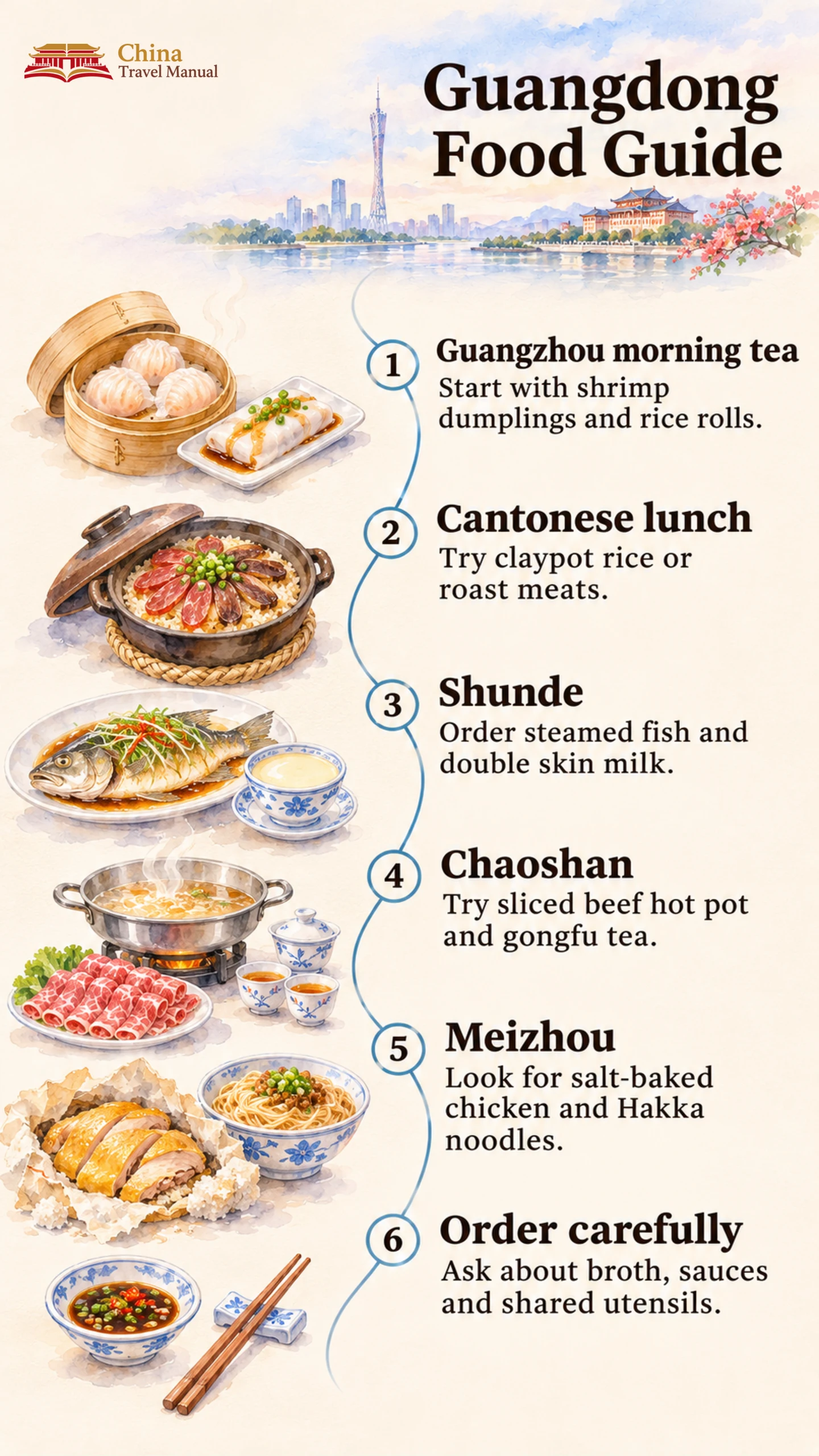
If you have time for just one food stop, choose the city that fits your route. The biggest difference you can taste is between a Guangzhou tea table, a Shunde fish lunch and the thin slices of beef at a Chaoshan hot pot restaurant.
Where to Eat in Guangdong
| Area | First thing to order | Best fit for your trip |
|---|---|---|
| Guangzhou | Steamed dim sum at a tea house.[1] | Anyone starting in Guangzhou or combining food with a city walk. |
| Shunde, Foshan | A cooked fish dish and milk custard.[2][3][4] | A lunch-focused day trip from Guangzhou or Foshan. |
| Chaozhou | Dancong oolong and an oyster omelet.[2][5][8] | A slower day around the old town. |
| Shantou | Freshly sliced beef hot pot and braised goose.[2][4] | An eastern Guangdong overnight trip with a full dinner. |
| Meizhou | Salt-baked chicken and Hakka noodles.[2] | An eastward route where you can add a longer stop. |
The Meals Worth Planning Around
Guangzhou: Morning Tea and a Second Meal
Go to a tea house and order three small plates for two people before deciding how much more you want. Start with a basket of dumplings, a plate of rice rolls and something with a different texture, such as a baked pastry or a fried turnip cake. Our Guangzhou dim sum guide helps you read the menu and spread out your order. If you want a second meal, try claypot rice (煲仔饭, bāozǎifàn) with a crisp bottom layer, or order roast meats or poached chicken. The broader Guangzhou food guide gives you more ways to combine these with a neighborhood visit.[1][2]
Shunde: A Fish Lunch, Then Dessert
Make lunch the anchor of a Shunde food route. Shunde is in Foshan and belongs to UNESCO’s Creative Cities Network for gastronomy. Order steamed fish and greens. If fish is priced by weight, ask what size is available and confirm the total before you order. Save the double skin milk for a separate stop if you want a walk between lunch and dessert. For a larger day out, use the Foshan travel guide to decide whether to add another district or stay around Shunde.[2][3][4]
Chaoshan: Hot Pot and Gongfu Tea
Shantou is a convenient base for a beef hot pot dinner if you are spending the night in the area. Ask the server to suggest a small mix of cuts and explain when each is cooked through. Ask what is in the dipping sauce before using it. In Chaozhou, plan a gongfu tea session near an old-town walk and compare how the same Dancong changes over several small pours. Use the Chaozhou beef hot pot guide for cut names and ordering options in that city.[2][4][5][8]
Meizhou: Hakka Cooking
If Meizhou is already part of your route, choose a Hakka noodle lunch and share the salt-baked chicken when you have company. Allow time to sit down for a full meal, especially if you want to visit a traditional village the same afternoon.[2]
How to Order and Handle Dietary Needs
In a claypot, braised dish or hot pot, flavor can come from the broth or sauce as well as the named ingredient. If you are vegetarian, ask whether the broth contains meat, fish or seafood and whether the kitchen can serve vegetables without oyster sauce. For an allergy, show staff the relevant words from the China food allergy guide and confirm ingredients and shared utensils with the kitchen. Use a different venue if staff cannot confirm your needs. See the food ordering guide for phrases to take with you.[6]
In Shunde, choose fully cooked freshwater fish. Ask for it steamed through when the menu presents several preparations. At a hot pot meal, keep utensils used for raw ingredients separate from those for serving cooked food.[7]
Which Food Stops Fit Your Route?
If you have two nights in Guangzhou, order morning tea in the city and take one Shunde lunch detour. If you have a longer trip with room for an overnight, review the Guangzhou to Chaozhou transfer and leave enough time for tea and dinner in eastern Guangdong. Travelers following the seven-day Guangdong itinerary can use the Foshan day for Shunde. Adding Chaoshan works best if you have another night or can replace a stop.
FAQs About Guangdong Food
Is all Guangdong food Cantonese?
The province includes several culinary traditions. Guangzhou and Shunde are centers of Cantonese cooking, while Chaoshan and Meizhou have their own food traditions. The same province can offer dim sum, Dancong tea, beef hot pot and Hakka salt-baked chicken.[1][2][3][4]
What should two people order for dim sum?
Start with three plates for two people and one pot of tea. Shrimp dumplings, rice rolls and a baked or fried item make a varied first order. Add a fourth plate only after seeing how much comes in the first round.[1]
Is Shunde or Chaozhou better for a short trip?
If you are based in Guangzhou and have just a day, choose Shunde for fish and dessert. Choose Chaozhou if an overnight fits your route and you want time for tea and a walk through the old town.[2][3][5]
Sources
[1] Guangzhou Municipal Government. Guangzhou expat guide to specialty food
[2] Guangdong Foreign Affairs Office. Guangdong regional food trails
[3] UNESCO Creative Cities Network. Shunde Creative City of Gastronomy
[4] China Daily via China Culture. Shunde and Chaoshan food traditions
[5] Chinese Ministry of Education. Chaozhou Creative City of Gastronomy
[6] Hong Kong Centre for Food Safety. Dining out with food allergies
[7] Hong Kong Centre for Food Safety. Food safety guidance for freshwater fish
[8] UNESCO Intangible Cultural Heritage. Traditional tea practices in China





