
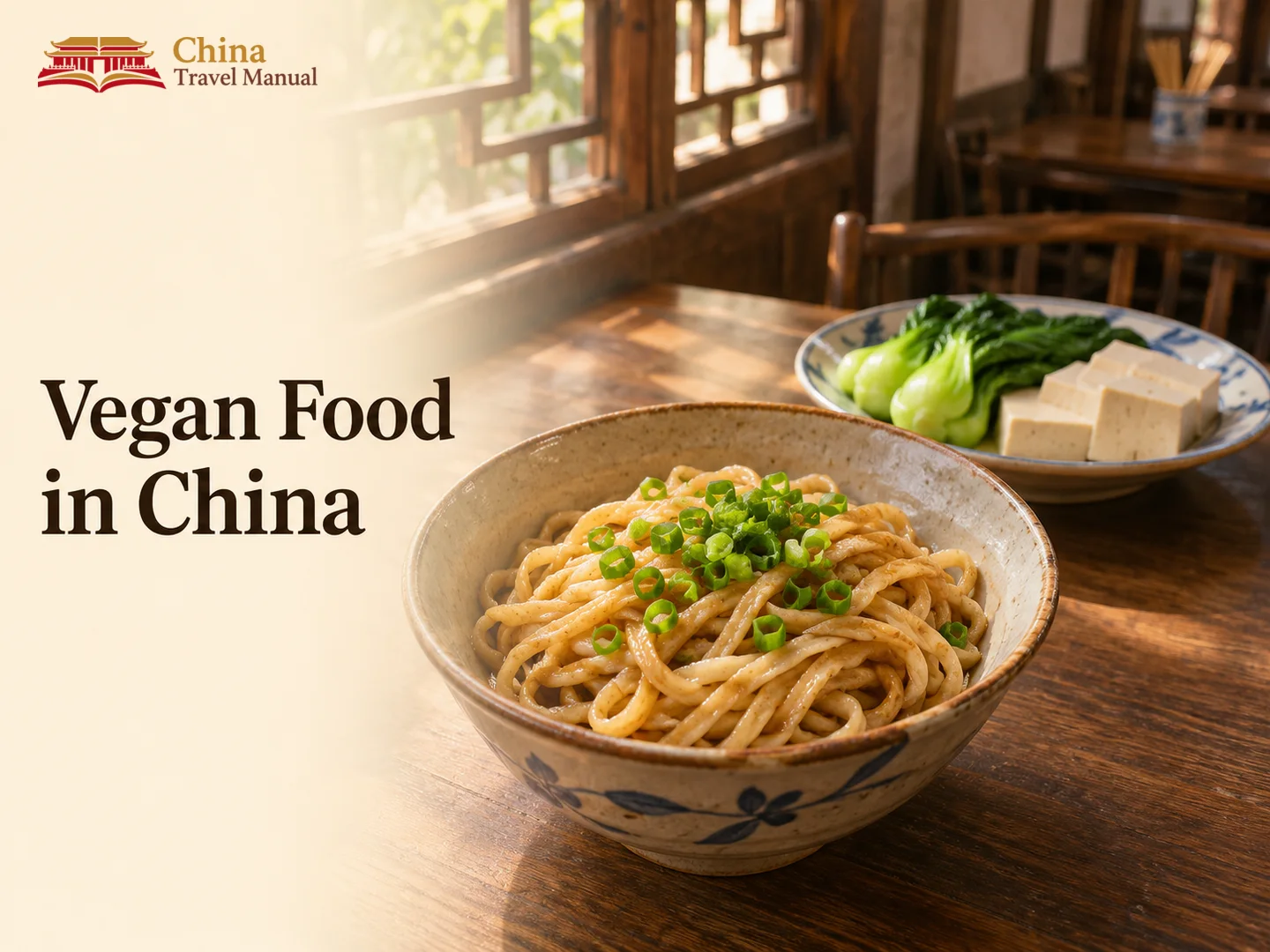
Quick Answer: How Can You Eat Vegan in China?
Search for a vegan restaurant or ask a mixed kitchen to confirm a specific dish. State that you avoid animal ingredients, including eggs, milk products and honey.
- Search: Try vegan (纯素, chúnsù) and confirm what the restaurant means by it.
- Order: Ask for rice, greens or tofu with plant oil and verified seasoning.
- Check: Ask about noodles, stock, eggs, milk, lard and seafood-based sauces.
- Shopping: Read the full ingredient list and any sauce or seasoning packets.
- Backup: Keep a verified option for airport, rail or late-night arrivals.
Ask the kitchen to confirm a specific preparation rather than relying on a menu icon.

A vegan meal can be straightforward when the restaurant understands what you need to avoid. In a mixed kitchen, the most important question is what goes into the noodles, broth or dressing before the dish reaches your table. Save a short Mandarin note and a few workable backup choices for days when you cannot confirm a menu.
Use Search Terms and Check the Restaurant
Search 纯素餐厅 (chúnsù cāntīng) for vegan restaurants, or 素食餐厅 (sùshí cāntīng) to widen the search. Shanghai’s public visitor information lists vegetarian restaurants as a local category.[1] Review the menu before going and ask whether any dishes contain eggs, dairy or honey. In a dietary sense, vegan food excludes animal ingredients, including these as well as meat, fish and shellfish.[2] For the broader restaurant search, see vegetarian food in China.
Keep a written note on your phone. “我吃纯素。不吃肉、鱼、海鲜、蛋、奶制品和蜂蜜。” says you eat vegan and avoid meat, fish, seafood, eggs, dairy and honey. Show it to a server and ask them to check with the kitchen. For noodles, point to the dish name and ask “面条里有鸡蛋吗?” to check whether they contain egg. If staff are unsure what comes in a packaged seasoning, ask to see its label.[3]
Build a Meal From Ingredients You Can Confirm
At a mixed restaurant, ask whether staff can make a plate of greens or tofu with vegetable oil, salt and seasonings they can confirm. Ask about plain rice if you need a simple side. For a bowl of noodles, check whether the noodles contain egg and whether the broth or dressing was prepared with animal ingredients. Ask about meat stock, oyster sauce, fish sauce and lard. If the sauce is premade and staff cannot verify it, ask what they can cook from separate ingredients.
At breakfast, check whether a vegetable-filled bun contains egg or is brushed or cooked with animal fat. Ask if the soy milk is plain and what is added to it. For a shared hot pot, check the broth, dipping sauces and who uses the pot. Use the Chinese menu guide to identify cooking methods and ingredient names, and the breakfast in China guide for dishes you can ask about at a morning stall.
Read Ingredients on Packaged Foods
Look for the ingredient list (配料表, pèiliàobiǎo) on a package. Read the main ingredients and listed subingredients, including any separate sachet that comes with noodles or a prepared meal. A vegetable flavor can still include cream, meat powder or a seafood seasoning. Use camera translation to find key terms, then ask for help identifying unclear ingredients.
| Words to check | Meaning |
|---|---|
| 鸡蛋, 蛋粉 | Egg, egg powder |
| 奶粉, 乳清, 黄油 | Milk powder, whey, butter |
| 猪油, 鸡粉 | Lard, chicken powder |
| 蚝油, 鱼露 | Oyster sauce, fish sauce |
| 明胶, 蜂蜜 | Gelatin, honey |
Whole fruit and plain packaged foods with a readable ingredient list can be useful backup options. Check the actual packet because similar flavors or package designs may have different ingredients. See visiting food markets in China for questions about buying by weight and finding ingredients.
How to Order a Vegan Meal in China
- Show your note: Explain what you avoid and name eggs, dairy and honey as well as meat and seafood.
- Choose one dish: Point to the exact dish and ask about the base ingredients.
- Ask about prep: Check noodles, stock, oil, sauces and any topping that may already be mixed in.
- Find a workable option: Ask whether a dish can be made with verified ingredients or choose another one.
- Check what arrives: Confirm the sauce or topping before eating if the kitchen had to change the dish.
For a long journey or late arrival, identify a restaurant near your destination and bring a backup meal or snack with a verified ingredient list. For a food allergy, use a separate note naming the allergen and ask staff to check shared equipment and utensils.[4]
FAQs About Vegan Food in China
Does the Word Su Mean Vegan?
The term can point toward vegetarian food. Confirm whether the specific dish excludes eggs, dairy and honey as well as meat, fish and shellfish.
Is Plain Soy Milk Always Vegan?
Ask what is in the drink. Check whether the shop adds dairy or honey, or look at the ingredient list on a packaged version.
Can I Use a Vegan Label for an Egg or Milk Allergy?
Ask the kitchen or manufacturer about the allergen and cross-contact. Ask how the food was handled even when the label identifies it as vegan.
Sources
[1] Shanghai Municipal Government. Examples of vegetarian restaurants in Shanghai
[2] The Vegan Society. Definition of veganism and dietary scope
[3] Shanghai Municipal Government. Mandarin phrases for vegetarian diners and people with food allergies
[4] Food Allergy Research & Education. Dining out with food allergies





