
Quick Answer: How Do You Find Vegetarian Food in China?
Search for a dedicated vegetarian restaurant or ask a regular kitchen about one specific dish. Confirm the stock, cooking fat and sauce as well as the main ingredients.
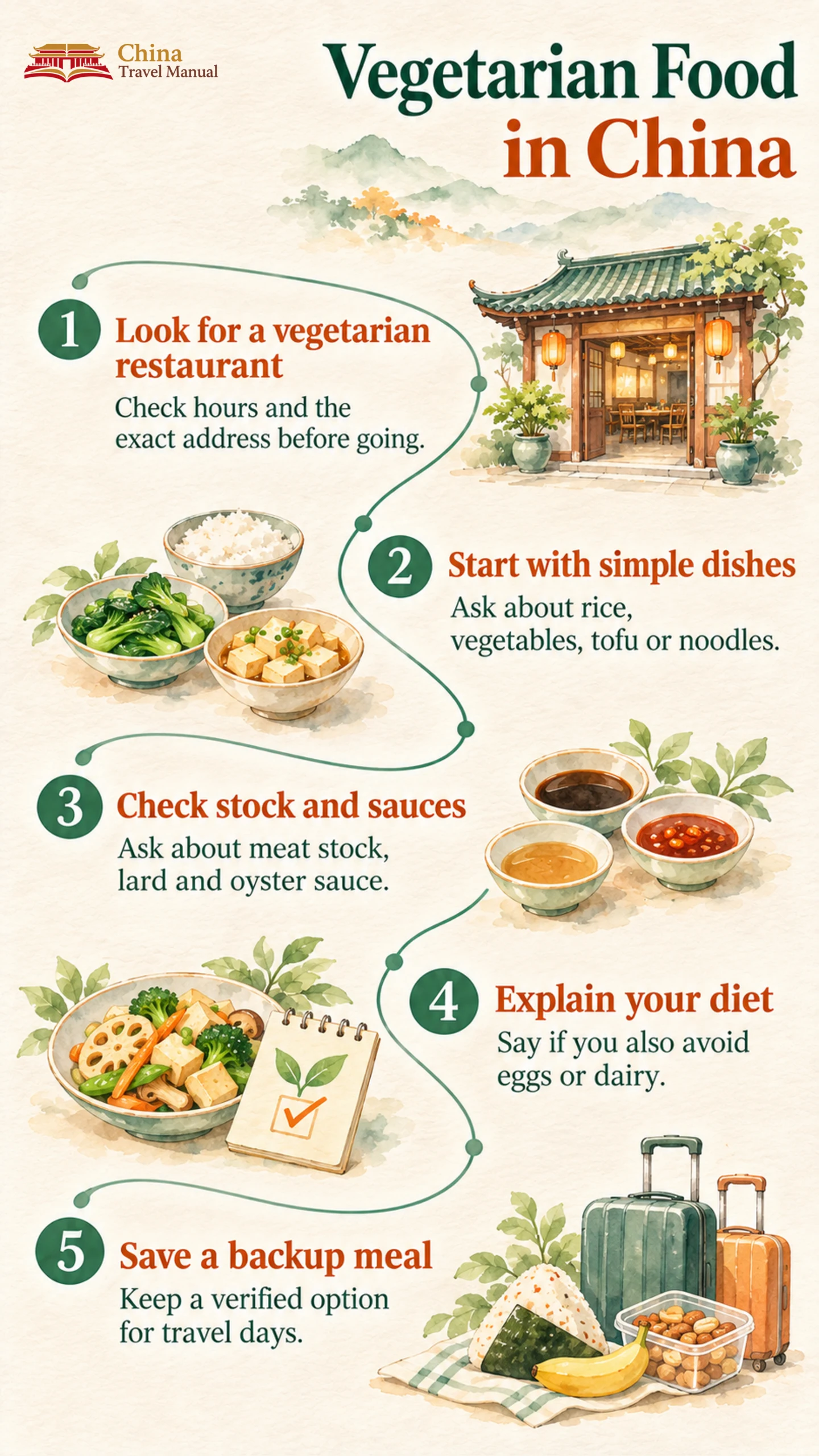
- Where to look: Search for vegetarian food (素食, sùshí) near your hotel or station.
- What to start with: Ask about rice, vegetable dishes, tofu or noodles that can be prepared to order.
- What to verify: Check for meat stock, lard, oyster sauce, dried shrimp and meat garnishes.
- How to ask: Show a short note that lists which foods you avoid and whether you eat eggs or dairy.
- Travel days: Save a verified meal option near where you will be at mealtime.
Ask about a different dish if the kitchen cannot change a prepared sauce or broth.
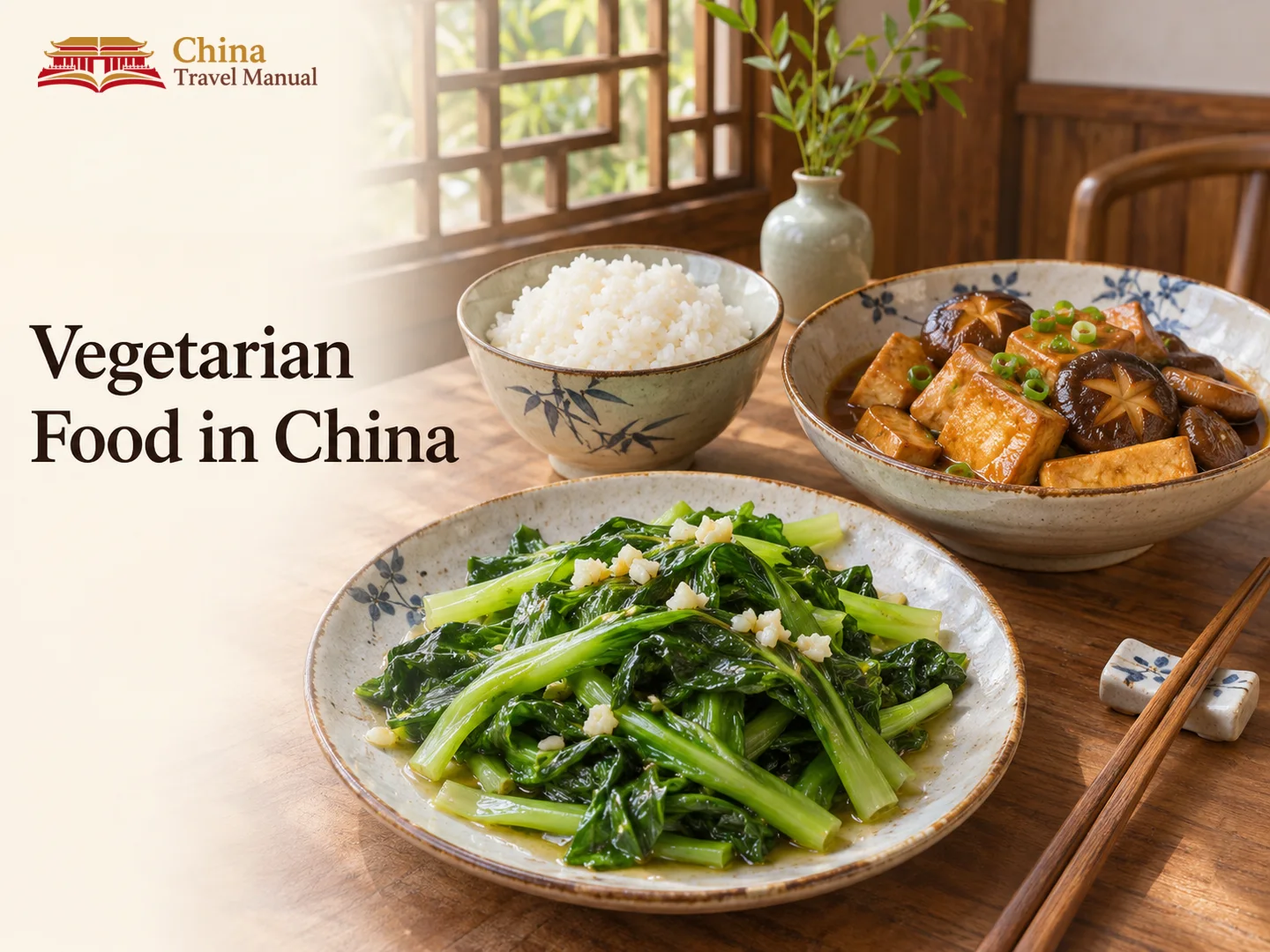
Vegetarian food in China is easier to find when you can tell a dedicated vegetarian restaurant from a restaurant that offers a few vegetable dishes. Both can work, but they call for different questions. Tell staff what you eat, then confirm one dish with the kitchen instead of relying on a translation or the menu category.
Choose a Restaurant by How It Cooks
Use 素食餐厅 (sùshí cāntīng) to search for vegetarian restaurants. Check recent photos and hours. A dedicated restaurant may offer more suitable choices and staff who can explain whether eggs and dairy are used. Shanghai’s visitor information lists dedicated vegetarian restaurants as one way to find suitable meals.[1]
Temple and Buddhist vegetarian food can also be an option. Shanghai’s Longhua Temple is known for vegetarian noodles with toppings and other dishes such as seasoned wheat gluten.[2] Check the current opening hours and where the dining room is located. A temple visit and a meal can have different schedules, so save the exact entrance if food is your main goal. See Buddhist travel in China for more on visiting temples.
Start With Dishes You Can Verify
At a regular restaurant, start with plain rice, greens, tofu, or noodles that staff confirm can be prepared with suitable ingredients. Check the entire dish. A tofu dish can be cooked with meat, or noodles may be served in broth that was prepared earlier. Ask whether the kitchen can stir-fry greens in vegetable oil with no oyster sauce. Check the sauce separately if you order steamed vegetables or dumplings. Shanghai’s official Mandarin guide notes that a menu item with the character for vegetables can still contain animal ingredients.[3]
For breakfast, look for plain steamed bread, soy milk or a vegetable-filled bun and check the filling and preparation. If the only available noodles use an animal-based broth, ask about plain rice with a freshly made side. The breakfast in China guide and Chinese menu guide cover useful names and ordering terms.
Ask About Stock, Sauces and Cooking Fat
Show a note that matches your diet. “我吃素,不吃肉、鱼和海鲜。请问这道菜有肉汤、猪油或蚝油吗?” means “I am vegetarian and don’t eat meat, fish or seafood. Does this dish contain meat stock, lard or oyster sauce?” Ask about eggs or dairy separately. For additional questions, use the words below.[3]
| Term | Meaning | Why to ask |
|---|---|---|
| 肉汤 (ròutāng) | Meat stock | It can be part of a soup, braise or sauce |
| 猪油 (zhūyóu) | Lard | A kitchen may use it instead of vegetable oil |
| 蚝油 (háoyóu) | Oyster sauce | Ask whether the sauce is oyster-based or a vegetarian version |
| 虾米 (xiāmǐ) | Dried shrimp | Small pieces can appear in fillings, toppings and sauces |
Ask the server to check with the kitchen before confirming. If stock or seasoning was already mixed, ask what the kitchen can make separately. If you exclude all animal products, use the vegan food in China guide for additional details about eggs, dairy and packaged foods.
Build a Vegetarian Plan for Travel Days
Save the Chinese name, location and service hours of a restaurant near your hotel or next station. Choose a second option if you will arrive between meal services or late at night. At a market, ask about the dish while it is still being prepared, before toppings are added. The street food guide covers how to order and confirm the price at a stall.
For a long rail leg, bring a verified snack or meal you can eat without relying on an onboard option. If you take packaged food, check the ingredient label or ask someone to verify it. For group meals, request a separate plate or serving utensil if you want to keep the food separate at the table.
FAQs About Vegetarian Food in China
Does a Vegetable Dish Always Mean It Is Vegetarian?
Ask what the kitchen cooks it with. A vegetable dish can include meat stock, lard, oyster sauce or a meat garnish.
Can I Order Vegetarian Noodles at a Regular Restaurant?
Ask about the broth, noodles, sauce and toppings. If the only broth is prepared with meat, ask whether a different noodle dish or a rice and vegetable combination is available.
Do Vegetarian Restaurants in China Serve Eggs or Dairy?
It depends on the restaurant and dish. Ask whether the kitchen uses eggs or dairy and tell staff if you avoid one or both.
Sources
[1] Shanghai Municipal Government. Vegetarian restaurant examples in Shanghai
[2] Shanghai Municipal Government. Longhua Temple vegetarian cuisine
[3] Shanghai Municipal Government. Mandarin phrases for vegetarian diners





