
Quick Answer
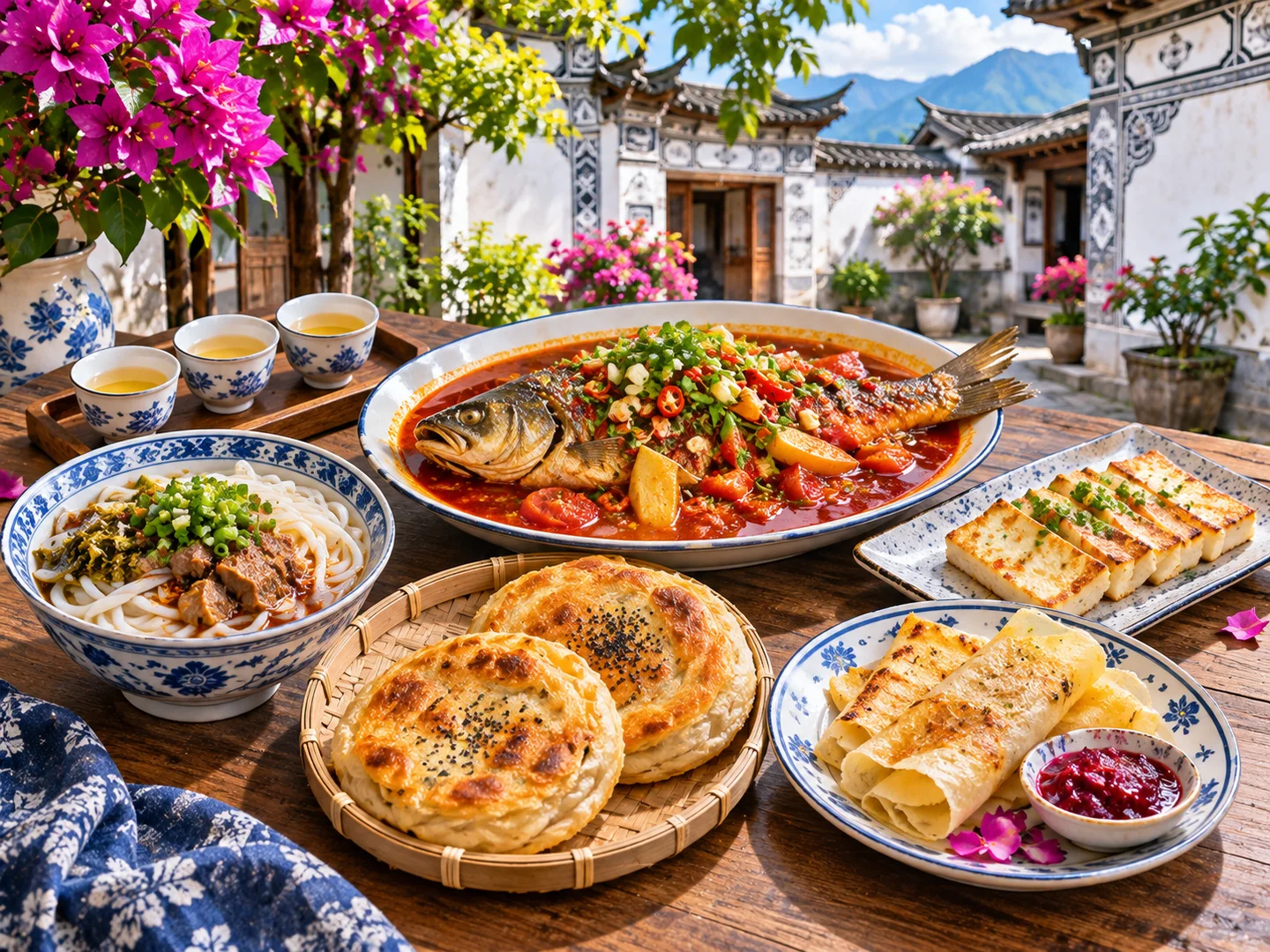
Start with a bowl of ersi (饵丝, ěrsī), discover Bai dairy traditions and Xizhou baba (喜洲粑粑, Xǐzhōu bābā), and save a proper Bai-style meal for dinner. Dali’s regional cooking is as much a reason to visit as the lake.
- Breakfast: Ersi rice strips at North Gate Farmers’ Market.
- Signature main: Sour and spicy fish (酸辣鱼, suānlà yú).
- Street snack: Grilled rushan (乳扇, rǔshàn), a thin milk cheese.
- Cultural experience: Bai three-course tea (白族三道茶, Báizú sāndàochá).
- Shared dinner: Fish or Yongping braised chicken with vegetables and rice.
- Daily food budget: ¥50–100 for simple meals or ¥100–200 for mid-range dining.
- Safety: Avoid raw pork and unfamiliar wild mushrooms.

Dali is an excellent place to discover a side of Yunnan cooking that goes beyond crossing-the-bridge noodles. Start in the old town, then use a village visit to sample specialties in their home region. This guide complements our Dali travel guide.
Understanding Dali’s Bai Cuisine
Sour flavors, chili, rice staples, dairy and seasonal produce are recurring features of Bai cooking. Sour papaya gives some fish dishes their characteristic tang, while preserved vegetables and fruit provide contrasting textures and tastes. Family-style meals encourage sharing rather than ordering an individual main course for every diner.
Dali City is only part of Dali Bai Autonomous Prefecture. Xizhou is within the city; Weishan, Yongping, Binchuan and Eryuan are separate counties in the prefecture. Their specialties are available in many Dali restaurants, but each has its own local background. A 2026 Ministry of Culture and Tourism heritage food route connects Dali Old Town, Xizhou and Weishan, highlighting regional cooking and crafts together. [1] For a broader picture see our Yunnan food guide.
Must-Try Local Dishes in Dali
Dali Sour and Spicy Fish
Sour and spicy fish is a signature Bai meal, especially when sharing a table. Cooks may combine fish with sour papaya, fresh chili, tofu, garlic and scallions; some use tomatoes or potatoes. The acidity is as important as the heat, so ask for less chili if you prefer a milder dish. Fish is frequently served whole, with bones, rather than as boneless fillets.
Budget ¥60–150 or more per dish, depending on species and size. Ask whether the listed price covers the whole dish or a unit of weight. Do not assume that fish served beside Erhai Lake was caught there. Confirm the source and total price before ordering, especially if a server invites you to choose a live fish.
Clay-Pot Fish and Haishao Fish
Clay-pot fish (砂锅鱼, shāguō yú) refers to a cooking and serving style, often with broth and accompanying vegetables. It may overlap with sour and spicy preparations, and recipes vary. Haishao fish (海稍鱼, Hǎishāo yú) is associated with Binchuan County, not specifically Dali Old Town. Expect a regional fish dish with its own seasoning style. Allow ¥80–160 or more per pot as a planning estimate, and check whether extras are included.
Yongping Braised Chicken
Yongping braised chicken (永平黄焖鸡, Yǒngpíng huángmèn jī) comes from Yongping County in Dali Prefecture. The chicken is cooked with aromatic seasonings and often chili, giving it a concentrated savory flavor. It is a useful alternative to a whole fish for diners who want a shared meat dish. Bone-in pieces are common. A serving may cost ¥60–150, depending on size and restaurant.
Local Vegetables and Bai-Style Home Cooking
Look for aquatic greens and taro soup (海菜芋头汤, hǎicài yùtou tāng), seasonal greens and broader Yunnan favorites such as mashed potatoes (老奶洋芋, lǎonǎi yángyù) or tomato, chili and minced pork stir-fry (红三剁, hóng sānduò). A vegetable name does not guarantee a vegetarian dish: soup may contain meat stock or cured pork.
For a balanced meal for two, choose one fish or chicken dish, one vegetable and one smaller side. Rice is sometimes charged separately.
| Example shared meal | Estimated cost |
|---|---|
| Sour and spicy fish | ¥60–100 |
| Seasonal vegetables | ¥15–30 |
| Rubing cheese or tofu | ¥20–40 |
| Rice for two | ¥5–10 |
| Total for two | ¥100–180 |
This is an illustrative order, not a restaurant package. For a solo meal, order a bowl of noodles or ask whether the restaurant offers a small portion of its main dish. A full fish may be more food than one traveler wants. A larger fish, premium ingredients or a lake-view venue can increase the bill.
Dali’s Traditional Rice Dishes and Breakfast
Ersi Rice Noodles
Ersi are made from processed rice dough cut into strips, giving them a relatively dense, chewy texture. Try them in soup with braised meat, pickled vegetables and scallions, or stir-fried for a more substantial meal. A bowl generally fits a ¥10–20 planning budget. Breakfast shops often let you add condiments yourself, which is useful if you are unfamiliar with local chili sauces. Ask whether the broth contains meat before ordering.
Weishan Slow-Cooked Pork Ersi
Weishan slow-cooked pork ersi (巍山耙肉饵丝, Wēishān páròu ěrsī) pairs rice strips with tender pork and rich broth. It is a specialty of Weishan County recognized in the national heritage food route. [1] You can look for it in Dali City or make breakfast part of a visit to Weishan Ancient Town. Our guide to day trips from Dali helps plan the excursion. Allow ¥12–25 per bowl. The slow-cooked topping is one of the main differences from an ordinary bowl of ersi.
Grilled Rice Cakes
Grilled erkuai (烧饵块, shāo ěrkuài) is a portable breakfast made from a thin rice cake toasted and folded around sauce or fillings. Choose sweet or savory seasoning; additions may include fried dough, pickles or sausage. A simple serving costs about ¥5–15. It is a good choice when you have an early sightseeing start and do not want to sit down for soup.
Cold Chicken Rice Noodles
Cold chicken rice noodles (凉鸡米线, liángjī mǐxiàn) combine rice noodles with shredded cooked chicken and tangy seasonings. Some versions contain walnuts or other nuts. Budget ¥10–20 for a bowl and choose a busy stall with good food handling, particularly in warm weather. The dish is a lighter lunch option than a shared cooked meal.
Savory Pea Porridge and Pea Jelly
Savory pea porridge (稀豆粉, xīdòufěn) is a warm, thick preparation often paired with fried dough sticks. Pea jelly (豌豆凉粉, wāndòu liángfěn) is set, sliced and usually dressed with cold seasonings. Both provide a change from rice-based breakfasts. Check toppings if avoiding animal ingredients.
| Menu term | Chinese | Main distinction |
|---|---|---|
| Ersi | 饵丝 | Chewy strips cut from rice dough |
| Erkuai | 饵块 | Sheets or blocks of prepared rice |
| Mixian | 米线 | Rice noodles, generally smoother |
| Cold chicken mixian | 凉鸡米线 | Cold noodles with chicken and dressing |
For a regional contrast, compare Kunming food, where small-pot rice noodles are a prominent everyday choice. See breakfast in China for general morning meal customs.
Xizhou Baba, Rushan and Local Snacks
Xizhou Baba
Xizhou baba is a layered, baked wheat flatbread associated with Xizhou’s market-town food culture. Savory versions often contain minced pork and scallions, while sweet ones may contain rose sugar or brown sugar. Buy one freshly baked near Sifang Street, preferably when you are already exploring the town. A serving typically fits a ¥5–15 budget. Traditional recipes may use lard for the pastry layers, including sweet versions. Ask rather than guessing from the filling. See the Xizhou visitor guide.
Grilled Rushan Cheese
Rushan, sometimes translated as milk fan, is a thin sheet of cow’s milk curd stretched and dried into a distinctive shape. Dengchuan in Eryuan County is a major production center, supported by local dairy farming. [2] Vendors grill the sheets until pliable or lightly crisp, then roll them with rose jam or another sweet topping. Fried rushan is another common preparation. Budget ¥5–15 for a street serving. It contains milk proteins and is not reliably lactose-free. If you have a milk allergy, do not eat it.
Rubing Cheese
Rubing (乳饼, rǔbǐng) is a firm fresh cheese formed into blocks, usually made from goat’s milk or cow’s milk. It can be pan-fried and served as a savory side or cooked with other ingredients. Unlike rushan, it is generally served in slices or chunks. Allow ¥20–45 per dish. Confirm which milk was used if that matters to your diet.
| Feature | Rushan | Rubing |
|---|---|---|
| Shape | Thin sheets | Firm blocks |
| Milk | Usually cow’s milk | Goat’s or cow’s milk |
| Typical serving | Grilled or fried snack | Pan-fried or cooked side dish |
| Planning price | ¥5–15 per serving | ¥20–45 per dish |
Both are dairy products, not tofu. If you are ordering from a menu with photographs, ask whether a white rectangular slice is cheese or a soybean product before assuming it is suitable for your diet. Their appearance alone is not a reliable indicator of ingredients, and goat’s milk is not a safe substitute for everyone with a cow’s milk allergy.
Carved Plums and Other Local Sweets
Carved plums (雕梅, diāoméi) are preserved green plums with decorative cuts and are associated with Eryuan. Weishan is known for preserved fruits and snacks such as niudagun (牛打滚, niúdǎgǔn), a glutinous rice preparation often dusted with soybean flour. Rose flower cakes (鲜花饼, xiānhuā bǐng) are widely available throughout Yunnan rather than exclusive to Dali. These are useful small purchases when browsing traditional markets. Buy a small portion first if unfamiliar with the flavor. For gifts, prefer sealed packages with ingredient labels and check your destination’s rules for bringing food home. Check fillings, dairy, nuts and animal fats before buying packaged or loose sweets.
Bai Three-Course Tea and Local Drinks
Bai Three-Course Tea
The three-course tea ritual expresses hospitality through three contrasting cups, traditionally associated with life’s bitterness, sweetness and lasting reflection. [3]
| Course | Typical character |
|---|---|
| First (苦茶, kǔchá) | Bitter roasted tea |
| Second (甜茶, tiánchá) | Sweet tea, sometimes with brown sugar, rushan and walnuts |
| Third (回味茶, huíwèichá) | Lingering flavor, often honey, ginger or Sichuan peppercorn |
Recipes vary. Ask in advance about milk, nuts and honey, especially if booking a cultural performance. Allow ¥20–80 or more per person, depending on the venue and whether other activities are included. Xizhou and Zhoucheng are sensible places to combine tea with a courtyard or craft visit. Read about tea experiences in China for context.
Xiaguan Tuocha and Yunnan Coffee
Xiaguan tuocha (下关沱茶, Xiàguān tuóchá) is a locally associated compressed tea, often shaped like a small bowl. Try a brewed cup before buying a block to take home. Yunnan-grown coffee is easy to find in old-town and lakeside cafes. A ¥20–50 coffee and snack break can fit comfortably between village sightseeing stops. For wider context see coffee experiences in China.
Food Safety: Raw Pork and Wild Mushrooms
Is Shengpi Safe to Eat?
Shengpi (生皮, shēngpí) is a traditional preparation that can involve pork or skin remaining raw or insufficiently cooked after surface treatment. It is not a recommended tasting for travelers. The CDC identifies raw and undercooked contaminated pork as a risk for trichinellosis; curing, smoking and similar treatments alone do not reliably eliminate the parasite. [4] Vinegar and chili dips cannot make raw pork reliably safe. Choose thoroughly cooked meat instead.
Wild Mushroom Season and Poisoning Risks
Wild mushrooms are particularly available during the rainy season. Do not pick, identify or cook unfamiliar wild mushrooms yourself. Some toxins remain dangerous even after cooking. [5] A dish made with cultivated mushrooms is a more prudent choice for visitors unfamiliar with local species. If poisoning is suspected, seek emergency medical care immediately; in China call 120. Do not wait for symptoms to resolve or induce vomiting unless instructed by medical professionals.
Are All Local Fish Caught in Erhai Lake?
No. Dali’s September 2026 ecological control announcement specifies licensed fishing operations, with planned periods of September 15–October 8 and November 20–December 5 for small non-native fish and October 10–30 for carp, crucian carp, silver carp and bighead carp. Authorities may adjust operations. [6] This is not permission for tourists to fish or a guarantee of restaurant supply. Ask where the fish came from.
Where to Eat in Dali
North Gate Farmers’ Market
North Gate Farmers’ Market (北门农贸市场, Běimén Nóngmào Shìchǎng) near Boai Road is a practical first stop for breakfast and local produce. Aim for 8–10 a.m. and allow 45–90 minutes. Try one bowl of ersi, then browse fruit and snacks; early vendors may sell out before noon. These are suggested visiting hours rather than confirmed opening hours for every stall. See visiting food markets in China.
Renmin Road and Fuxing Road
Renmin Road (人民路) is convenient for dinner, cafes and evening snacks. Fuxing Road (复兴路) and surrounding lanes offer more opportunities to browse bakery shops and simple noodle restaurants. Prices vary even within the same street. Look at the menu and portions before deciding rather than dismissing all main-street restaurants as tourist traps. Our Old Town visitor guide helps you combine meals with sightseeing.
March Street Market
March Street (三月街, Sānyuè Jiē) is west of the old town near Cangshan Gate. Its traditional regular market days fall on the second, ninth, sixteenth and twenty-third days of each lunar month. The annual March Street Festival traditionally runs from the fifteenth to the twenty-first day of the third lunar month. [7] These are lunar dates, not Gregorian dates. Confirm current arrangements before planning a visit. Look for produce, grilled milk fan and cold chicken noodles alongside regional specialties. See the best time to visit Dali for seasonal planning.
Xizhou and Zhoucheng
Xizhou is a natural place for baba and a Bai-style lunch. In Zhoucheng, combine a tea experience with a tie-dye workshop rather than making a separate trip just for a snack. Plan a meal around the villages you are visiting, and confirm the afternoon opening hours of any particular workshop or courtyard.
Shuanglang, Lakeside Villages and Xiaguan
Shuanglang and other lakeside settlements suit a leisurely meal with a view. Check the menu, especially the unit price for whole fish, before taking a table. Xiaguan has everyday urban dining, but if you are staying in the old town there is little reason to cross town solely for an ordinary meal. Use our Dali transportation guide and where to stay in Dali to choose nearby options.
How to Plan a Food Day in Dali
A Food Day in Dali Old Town
| Suggested time | Experience |
|---|---|
| 8–9:30 a.m. | North Gate Market breakfast: ersi or grilled erkuai |
| Noon–1 p.m. | Cold chicken rice noodles or a simple lunch |
| 3–4 p.m. | Grilled rushan and Yunnan coffee |
| 6–7:30 p.m. | Shared Bai dinner with fish, cheese, vegetables and rice |
Leave time for sightseeing between meals; there is no need to order every item. Use the things to do in Dali guide to fill the gaps with sights within walking distance.
A Bai Food and Culture Day in Xizhou
Start with freshly baked baba, explore the market and traditional courtyards, then have a shared lunch. Continue to Zhoucheng for tie-dye and tea, returning to your base for dinner. Either food route fits into a three-day Dali itinerary or a five-day Dali itinerary without adding a dedicated eating day.
How Much Does Food Cost in Dali?
All prices in this guide are planning estimates in Chinese yuan (CNY), not live menus.
| Meal | Estimated cost |
|---|---|
| Local breakfast | ¥8–20 per person |
| Noodle lunch | ¥10–25 per person |
| Street snack | ¥5–15 per item |
| Coffee and dessert | ¥20–50 per person |
| Casual Bai dinner | ¥40–90 per person |
| Shared fish or chicken | ¥60–150+ per dish |
| Three-course tea | ¥20–80+ per person |
| Upscale lakeside meal | ¥100–250+ per person |
Budget ¥50–100 per person per day for simple meals, ¥100–200 for mid-range dining or ¥200–400+ for upscale food experiences. Two people eating at mid-range prices for three days should allow ¥600–1,200 total. This excludes transportation, accommodation and tickets. A jin (斤, jīn) equals 500 grams in mainland China; confirm fish or mushroom pricing and total weight before ordering. See the Dali travel budget.
Ordering Food and Dietary Requirements
How to Order Local Food in Dali
Show the Chinese phrases to restaurant staff. See our Chinese menu guide and ordering food in China for additional help.
| English | Chinese |
|---|---|
| One bowl of ersi, please. | 请给我一碗饵丝。 |
| One sweet and one savory baba, please. | 喜洲粑粑,甜的和咸的各一个。 |
| Less chili, please. | 请少放辣椒。 |
| Is the fish priced per fish or by weight? | 鱼是按条卖还是按斤卖? |
| How much is this whole fish? | 这条鱼一共多少钱? |
| Please cook the meat thoroughly. | 请把肉完全煮熟。 |
| Does this contain lard? | 这个里面有猪油吗? |
| Does this contain milk or nuts? | 这个里面有牛奶或坚果吗? |
Vegetarian and Vegan Food in Dali
Look for dedicated vegetarian restaurants in the old town. Check the entire preparation, not only the main ingredient.
| Food | Ingredients to check |
|---|---|
| Xizhou baba | Lard, pork filling |
| Ersi | Meat broth and toppings |
| Pea jelly | Minced meat, animal fat |
| Vegetables | Lard, meat stock, oyster sauce |
| Rushan and rubing | Milk |
| Three-course tea | Dairy and honey |
Our vegetarian food guide and vegan food guide explain the differences in more detail.
Food Allergies, Gluten-Free and Halal Dining
Milk, walnuts and other nuts may appear in snacks and tea. Wheat is used for baba, and rice-based dishes can contain wheat-based soy sauce or encounter shared utensils. For serious allergies, confirm ingredients and cross-contact with staff and avoid food if reliable confirmation is unavailable. Consult our food allergy guide and gluten-free dining guide. For halal dining, seek clearly identified halal restaurants and confirm meat sourcing and cooking fat; a beef dish alone does not establish halal status.
FAQs About Dali Food
What food is Dali best known for?
Dali is especially known for sour and spicy fish, grilled rushan, Xizhou baba, ersi and the Bai three-course tea ritual.
What is the best food market in Dali?
North Gate Farmers’ Market is a convenient first choice for breakfast. March Street is a worthwhile alternative when your visit coincides with a traditional market day.
Is Dali food very spicy?
Some local dishes use substantial chili, but you can request less heat or choose cheese, sweet baba and mild vegetable dishes. Sourness is another characteristic flavor.
Is shengpi safe for tourists to eat?
Raw or undercooked pork can carry parasites and other pathogens. Avoid raw or insufficiently cooked shengpi and choose thoroughly cooked local meat instead.
How much does food cost in Dali?
Allow ¥50–100 per person per day for simple local meals or ¥100–200 for mid-range dining. Upscale meals can cost considerably more.
Sources
[1] Ministry of Culture and Tourism. Dali intangible heritage food tour, February 2026
[2] Dali Daily. Dengchuan rushan production, February 2026
[3] Dali Daily. Bai three-course tea and local heritage, June 2026
[4] CDC. How to Prevent Trichinellosis
[5] National Capital Poison Center. Wild mushroom poisoning prevention
[6] Dali Erhai Management Bureau. 2026 ecological fish control announcement, September 10
[7] Yunnan Publicity Department. March Street market and lunar dates





