

Quick Answer: How Do You Eat Gluten-Free in China?
Choose food whose ingredients and preparation you can verify. For celiac disease, ask about cross-contact as well as anything made from wheat, barley or rye.
- Start simple: Ask about plain rice or another plain dish with ingredients you can verify.
- Check flavoring: Ask about soy sauce, stock, marinades, coatings and seasoning blends.
- Check prep: Ask whether the kitchen can use clean cookware and separate cooking water or oil.
- Communicate: Show a Mandarin note that states your exact requirement.
- Prepare a backup: Carry a meal or snack you can eat if the kitchen cannot confirm the details.
A dish’s name or an English menu translation cannot establish how it is prepared.
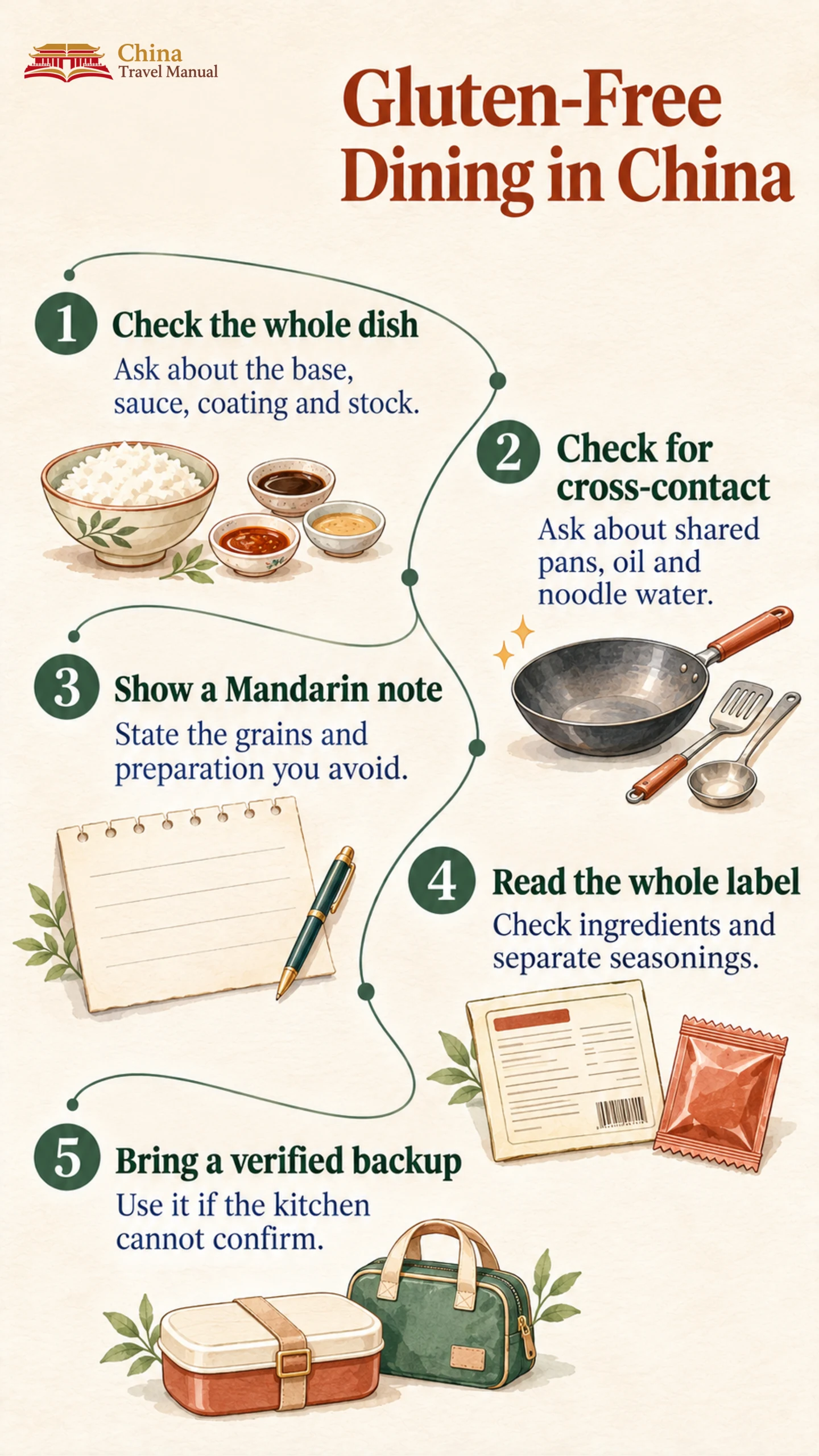
A bowl of rice or noodles can look straightforward, but the sauce, coating and shared cookware affect whether it suits a gluten-free diet. Use a translated note to ask the kitchen about one dish at a time. Arrange a backup for travel days when you may have fewer options.
Check the Dish Beyond Its Main Ingredient
Wheat, barley and rye contain gluten. In a prepared dish, those grains can appear in sauces, soups, processed ingredients and toppings as well as noodles or bread.[1] Check the base and anything mixed in. Rice noodles may contain an added flour or use a wheat-containing seasoning. Plain steamed rice can be a useful starting point if you can confirm how it has been prepared and served.
Coeliac UK’s China guide highlights soy sauce (酱油, jiàngyóu) as a question to ask in Chinese restaurants.[2] Ask which sauce the kitchen uses and whether it can check the bottle. Check if the marinade or soup stock already contains it. Ask about flour in a fried coating or in the mixture that binds meatballs. The Chinese menu guide can help you read cooking terms before you ask.
Ask How the Kitchen Prevents Cross-Contact
If you have celiac disease, explain that you need to avoid gluten even when the main ingredients are gluten-free. Gluten can be transferred by equipment, water, oil or utensils used for food that contains it.[1][3] Ask the server to show your note to the person cooking. Check whether the kitchen can use a clean pan, clean utensils and fresh water or oil. If it cannot confirm this, choose a meal you have already verified.
You can show this note if it describes your needs. “我有乳糜泻,不能吃含麸质的食物,包括小麦、大麦、黑麦以及含这些谷物的配料。请用干净的锅和餐具,不要使用煮过普通面条的水或炸过裹面粉食物的油。” It explains that you have celiac disease, cannot eat gluten or ingredients made from wheat, barley or rye, and need clean cookware and utensils. It also asks the kitchen to avoid water used for ordinary noodles and oil used for flour-coated foods. Ask staff for a clear answer before ordering.[1][2][3]
Read the Label Before Buying Packaged Food
Find 配料表 (pèiliàobiǎo), the ingredient list. Check it on the package you will buy, including the label of any separate dressing or seasoning. Read all listed ingredients even when the packet is marketed as rice- or corn-based. If you cannot confirm the product’s contents, choose one you know meets your needs.[1]
| Ingredient terms | Meaning |
|---|---|
| 小麦 (xiǎomài), 小麦粉 (xiǎomàifěn) | Wheat, wheat flour |
| 大麦 (dàmài), 黑麦 (hēimài) | Barley, rye |
| 麦芽 (màiyá), 啤酒 (píjiǔ) | Malt, beer |
| 面筋 (miànjīn), 麸质 (fūzhì) | Wheat gluten, gluten |
| 酱油 (jiàngyóu) | Soy sauce. Check the actual ingredients |
A translation app can help locate words. Keep the original package visible and ask the manufacturer or store if something is unclear. The food markets guide covers shopping options when you want unprepared ingredients instead.
How to Plan a Gluten-Free Meal in China
- Find a place to ask: Contact a restaurant or hotel before arrival when you can.
- Describe your needs: Use a translated note with the grains and preparation you need to avoid.
- Verify the exact dish: Ask about the base ingredient, sauce, seasoning and any premade components.
- Confirm the preparation: Check cooking equipment, shared oil, noodle water and service utensils.
- Carry an alternative: Use a verified meal or snack if staff cannot check the preparation.
Check hotel breakfast in China before paying for a breakfast rate. If a buffet is unsuitable, ask whether the hotel can provide a separately prepared meal.
FAQs About Gluten-Free Dining in China
Are Rice Noodles Gluten-Free?
Check what flour goes into the noodles and how they are cooked. A rice-based noodle dish can still use wheat in a sauce or pick up gluten from shared water or equipment.
Can I Just Ask for No Soy Sauce?
Ask about all sauces, broth, coatings and cooking equipment. If a marinade or stock already contains wheat, leaving out soy sauce at the end will not remove it.
What Can I Do If the Kitchen Cannot Confirm Preparation?
Use a verified backup or try another kitchen that can explain the ingredients and cooking process. Save an option near your accommodation or station before traveling.
Sources
[1] National Institute of Diabetes and Digestive and Kidney Diseases. Eating, diet and nutrition for celiac disease
[2] Coeliac UK. China travel guide and ordering phrases
[3] Celiac Disease Foundation. Dining and social eating with celiac disease





