
Quick Answer: What Should You Eat in Hong Kong?
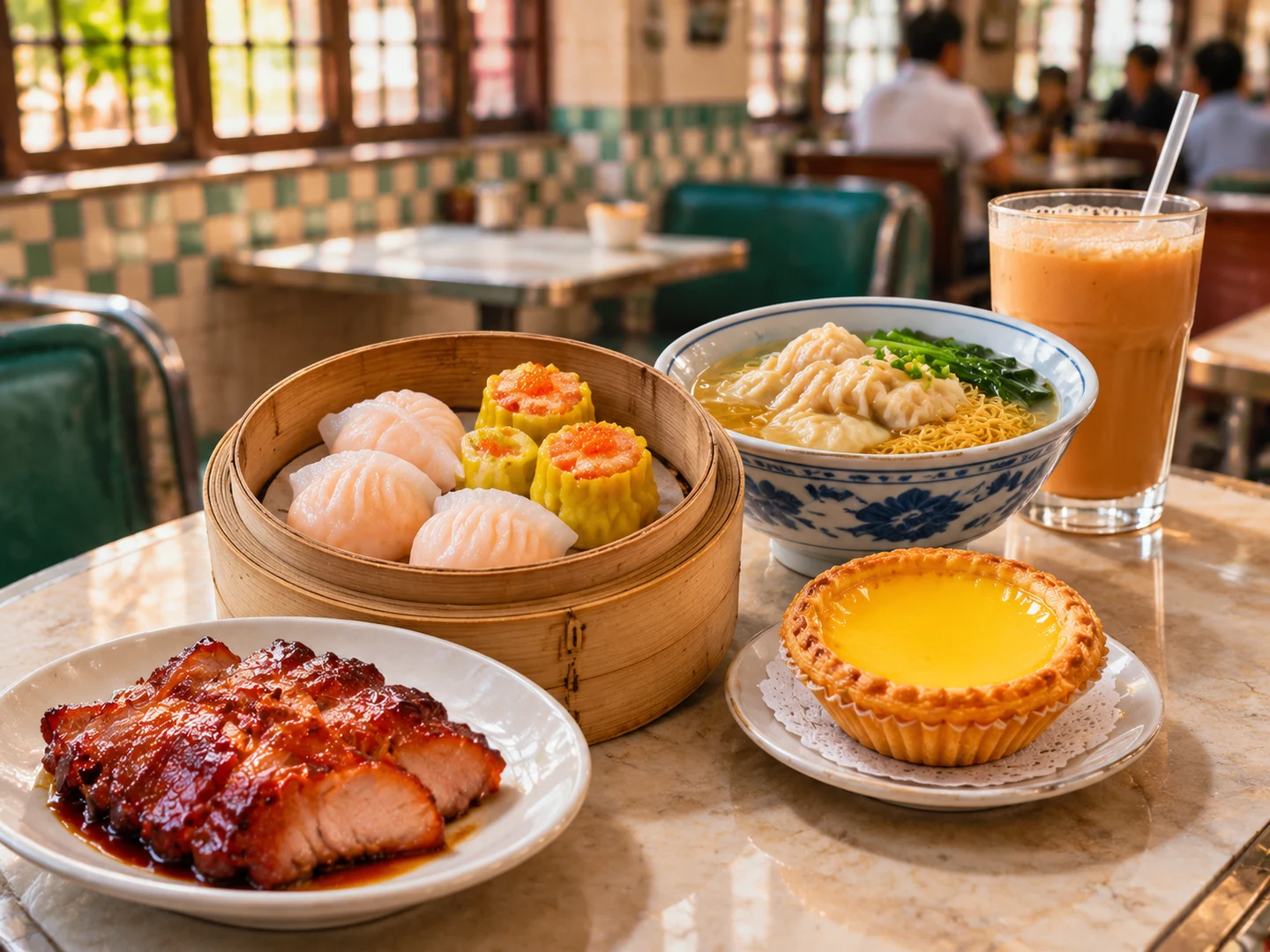
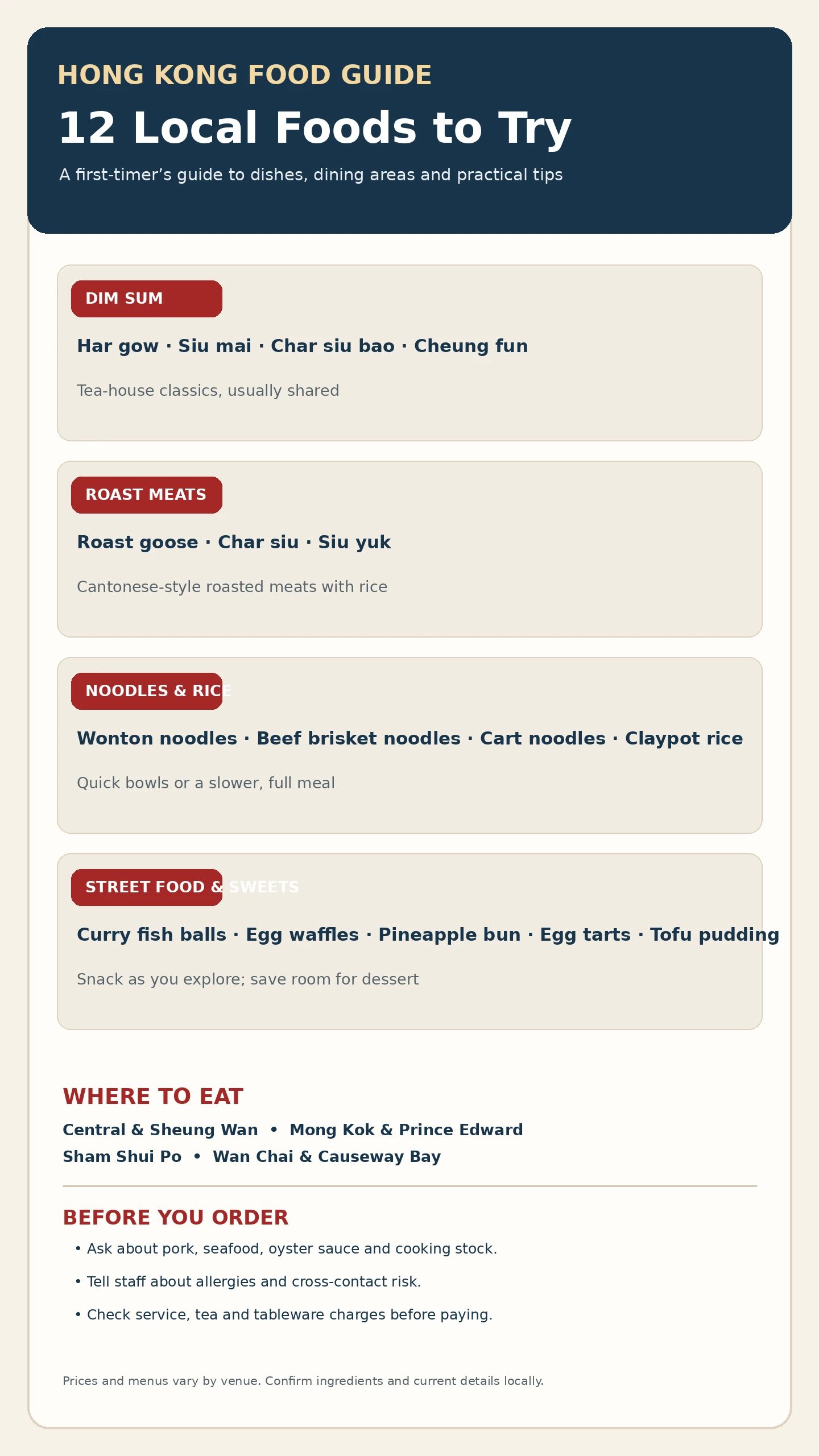
For a first visit, try a mix of dim sum, roast meats, noodles, cha chaan teng comfort food and street snacks. Start with har gow (shrimp dumplings), siu mai and char siu bao at a dim sum restaurant; try roast goose or char siu with rice; and order wonton noodles or beef brisket noodles for a quick local meal. A pineapple bun with Hong Kong milk tea gives you the classic tea-café experience, while curry fish balls and egg waffles are easy street-food picks. Save room for an egg tart or tofu pudding. Central and Sheung Wan offer a broad introduction, Mong Kok is good for snack-hopping, and Sham Shui Po has a more everyday neighbourhood feel. Ask about pork, seafood, sauces and cooking stock if you have dietary restrictions.
| Food experience | What to try | Where it fits |
|---|---|---|
| Dim sum | Har gow, siu mai, char siu bao | Traditional tea house |
| Roast meats | Roast goose, char siu, siu yuk | Roast-meat shop |
| Noodles and rice | Wonton noodles, brisket noodles, claypot rice | Local noodle shop or dinner restaurant |
| Tea-café food | Pineapple bun, Hong Kong milk tea | Cha chaan teng |
| Street snacks and sweets | Curry fish balls, egg waffles, egg tarts, tofu pudding | Markets, bakeries and dessert shops |
Treat price ranges as planning estimates, not fixed menu prices. Check current menus and explain allergies or strict dietary requirements before ordering.
Hong Kong food is rooted in Cantonese cooking but shaped by the city’s own history, working-day routines and international influences. A single day can include dim sum over tea, a roast-meat rice plate, a quick bowl of wonton noodles, a pineapple bun from a tea café and an egg tart from a bakery. The best way to understand the city is to try a few different dining settings rather than chase a long checklist. If you are planning your first visit, start with our Hong Kong travel guide and choose food stops that fit your route.
Understanding Hong Kong Food Culture
Cantonese Roots and Hong Kong’s Local Food Identity
Cantonese cooking provides the foundation for many familiar Hong Kong dishes: steamed seafood, roast meats, soups, rice and noodles. Hong Kong’s local food culture, however, is not simply a copy of food served elsewhere in Guangdong. The city’s long history as an international port and its British-era social history helped shape a distinctive everyday food scene, including cha chaan tengs, local bakeries and hybrid café meals. These are part of Hong Kong’s identity alongside traditional Cantonese restaurants.
Hong Kong food should also not be confused with Macau’s Portuguese-influenced dishes. The two cities share regional ingredients and some culinary traditions, but their signature café foods, pastries and restaurant histories are different. An egg tart in Hong Kong, for example, is not automatically the same style as a Portuguese-style pastel de nata.
Cha Chaan Tengs, Dai Pai Dongs and Yum Cha
Cha chaan tengs are casual Hong Kong tea restaurants. Their menus may combine milk tea, toast, buns, noodles, rice plates and Hong Kong-style versions of Western dishes. They are practical for breakfast or a quick meal. Dai pai dongs are traditional open-air cooked-food stalls associated with wok-fried dishes and a street-side dining atmosphere; the term should not be used for every ordinary street-food shop. Yum cha means going for tea, usually with dim sum. Diners order several small dishes to share, often from a menu or order sheet. These are three different dining experiences, not interchangeable names. The Hong Kong Tourism Board describes cha chaan tengs as a defining expression of the city’s East-meets-West food culture.[1]
Must-Try Hong Kong Dishes
1. Dim Sum: Har Gow, Siu Mai, Char Siu Bao and Cheung Fun
Dim sum is one of the most rewarding introductions to Hong Kong dining. Har gow are shrimp dumplings wrapped in a thin, translucent wheat-and-starch skin. A good wrapper is delicate but holds together, while the filling tastes clean and springy. Siu mai are open-topped dumplings, commonly made with pork and shrimp. Their texture is firmer and more savoury than har gow. Char siu bao are soft buns filled with Cantonese barbecue pork in a sweet-savoury sauce; versions may be steamed or baked. Cheung fun are smooth rice rolls, served plain with sweet soy sauce or filled with shrimp, beef or barbecue pork.
At a tea house, order a few baskets for the table rather than treating each dish as a separate main course. Tea is usually part of the experience, and some venues charge a tea or table fee. If you are dining alone, start with two or three items and add more if you are still hungry. For a wider overview of Chinese regional dishes, see our Chinese food guide.
2. Hong Kong Roast Meats: Roast Goose, Char Siu and Siu Yuk
Roast goose is known for crisp skin, rich meat and a layer of rendered fat. It is often served with plum sauce, which adds sweetness and acidity. Char siu is Cantonese barbecue pork, usually marinated in a sweet-savoury mixture and roasted until the outside is glossy and lightly caramelised. Siu yuk is roast pork belly with a crisp crackling skin and alternating layers of meat and fat.
Roast meats are commonly served over rice or with noodles and vegetables. A single roast-meat rice plate can be a filling lunch. If you do not eat pork, say so clearly: char siu and siu yuk are pork, and mixed roast-meat plates may include them. Roast goose is poultry, but sauces and side dishes should still be checked if you follow strict dietary rules.
3. Hong Kong Noodles and Rice Dishes
Wonton noodles pair thin egg noodles with dumplings often filled with shrimp and pork. The broth is usually light, with a seafood-forward flavour in many traditional versions. Beef brisket noodles are more substantial: brisket is braised until tender and served with noodles in a savoury broth or sauce. Cart noodles let diners choose a noodle type, broth and toppings such as fish balls, radish, beef tendon or offal. Ingredients and preparation vary by shop, so ask what is included rather than assuming every topping is standard.
Claypot rice is a slower meal. Rice is cooked in a clay pot and topped with ingredients such as Chinese sausage, chicken, pork ribs or preserved meats. The rice at the bottom can form a crisp layer that is prized by many diners. It is usually made to order and takes longer than a bowl of noodles. Wonton noodles suit a quick lunch; claypot rice is better when you have time to sit down. For more street-side snack ideas across the country, see our guide to Chinese street food.
4. Street Food and Sweet Treats
Curry fish balls are fish-paste balls simmered or coated in a curry-flavoured sauce. They are a familiar snack at takeaway counters and street-food shops. Egg waffles (gai daan jai) are cooked in a mould that creates connected round pockets. They are crisp outside and soft inside, and are best eaten warm. Both are easy to share while walking, but check the sauce and ingredients if you have allergies.
Pineapple buns do not normally contain pineapple. The name refers to the cracked, golden topping that resembles a pineapple’s skin. A popular variation, bolo yau, is a warm pineapple bun served with a slab of cold butter. Hong Kong egg tarts have a pastry shell and a set egg custard filling; bakeries may offer shortcrust or flaky pastry versions. They are distinct from the Portuguese-style pastel de nata associated with Macau, which typically has a different pastry and a browned, caramelised custard surface. Tofu pudding is a soft soy-based dessert served with syrup, often plain sugar syrup or ginger syrup. Ask about toppings and sweeteners if you have dietary restrictions.
Where to Eat in Hong Kong
Central and Sheung Wan
Central and Sheung Wan are useful starting points if you want to combine classic food with sightseeing. The area has traditional tea restaurants, bakeries, roast-meat shops, dim sum venues and a mix of older cooked-food businesses and newer cafés. It is convenient for a food stop between Central’s major streets and Sheung Wan’s older neighbourhood lanes. Expect busy lunch periods, and do not assume every well-known shop has the same queue or menu throughout the day.
Mong Kok and Prince Edward
Mong Kok and nearby Prince Edward are good for snack-hopping. Look for egg waffles, fish balls, bakery buns, noodle shops and small dessert counters. The area is dense and lively, so it works well when you want to sample several inexpensive items rather than sit down for one long meal. Keep an eye on pedestrian traffic and takeaway queues, especially in the evening.
Sham Shui Po
Sham Shui Po has a strong everyday neighbourhood food scene, including noodle shops, tofu pudding, bakeries and casual local eateries. It is a useful place to try simple foods that residents eat regularly, rather than focusing only on famous restaurant names. Prices and portion sizes vary from shop to shop; check the menu before ordering and carry a payment option accepted by the business.
Wan Chai and Causeway Bay
Wan Chai and Causeway Bay offer a broad mix of Cantonese restaurants, dim sum, roast-meat shops, bakeries and international dining. They suit visitors whose sightseeing or shopping plans already take them to Hong Kong Island. Use the MTR or tram to connect neighbourhoods, and plan meals around the day’s route with our Getting Around Hong Kong guide.
How Much Does Food Cost in Hong Kong?
Hong Kong has everything from inexpensive takeaway snacks to high-end dining. The following ranges are broad planning estimates in Hong Kong dollars, not guaranteed current menu prices. A bakery item or street snack may cost around HK$8–35; a bowl of wonton noodles may be roughly HK$40–70; and a cha chaan teng meal may fall around HK$40–80. Dim sum can be about HK$60–150 per person at casual venues, while roast-meat rice may be around HK$45–90. Claypot rice is often roughly HK$60–120, depending on toppings and portion size. A mid-range restaurant meal may be around HK$100–200 per person before any additional charges.
| Food type | Indicative range |
|---|---|
| Street snacks | HK$10–35 |
| Pineapple bun or egg tart | HK$8–25 |
| Wonton noodles | HK$40–70 |
| Cha chaan teng meal | HK$40–80 |
| Casual dim sum | HK$60–150 per person |
| Roast-meat rice | HK$45–90 |
| Claypot rice | HK$60–120 |
| Mid-range restaurant meal | HK$100–200 per person |
Actual prices depend on location, restaurant type, portion and date. Some restaurants add a 10% service charge; tea, table or condiment charges may also apply. Check the menu and ask about extra charges before ordering. Small shops may prefer cash, while larger businesses often accept cards or mobile payments. For payment planning, see Hong Kong payments and cash.
Vegetarian, Halal and Food Allergies in Hong Kong
Vegetarian and Vegan Food
Vegetarian options are available in Hong Kong, but a vegetable dish is not automatically vegan. Cantonese kitchens may use oyster sauce, dried shrimp, fish sauce, lard, chicken stock or other animal-based seasonings. Tofu can also be cooked with meat or seafood. If you avoid all animal products, explain that you need no meat, seafood, oyster sauce, fish sauce, lard, stock or animal-derived ingredients, and ask the kitchen to confirm. A dedicated vegetarian restaurant is often easier than trying to modify a complex dish. Our vegetarian food in China guide offers broader ordering advice.
Halal Food in Hong Kong
Hong Kong has halal-certification services, including the Incorporated Trustees of the Islamic Community Fund of Hong Kong (often known as the Board of Trustees). Its published scheme describes different categories, including Halal Restaurant, Halal Kitchen Restaurant and Halal Friendly Restaurant. These categories are not interchangeable: the organisation’s descriptions distinguish premises where all food prepared and served is halal from kitchens or dining areas with different arrangements.[2] Do not assume that a restaurant is fully halal because it advertises Muslim-friendly options. Check the current certificate, the exact outlet and its category with the certifying body before visiting. See our halal food in China guide for general guidance.
Food Allergies and Dietary Restrictions
Hong Kong’s Centre for Food Safety lists common allergenic ingredients including crustaceans, eggs, fish, milk, molluscs, tree nuts, peanuts, soybeans, gluten-containing cereals and sulphites. Oyster sauce can contain molluscs; shrimp paste contains crustaceans; fish sauce and some sauces may contain fish. The Centre advises food premises to ask about allergies and confirm ingredients with the kitchen, while preventing unintended cross-contamination.[3]
Tell staff about the specific allergen before ordering, not after the food arrives. Ask whether separate utensils, cookware and preparation surfaces can be used. If staff cannot confirm the ingredients or cross-contact controls, choose another dish or venue. People with severe allergies should not rely on a translated dish name alone. For more detail, read Food Allergies and Dining in China.
How to Order Food in Hong Kong
Useful Cantonese Food Phrases
Hong Kong residents commonly use Cantonese in everyday conversation. The phrases below use Traditional Chinese and Jyutping, a standard romanisation for Cantonese sounds. They are useful prompts, but a written phrase cannot replace a clear allergy conversation with the restaurant.
| English | Traditional Chinese | Jyutping |
|---|---|---|
| Not spicy | 唔辣 | m4 laat6 |
| No pork | 唔要豬肉 | m4 jiu3 zyu1 juk6 |
| No seafood | 唔要海鮮 | m4 jiu3 hoi2 sin1 |
| No peanuts | 唔要花生 | m4 jiu3 faa1 sang1 |
| Vegetarian food | 素食 | sou3 sik6 |
Restaurant Etiquette and Payment
At a dim sum restaurant, use the paper order sheet or ordering system to select dishes; staff bring the baskets to the table. Sharing several small plates is normal. Busy tea houses and casual restaurants may seat different parties together, so do not be surprised if staff ask you to share a table. Check the bill for tea, tableware, condiment or service charges. Payment methods vary: larger restaurants and chains commonly accept cards or electronic payments, while some small shops may prefer cash. For help with menu terms and ordering, see How to Order Food in China and How to Read a Chinese Menu.
Practical Tips for Eating in Hong Kong
- Try a cha chaan teng for breakfast: milk tea with toast, a bun or noodles is a familiar local combination.
- Dim sum is designed for sharing. Order a few baskets first and add more if needed.
- Popular restaurants can be busiest around lunch and dinner; shift meal times when your schedule allows.
- Carry some Hong Kong dollars for small shops, even if you usually pay by card or phone.
- Do not assume every restaurant has an English menu. Save dish names or photos, and use a translation app when needed.
- At seafood restaurants, confirm the price unit, live-seafood weight, cooking charge and any side costs before the order is prepared.
FAQs About Hong Kong Food
What Food Is Hong Kong Most Famous For?
Hong Kong is especially known for dim sum, roast goose, char siu, wonton noodles, milk tea, pineapple buns and egg tarts. These foods reflect both Cantonese roots and the city’s own café and street-food culture.
What Should First-Time Visitors Eat in Hong Kong?
Start with dim sum, a roast-meat rice plate, wonton noodles and a few street snacks such as curry fish balls or egg waffles. Add a pineapple bun with milk tea and an egg tart for a classic tea-café and bakery experience.
Is Hong Kong Food Spicy?
Many familiar Hong Kong dishes are savoury, sweet or mild rather than very spicy. Curry fish balls and some sauces may have heat. Ask for no chili or a mild version, and check sauces if you are sensitive to spice.
Is Hong Kong Expensive for Food?
It can be affordable if you mix bakery items, noodle shops and casual tea restaurants with occasional sit-down meals. Street snacks may cost HK$10–35, while casual meals often cost more. Check current menus and extra charges rather than relying on a fixed daily estimate.
Can Vegetarians and Muslim Travelers Find Suitable Food in Hong Kong?
Yes, but they should check carefully. Vegetarians need to ask about lard, oyster sauce and stock. Muslim travelers should verify the exact outlet’s current halal certificate and category rather than relying on a general “Muslim-friendly” label.
Sources
[1] Hong Kong Tourism Board. 7 Must-Visit Cha Chaan Tengs in Hong Kong; Must-Try Street Food in Hong Kong.
[2] Incorporated Trustees of the Islamic Community Fund of Hong Kong. Categories of Halal Certificates and Halal Outlets.
[3] Hong Kong Centre for Food Safety. Food Allergens and Beware of Allergens in Food.





