
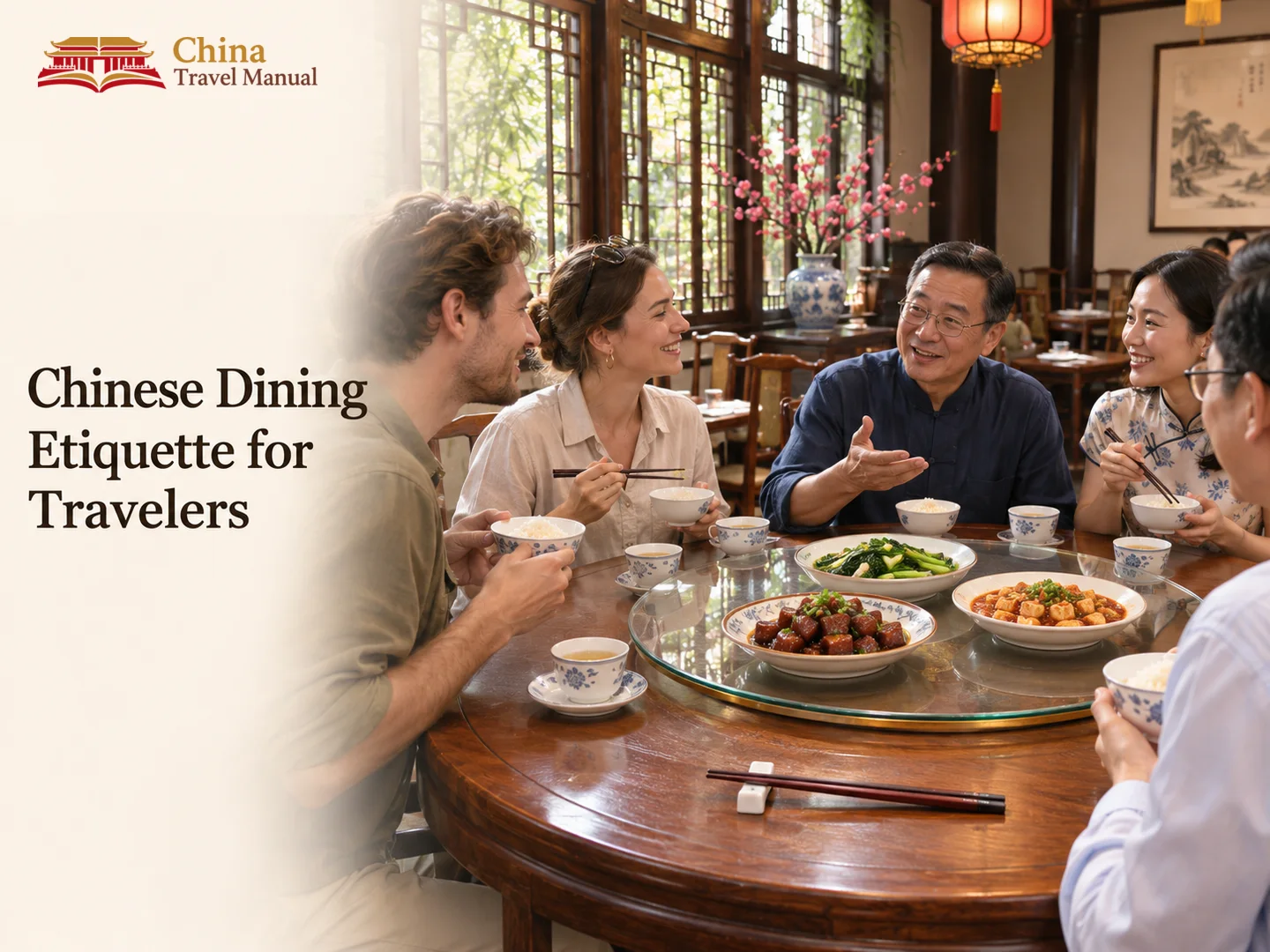
Quick Answer: What Dining Etiquette Should Travelers Know in China?
At a shared meal, follow the host’s cues for seating and starting. Use serving chopsticks (公筷, gōngkuài) or a serving spoon for shared dishes when available.
- Seating: Ask where to sit if someone is hosting or a seating plan is in place.
- Sharing: Take a small portion onto your own plate rather than eating directly from the shared dish.
- Chopsticks: Rest your own pair on a rest or beside the plate between bites.
- Toasts: Ask for tea or another nonalcoholic drink when you prefer it.
- Payment: Check whether the host is paying or the group plans to split the bill.
At a casual meal, observe what people at your table are doing and ask when unsure.

Chinese dining etiquette changes with the group, occasion and venue. For a quick noodle lunch you may only need to find the seat and pay. For a hosted meal, wait for the seating and serving cues. At a shared table, pay attention to the host, how food is served and the utensils set out for everyone.
Read the Setting Before You Sit
At a formal hosted meal, wait for the host or staff to show you where to sit. A seat facing the entrance can be reserved for the host or an honored guest, and arrangements vary with the room and group.[1] Let the host handle the seating order. A simple “我坐哪里?” means “Where should I sit?”
At an ordinary restaurant with friends, ask whether everyone is ready to order and whether dishes will be shared. At a hosted meal, follow the host’s lead when food arrives. If someone asks what you would like, mention dietary needs early so the group can order appropriate dishes. The Chinese menu guide covers how to identify dishes and confirm portion sizes.
Share Dishes With the Serving Utensils
Use the communal utensils to transfer food from the dish to your plate. Keep personal chopsticks for eating. If you cannot identify which utensils are for serving, ask for 公筷 (gōngkuài) or a communal spoon (公勺, gōngsháo). Shared tableware can vary in color, so look for the pair laid with the dish or ask staff.[1][3]
At a table with a rotating tray, wait until someone has finished serving before moving it. Take a little from the part of the dish you can reach, and avoid searching through it with your chopsticks. Rest your chopsticks between bites. The practice to avoid is leaving them standing upright in a bowl of rice. Waving them, pointing them at people or using them to spear food can also draw attention.[2] Ask for a fork if it makes the meal easier.
Handle Tea, Toasts and Offers of Food
If you are pouring tea for others, check whether they would like more before refilling. At a formal or hosted meal, the host may offer a toast. Follow the timing of the group and pay attention when someone speaks. Ask for tea, water or another drink if you prefer not to drink alcohol. “我不喝酒,可以喝茶吗?” means “I don’t drink alcohol. May I have tea?”[1][3]
If someone offers a dish you cannot eat, thank them and explain the ingredient you avoid. Say so before it is served to you or added to the food you are sharing. Use the Chinese phrases for travel guide to prepare short requests. The vegetarian dining guide covers what to ask about broths and sauces.
Ask About the Bill and Payment
If a friend or colleague invited you, check the plan with the host before paying. In a group that plans to split, ask whether the restaurant can take several payments or whether one person should pay and settle with the others. “买单” (mǎidān) is a common way to ask for the bill. Some restaurants process payment at the table and others at a counter. Ask which method they accept or see the China mobile payments guide for setup before going out.
Shanghai’s city guidance says tips are generally not expected at most restaurants, although some venues can include a service charge.[4] Check your bill for the terms of the venue. For a hosted meal, thank the person who invited you and follow the group’s agreement on payment.
FAQs About Chinese Dining Etiquette
Where Should I Put My Chopsticks Between Bites?
Use a chopstick rest if there is one, or put the pair neatly beside your plate. Keep them out of shared dishes when you are not using them.
Can I Decline Alcohol at a Chinese Meal?
You can tell the host early and ask for tea or another nonalcoholic drink. Use that drink to join a toast if you wish.
Is Tipping Expected at Restaurants in China?
In Shanghai, local guidance says tips are generally not expected in most restaurants. Check the bill for a service charge, and ask the venue about its policy if you are unsure.
Sources
[1] Shanghai Municipal Government. Guide to table etiquette in China
[2] Shanghai Municipal Government. Chinese chopstick customs
[3] Shanghai Municipal Government. Chinese tableware terminology
[4] Shanghai Municipal Government. Tipping and service charges at Shanghai restaurants





