
Quick Answer
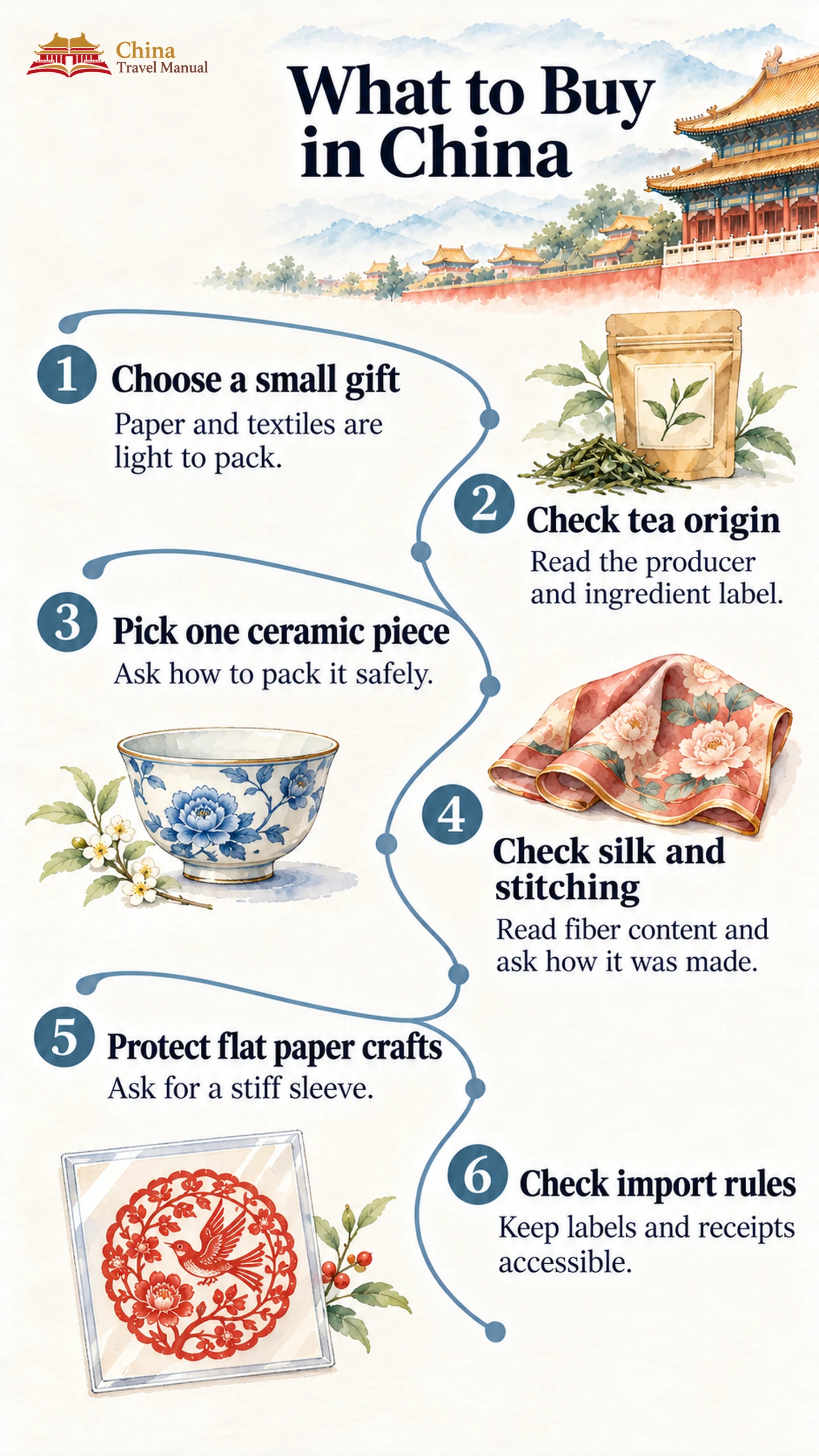
Regional tea, a small porcelain piece, silk textiles and paper crafts are good starting points. Choose a product you will use or a gift connected to somewhere you visited. Check how it was made, whether you can bring it home, and how much space it will take.
- For a light gift. Pick a scarf, a paper craft or a museum-shop print that can travel flat.
- For something useful at home. Buy tea you have tasted or a single ceramic cup you can protect.
- For a gift tied to a place. Ask for the maker, production location and material rather than relying on the shop’s location alone.
For food, plant materials, wildlife products or anything sold as an antique, check the relevant export or import requirements before buying.[5]
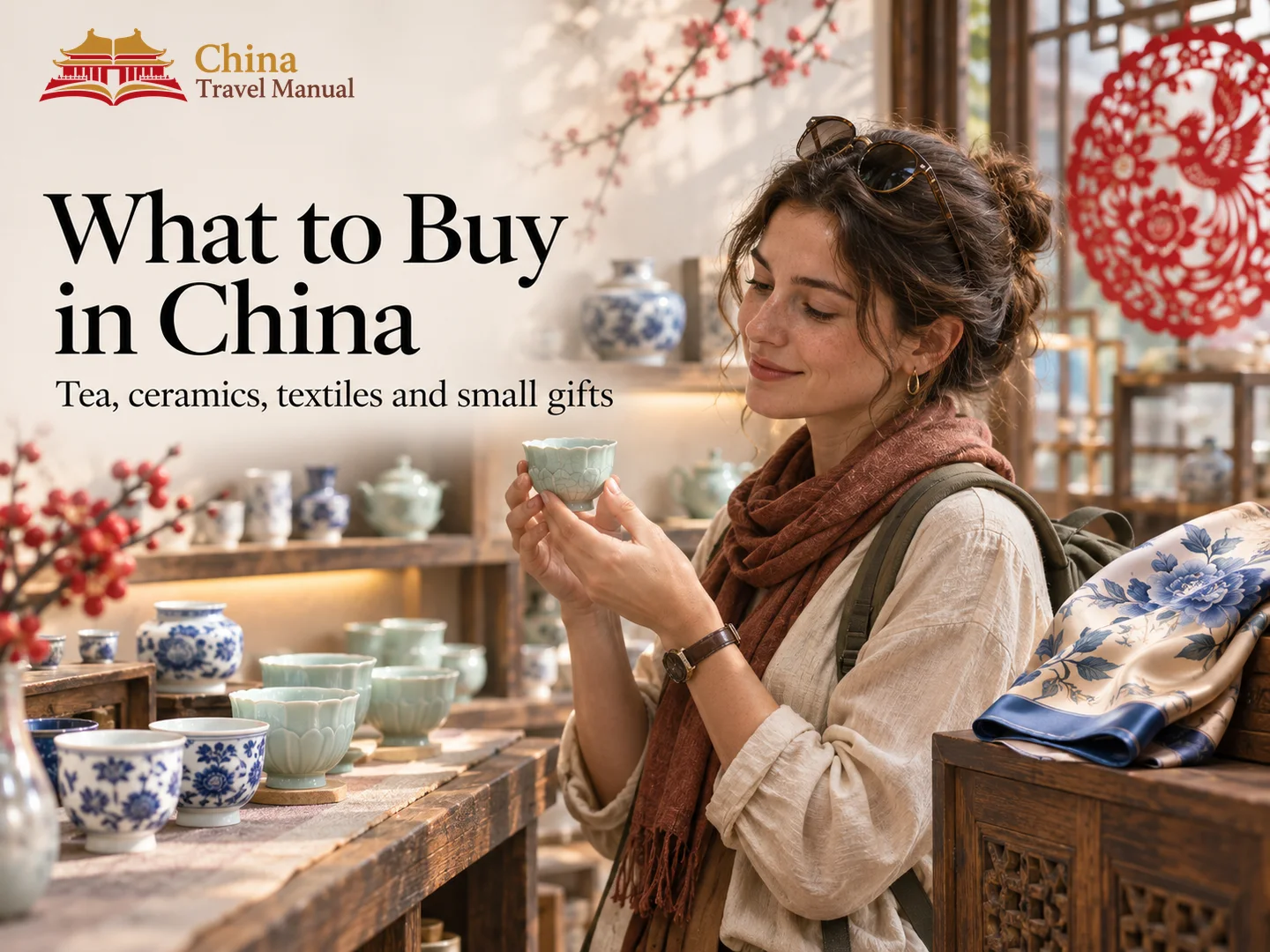
Buy regional products where you can compare makers, check the label and see how the item will travel. A small cup from a ceramics stop, a scarf you will wear or a paper gift connected to a museum visit is usually easier to bring home than a bulky set picked up on your final day.
Pick a Souvenir for How You Travel
| If you want | Look for | Check before you pay |
|---|---|---|
| A light gift for several people | Paper goods, small prints or bookmarks | Size, whether it lies flat and packaging |
| A gift for a tea drinker | A sealed pack from a specialist | Harvest or packing information, origin and ingredients |
| An object you can use regularly | One ceramic cup or small bowl | Food-contact suitability, chips and padding |
| A wearable gift | Scarf or other small textile | Fiber content, finish and care directions |
| A memento of a site visit | Museum shop print or reproduction | What it depicts, edition and maker |
Use the shopping in China guide to choose between a specialist shop, workshop, market and museum store. Ask how the seller handles defects or exchanges before buying a costly piece.
Tea and Regional Food Gifts
In Hangzhou, Longjing tea (龙井茶, Lóngjǐng chá) is a useful starting point if you enjoy green tea. If a seller quotes a premium for West Lake origin, ask how the package identifies the producer and specific origin. The protected West Lake designation refers to origin, so a general Longjing label alone does not establish it. Choose a small sealed pack you have tasted or can share.[1]
Choose packaged food by ingredient list and destination import rules. Prefer original packaging with a readable label and avoid assuming that a sealed product can cross any border. The tea shopping guide covers what to check when comparing shops, harvest information and packaging.[5]
Porcelain, Silk and Paper Crafts
In Jingdezhen, compare small works from current workshops. Look at the rim, base and finish under good light, and ask who made it. For a piece you plan to drink or eat from, confirm intended use and care. Pick one piece with sturdy packaging if you are changing trains or flying with limited space. See the porcelain souvenir guide for ways to compare sizes and finishes.[2]
Suzhou-style embroidery (苏绣, Sūxiù) is a regional needlework tradition. Ask whether the item is hand-stitched, machine-made or a printed design, and ask what the cloth and thread contain. A silk scarf or small textile is easier to inspect and carry than a framed panel. For a silk item, check fiber content and washing instructions before paying.[3]
Chinese paper-cutting (剪纸, jiǎnzhǐ) has many regional forms. For a gift, ask if the piece is cut by hand or reproduced and whether the seller can slide it into a rigid sleeve. A museum print or contemporary paper craft can be simpler to pack than a frame. See the paper-cutting souvenirs guide for what to look for.[4]
What to Check Before Taking It Home
Save the receipt, any maker information and the original ingredient or material label. For fragile pieces, ask the seller to demonstrate the packing. Measure the packed item and check the airline’s size and weight allowances. If you plan to ship it, ask who handles insurance and what customs information will appear on the parcel.
Check your destination’s official rules for food, untreated plant materials, wildlife products and goods you need to declare. For example, U.S. travelers must declare agricultural and wildlife items even if they believe their purchases are allowed. Research export and import requirements before buying an item described as an antique or containing wildlife material.[5]
FAQs About What to Buy in China
What is a good souvenir if I have only a carry-on?
Pick a scarf, an unframed paper craft or a small packaged gift. Check whether its ingredients or materials affect transport or admission at your destination.
Is an expensive gift more likely to be locally made?
Price alone does not establish origin. Ask who made it, how it was made and whether the seller can give you a label, invoice or maker’s record.
Should I buy a full tea set?
Consider one well-packed cup or a compact pair unless you have room and want a set. Check the weight together with the protective packing before committing.
Sources
[1] Hangzhou Municipal Government. Protection regulations for West Lake Longjing tea
[2] State Council Information Office. Jingdezhen’s porcelain heritage and current craft
[3] Suzhou Municipal Government. Suzhou-style embroidery
[4] UNESCO. Chinese paper-cut
[5] U.S. Department of Agriculture. Traveler guidance for tea, spices and other agricultural items





