

Quick Answer
Choose the shop for the job. Malls and department stores are useful for standard retail purchases. Markets are good for browsing and comparing stalls, and specialist shops are a better place to ask about materials, makers or repairs. Confirm the final price, payment method and replacement or return terms before paying.[1][2][3]
| Where to shop | Best for | What to check |
|---|---|---|
| Supermarket or convenience store | Snacks, drinks and supplies | Pack size and unit price |
| Mall or department store | Clothing, cosmetics and branded goods | Size, return terms and card acceptance |
| Market or street stall | Small gifts, secondhand goods and browsing | Condition, price basis and whether bargaining is welcome |
| Museum shop or specialist workshop | Locally connected gifts or a specific craft | Material, maker, receipt and safe packing |
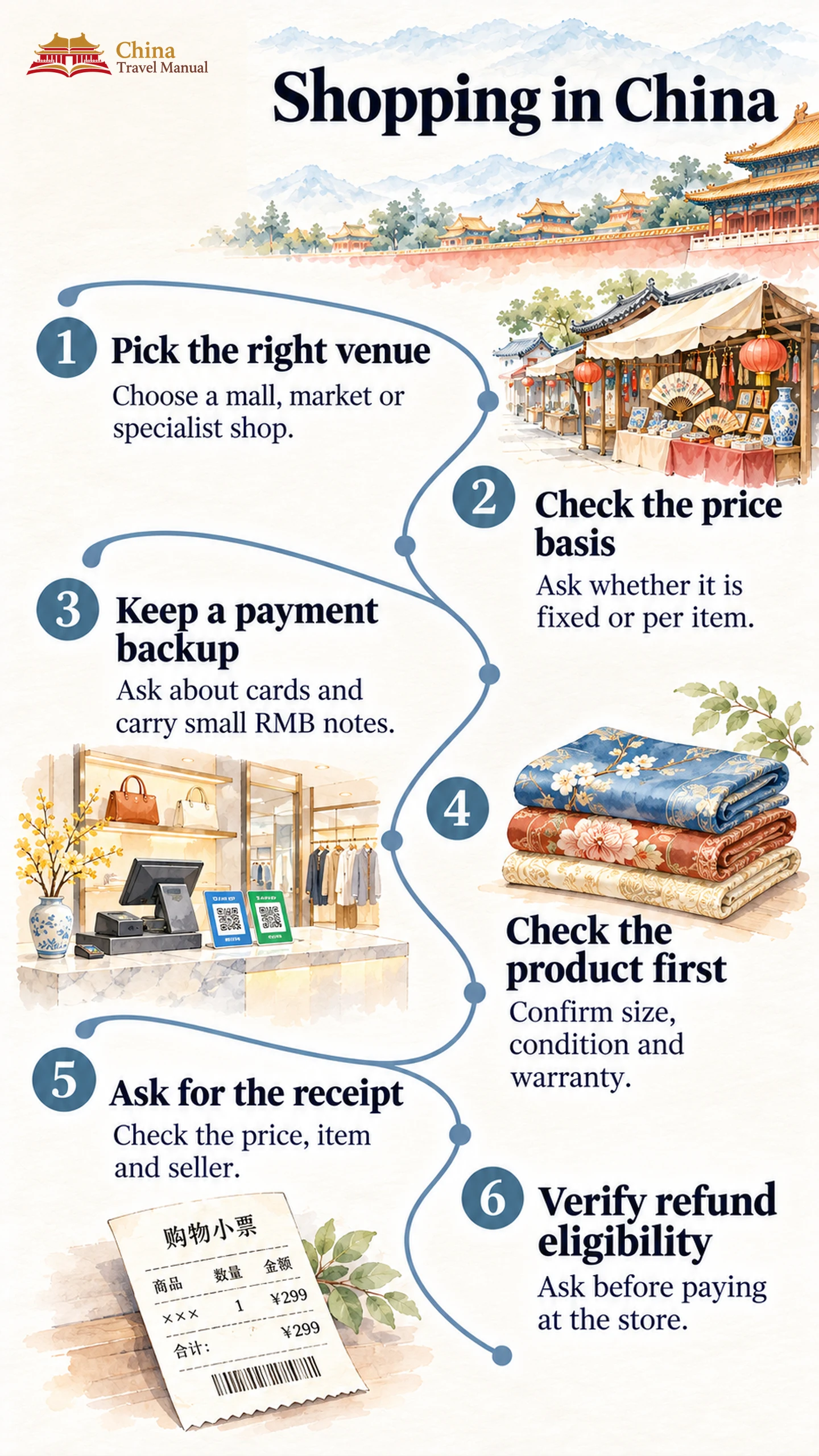
A useful shopping stop in China depends on what you need from the seller. Start with a supermarket for everyday supplies, a mall for a predictable checkout, or a specialist workshop when you want to understand the material and who made it. Keep the visit on the same side of town as the rest of your day.
Where to Shop in China
In Shanghai, a shopping area such as Nanjing Road lets you compare stores and combine errands within one walk. A mall or department store is practical when the group needs several different things or wants to compare fitting rooms and payment options. Supermarkets are usually an easier stop for ordinary travel supplies.[1]
At a market such as Panjiayuan in Beijing, leave time to browse and check the item in daylight or good shop lighting. Inspect individual pieces and ask what is included in the quoted price. If you are looking for gift ideas across different regions, use the China souvenirs guide to narrow the search.[2]
Try a workshop, specialist shop or museum shop when origin matters more than breadth. Ask where the product was made and whether you are buying the display item or a packaged copy. Arrange any longer workshop visit before setting aside an afternoon for it.
Where a Price Is Negotiable
Expect a posted price at a chain shop, supermarket or mall counter. At an independent stall, ask if the seller can offer another price before you start negotiating. If you buy several pieces, ask for the total and confirm what quantity and packaging are included.
Check whether a price is per piece, per set or by weight. A number that looks attractive in isolation can change when you select a larger size or add accessories. The bargaining in China guide explains how to ask without stretching out the exchange.
Paying and Keeping a Receipt
Mobile payment is widely used, but payment options vary by merchant. At a staffed checkout, ask whether the shop takes your network before relying on an overseas card. A few smaller RMB notes are useful when a terminal or phone payment fails. Compare mobile and card options in the foreign cards in China guide.[3]
Ask for an itemized receipt, especially on purchases worth exchanging or taking through customs. Check the seller name, item and amount. For an eligible departure refund, ask the participating store to issue the required invoice and application form. A payment notification alone does not contain the necessary documents.[4]
Check Sizes, Quality and Returns
For clothes and shoes, try the item on or compare the actual measurements against something you already own. Manufacturer and fabric differences can matter more than the printed size. For electronics, check the exact model, voltage, plug and whether service or warranty coverage follows you home.
Before paying for a valuable item, ask how the seller handles defects, returns and exchanges. Confirm the deadline, whether you must return in person, and what proof to show. Keep the original packaging if it matters to the seller’s policy. If you expect a tourist shopping tax refund, confirm store and item eligibility before paying and keep the goods unused through departure.[4]
FAQs About Shopping in China
Is cash useful if I already have a payment app?
Yes. Carry some RMB as a backup, and check card or cash acceptance with staff before a large purchase. A loaded or linked app alone may not help if the battery, signal or checkout is unavailable.[3]
Can I ask for a discount in a department store?
Ask whether a promotion or a multi-item offer is available. Treat a marked retail price as fixed unless the store tells you otherwise.
Should I keep receipts for gifts and clothes?
Keep them for purchases you may exchange, declare or claim a departure refund on. For a refund, request the designated documents at the participating shop.[4]
Sources
[1] Shanghai Municipal Government. Where to shop in Shanghai
[2] Beijing Municipal Government. Panjiayuan Antique Market
[3] State Council of China. Guide to working and living in China
[4] Shanghai Municipal Tax Service. Departure tax refund guide for overseas visitors





