
Quick Answer: What Drinks Should You Try in China?
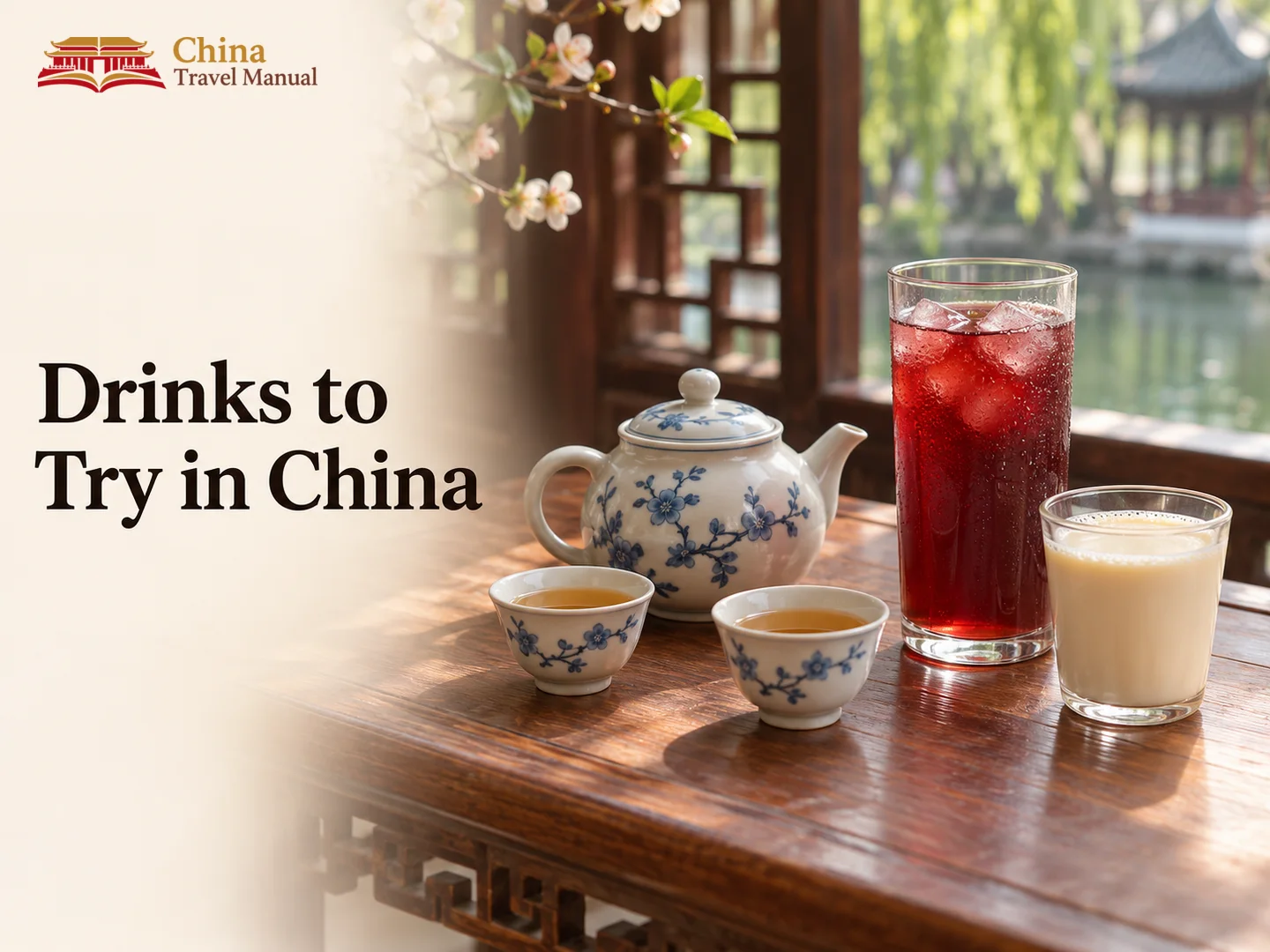
Choose a drink that fits the meal or stop you have planned. Try local tea at a teahouse, soy milk with breakfast or a tart plum drink with a snack.
- Tea: Ask about the local leaves, how the tea is brewed and whether you order by cup or pot.
- Breakfast: Try soy milk and check whether it is sweet, plain or savory.
- Cold drinks: Look for chilled plum drinks or ask if a drink is made fresh.
- Alcohol: Compare beer, fermented rice wine and distilled Chinese spirits.
- Order: Ask about temperature and added sugar before the drink is made.
Check ingredients or alcohol content when you need to avoid something specific.
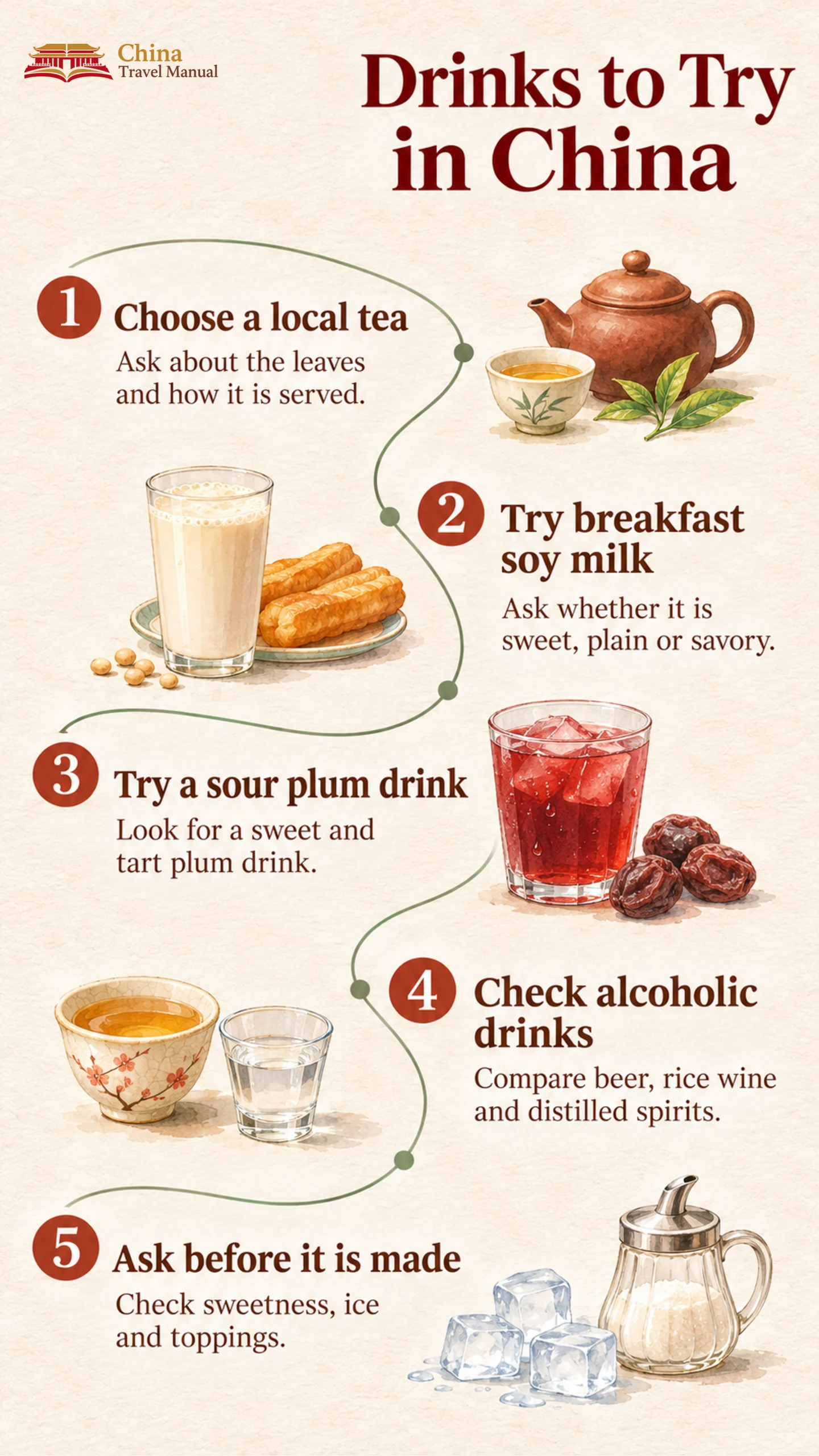
Drinks to try in China range from a pot of tea to share at a table to a paper cup of soy milk at a breakfast stall. The menu terms can tell you the style of drink, and a question about preparation helps you choose the temperature, sweetness or strength you want.
Choose a Tea by Place and Occasion
A restaurant may serve a simple pot of tea with a meal, while a teahouse can offer a choice of leaves or a longer tasting. Ask whether tea is priced per person, pot or serving. If you want to compare teas, choose a place where staff can explain the leaves and brewing. UNESCO’s listing for traditional tea processing describes a range of teas and the role of tea in hospitality and daily social life.[1]
Consider green tea for a lighter-tasting introduction, or ask if the venue offers a local oolong or fermented tea. Ask staff which tea matches your preference rather than judging from the color of the cup. Use tea travel in China or the Chinese teahouse guide to decide how much time to spend on the experience.
Try Soy Milk, Sour Plum Drinks and Freshly Made Options
Soy milk (豆浆, dòujiāng) can be served hot or cold, sweetened or plain. Shanghai also has a savory version that can include dried shrimp.[2] Ask what comes with it if you avoid seafood. Pair a drink with a bun or fried dough, using the breakfast in China guide for other combinations.
A sour plum drink (酸梅汤, suānméitāng) tastes sweet and tart. It can be made with smoked plums and other ingredients such as hawthorn or licorice, depending on the recipe.[3] You may find it bottled or made for service at a shop or restaurant. Freshly made tea drinks can include fruit, milk or toppings, so ask about the base and what can be changed. For beans and cafés, see coffee experiences in China.
Recognize Beer, Huangjiu and Baijiu
Huangjiu (黄酒, huángjiǔ) is fermented grain wine. Shaoxing, in Zhejiang, is known for its yellow rice wine and the techniques used to brew it.[4] Baijiu (白酒, báijiǔ) is a distilled Chinese spirit. Sorghum is used in some versions.[5] Read the bottle or ask about alcohol content when deciding what to order. The baijiu guide covers how the spirit is served and tasted.
Beer (啤酒, píjiǔ) is another option when eating at a casual restaurant or market. Ask whether the menu lists a bottle, glass or draft serving and confirm the size. If you want to join a toast without alcohol, request tea or another drink and follow the group’s timing. See Chinese dining etiquette for hosted meals.
Order the Temperature and Sweetness You Want
For freshly made drinks, ask “可以少糖吗?” to request less sugar or “可以不加糖吗?” to ask if no sugar can be added. A premixed drink, fruit purée or syrup may already be sweetened. Ask for a simpler version or check the ingredients on a bottled drink. To ask about ice, use “请不要加冰.” You can also ask whether the drink is available hot or at room temperature.[6]
A menu may picture toppings that cost extra or come only with one size. Check what is included before paying. Use the Chinese menu guide for price and item questions at restaurants and markets.
FAQs About Drinks to Try in China
What Can I Order if I Do Not Drink Alcohol?
Try tea, plain soy milk, a sour plum drink or a fruit-based drink. Ask about the ingredients if avoiding alcohol matters, especially with a fermented drink or mixed beverage.
Is Soy Milk in China Sweet or Salty?
You may find sweetened, unsweetened or savory versions. Check how the shop serves it and whether the savory version includes any toppings you avoid.
How Do You Ask for No Ice or No Added Sugar?
Ask “请不要加冰” for no ice and “可以不加糖吗?” for no added sugar. Confirm whether the base already contains sugar.
Sources
[1] UNESCO. Traditional tea processing and associated social practices in China
[2] Shanghai Municipal Government. Shanghai salty soy milk
[3] China Daily. Sour plum drink
[4] Zhejiang Government. Brewing technique of Shaoxing yellow rice wine
[5] China Daily. Baijiu distillation at a Wuhan distillery
[6] Shanghai Municipal Government. Chinese names and ordering language for popular drinks





