
Quick Answer: How Should You Try Baijiu in China?
If you want to try baijiu (白酒, báijiǔ), ask for a small pour and read the alcohol percentage. Compare light or rice aroma with a stronger-smelling style when a tasting is available. At a hosted meal, ask about the toast and say if you prefer to sip or use tea.[1][2][3]
- What it is: A distilled Chinese grain spirit, often made with sorghum or rice.
- Start small: Choose a tasting pour instead of buying a bottle for your first try.
- Read the label: Aroma category and alcohol percentage tell you different things.
- At a toast: Make your preference clear before anyone refills your cup.
Choose a pour size before trying to distinguish aroma styles.
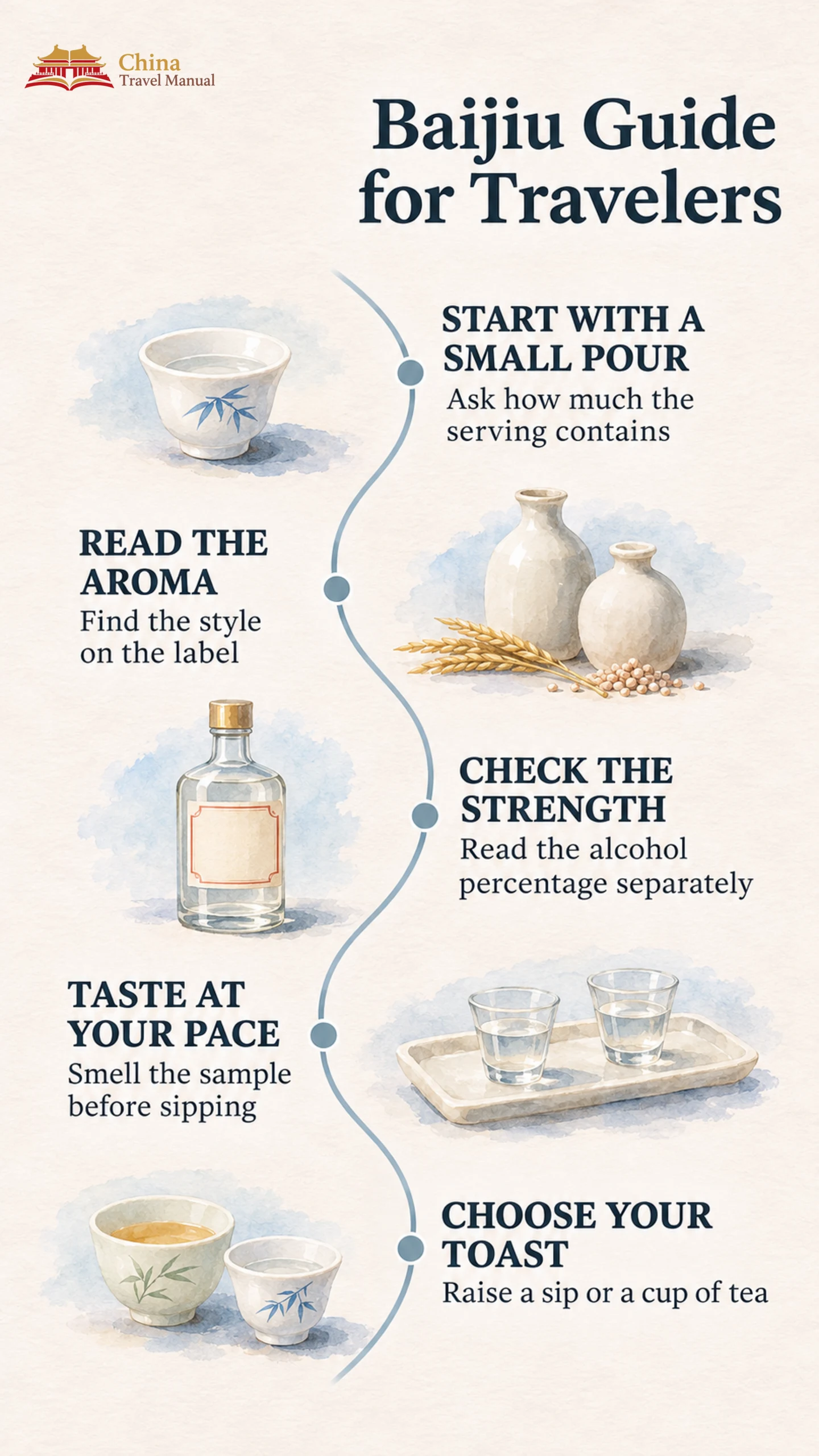
Baijiu can arrive in a tiny cup at a group dinner or in a measured pour at a tasting. The label describes the aroma family and the alcohol strength separately. Learning both makes it easier to recognize what is being served and decide how much you want.
Four Baijiu Aroma Families to Recognize
| Aroma label | Chinese name | Useful tasting cue |
|---|---|---|
| Light aroma | 清香, qīngxiāng | A cleaner grain scent |
| Rice aroma | 米香, mǐxiāng | A softer rice-based character |
| Strong aroma | 浓香, nóngxiāng | A fuller, often fruity scent |
| Sauce aroma | 酱香, jiàngxiāng | A savory, layered aroma |
These are four commonly discussed families. Individual producers and bottles vary, and aroma strength cannot tell you the alcohol percentage. If you have two small samples, smell each before sipping. Sauce-aroma production is particularly associated with Guizhou.[1][2][4]
How to Order a Small Tasting
Ask whether the restaurant sells a small pour, only a bottle, or a tasting of different styles. If the menu is unclear, ask how many milliliters are in the serving and read the alcohol percentage before ordering. Baijiu is a spirit, even if the Chinese name is translated literally as white liquor. If your dinner calls for a different kind of drink, the Chinese beer guide and Chinese wine regions guide explain those options.[1][2][3]
How to Handle a Toast
Gānbēi (干杯) literally refers to emptying the cup, and its tone can vary with the table. If you prefer a sip, use 我喝一小口 (wǒ hē yì xiǎo kǒu), meaning “I’ll take a small sip.” If you prefer tea, try 我用茶敬您 (wǒ yòng chá jìng nín), meaning “I’ll toast you with tea.” State your preference calmly before your cup is refilled.[3]
At a dinner with several rounds, stay with the serving size and drink you choose. You can still raise your cup with the group. The Chinese dining etiquette guide covers more of the meal around the toast.
FAQs About Baijiu
Is baijiu a kind of wine?
It is a distilled grain spirit. A wine label generally refers to a different drink, so check the actual category before ordering.[1][2]
Does light aroma mean less alcohol?
No. Light aroma is a flavor category. Check the percentage on the bottle or menu for strength.[1][2]
Can you decline baijiu at a toast?
Yes. Say that you prefer tea or a small sip and take part with the drink you choose.
Sources
[1] Wine Enthusiast. Baijiu grain spirits and four major aroma families
[2] China Daily. Grain, distillation and aroma descriptions
[3] China Travel Places. Visitor tasting settings and toast etiquette
[4] State Council Information Office. Guizhou’s sauce-aroma baijiu tradition





