
Quick Answer
Before buying a souvenir in China, check what it is made of, whether it can leave China and whether you can bring it into your destination. Ask for an itemized receipt and keep labels or any permits where you can show them.
- Modern gifts: Buy clearly described items and pack fragile pieces with enough protection.
- Food and natural materials: Check the ingredients or species and your destination’s declaration rules.
- Antiques or wildlife materials: Verify the paperwork and permissions before paying. Pick a different gift if you cannot verify what it is or whether you can take it home.
Check the rules for every border where you will clear customs, including any self-managed connection.
A glazed teacup, a tin of tea and an old carved box can raise three different questions. The cup may need better packing. The tea may need an agricultural declaration. The box may need a material or heritage check. Use the guide to what to buy in China for ideas, then check the practical questions before deciding which item to take home.
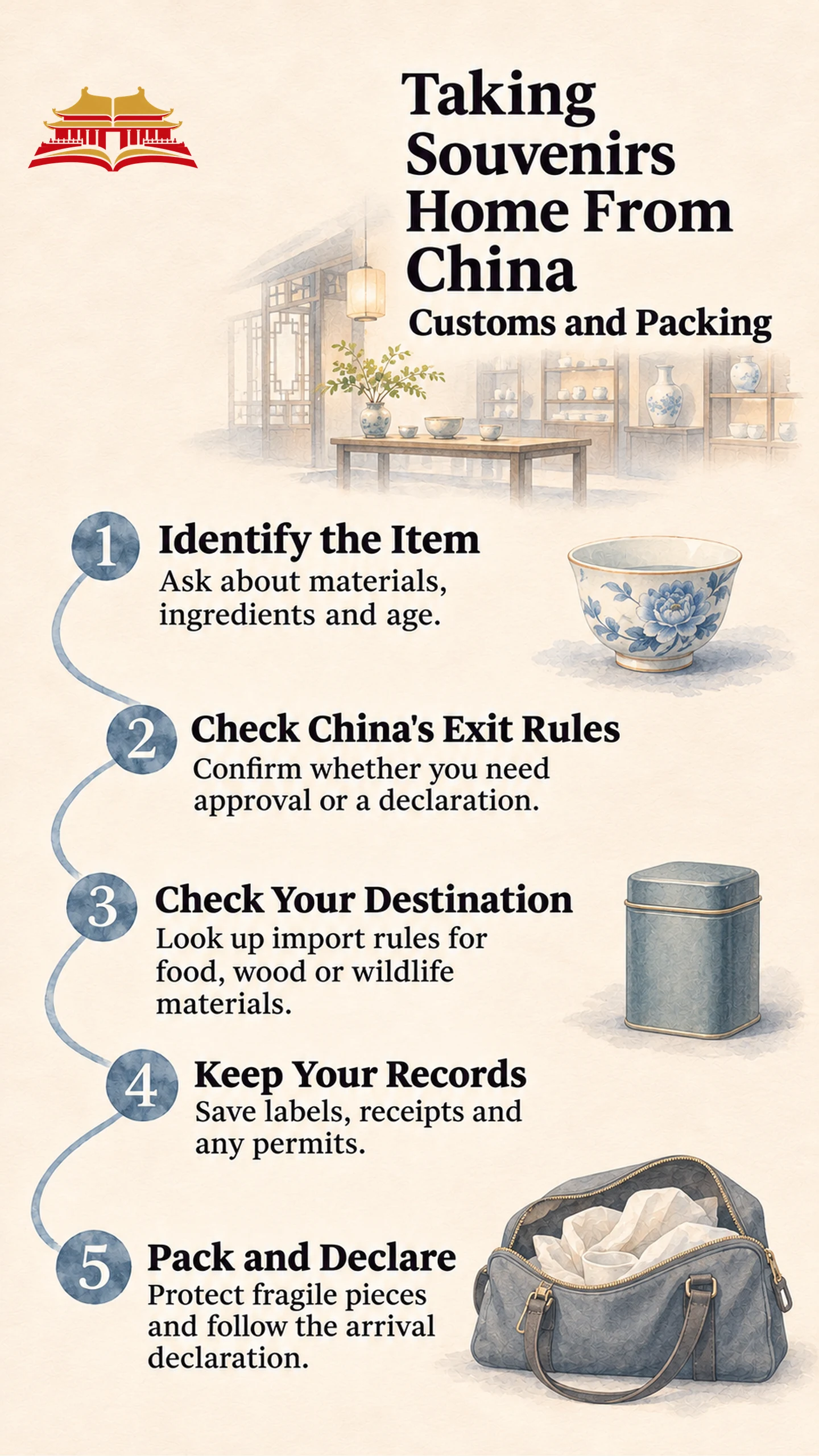
How to Check a Souvenir Before You Buy
Start with the item’s actual material, age and intended use. A generic receipt description like “gift” leaves little information to show an inspector.
- Ask what it is. Get the material, ingredients and claimed age or origin. For something sold as old, ask whether it is a modern reproduction or an older piece.
- Check China’s departure rules. Use the exact item description and the port you will travel through. Ask whether the item needs a declaration, inspection or approval before leaving.
- Check the destination. Find its current traveler rules for the product category and whether you need to declare it, pay duty or obtain a permit.
- Keep the purchase record. Ask for a receipt with the description, price and date. Save a photo of the label, and keep any required certificate with the item.
Common Gifts and What to Check
- Porcelain and modern tea sets: Confirm the age if the seller describes the piece as antique. For new pieces, ask how the seller will wrap handles, lids and spouts. The porcelain souvenir guide covers buying and packing these fragile parts.
- Silk and paper art: When buying silk in China, keep the fiber label and receipt. If you choose paper-cutting souvenirs or calligraphy, ask whether a frame or backing adds raw wood or other materials that need a separate check.
- New seals: Ask which material was used for the seal and its case. If you buy a custom carved seal, ask the seller to write the material on the receipt.
- Tea, snacks and spices: Save the original ingredient label and check the rules for each ingredient. For example, the United States generally allows products made only of tea leaves from the tea plant, but still requires agricultural declarations. Fruit, seed or herb blends can be treated differently.[3] Read the relevant destination rules before buying an unpackaged blend.
- Wood and bamboo: Check species and condition along with any import requirements. Australia, for example, requires travelers to declare wooden and bamboo items and applies import conditions even when the goods are sent by mail.[4] Get a clear description when buying carved, raw or bark-covered pieces.
Antiques, Cultural Relics and Wildlife Materials
China’s cultural relics law prohibits export of specified classes of relics, with limited exceptions. A regulated relic that is permitted to leave has to be assessed by a designated authority and sent through a designated port with export approval. Declare it to Customs whether you carry, transport or mail it.[1] If a seller describes a piece of jade jewelry, a painting or a ceramic piece as old, ask for the item details and check with a relevant authority before buying.
A receipt records the purchase. For an item that needs export permission, check which authority issued the approval and whether it identifies the exact object. Check the China customs guide for how to raise a declaration question before the last day of your trip.
Some animal- and plant-derived products face restrictions, including products from protected species.[2][5] Materials such as ivory, coral, decorative shells and exotic leather need particular care. Ask for the species name and check the rules in both places. If you cannot identify the material or verify required permits, buy a clearly described alternative.
Packing, Shipping and Declaring Your Purchases
Keep delicate objects accessible but protected. Ask the shop to cushion protruding pieces, then wrap separate parts so they cannot knock together and fill empty space in the box. Check cabin size, weight and prohibited-item rules for the whole trip. If your party claims a China departure tax refund, keep the eligible goods available for customs checks as required at the exit port.[6] Fit that stop into your China departure checklist.
If you are shipping purchases home from China, ask the carrier for its written acceptance, service limits and paperwork. An item can still be restricted when it travels in a parcel. Save the item description, value and tracking record.
When you arrive, follow the destination’s declaration process for the product and its value. Show the label, permits or receipts when asked. Check your own allowance and whether it includes gifts, because duty and biosecurity are separate considerations.
FAQs About Taking Souvenirs Home From China
Can I bring Chinese tea home in my luggage?
Check the destination’s entry rules for the actual ingredients, and keep the packaging and label. Plain tea leaves can be treated differently from blends that include fruit, seeds or other plant material.
Does a shop receipt let me export an antique?
Keep the receipt as proof of purchase. If the object is a regulated cultural relic, confirm whether it can be exported and which official approval and declaration you need.
Is it easier to mail souvenirs home?
Mailing can save luggage space, but the parcel must still meet export and import rules. Confirm the exact item with the carrier and check packaging, duties and compensation terms before handing it over.
Sources
[1] Datong Municipal People’s Government. Cultural Relics Protection Law of the People’s Republic of China, 2024 Revision
[2] State Council of the People’s Republic of China. Customs
[3] USDA Animal and Plant Health Inspection Service. International Traveler: Coffee, Teas, Honey, Nuts, and Spices
[4] Australian Department of Agriculture, Fisheries and Forestry. Importing Wooden and Bamboo Articles for Non-commercial Personal Use
[5] UK Government. Bringing Goods Into the UK for Personal Use: Banned and Restricted Goods
[6] State Taxation Administration. What Is the Process of the Refund-upon-Departure?





