
Quick Answer: How to Plan a Trip to Shenzhen
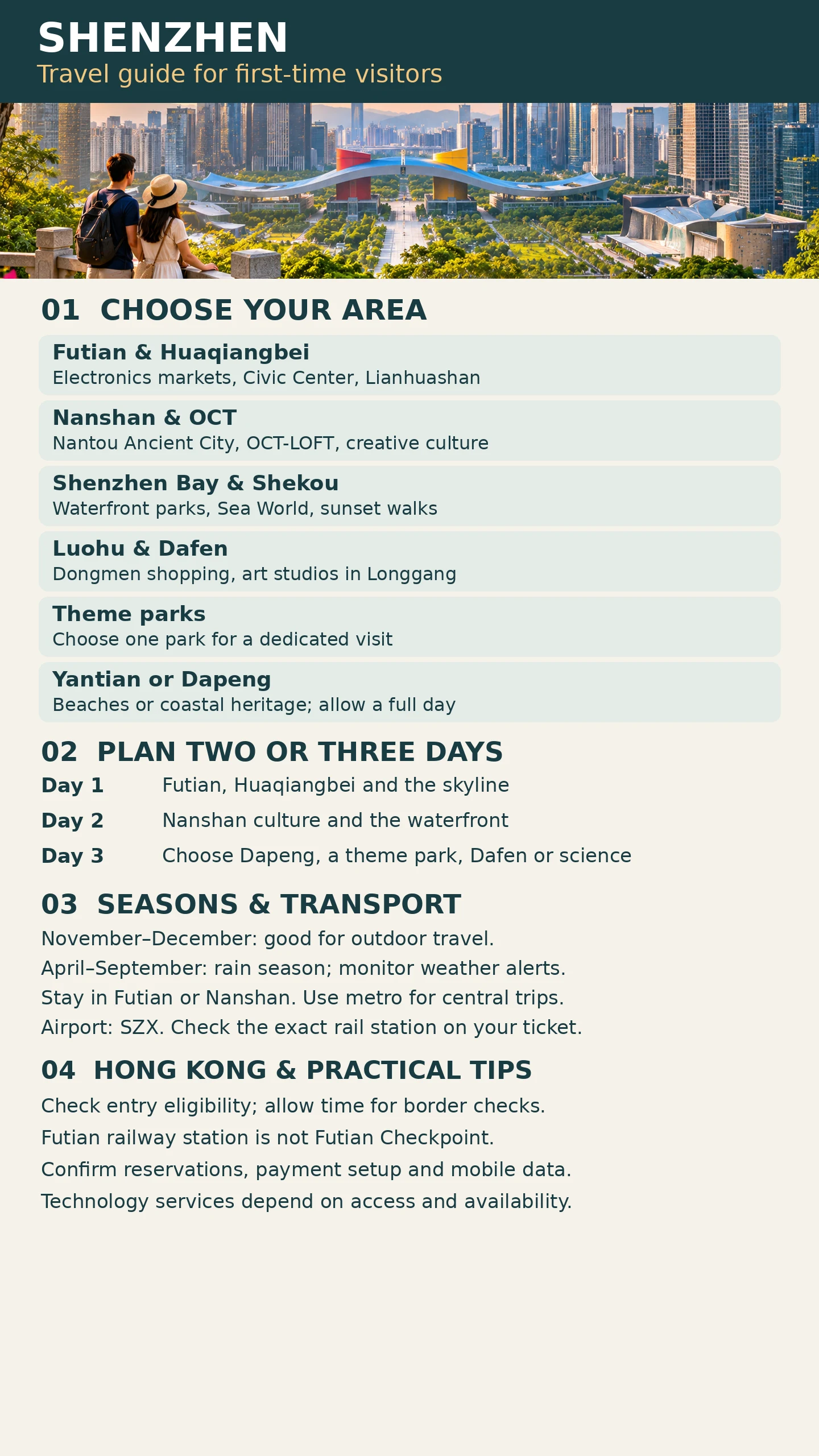
Allow two or three full sightseeing days in Shenzhen. Base yourself in Futian for a central location or Nanshan for creative neighborhoods and the waterfront. Shenzhen is particularly rewarding for travelers interested in modern China, electronics, design and coastal public spaces.
- Day 1: Explore Huaqiangbei, the Civic Center and Lianhuashan Park.
- Day 2: Choose Nantou Ancient City or OCT-LOFT, then enjoy Shenzhen Bay or Shekou.
- Day 3: Pick one additional experience: a theme park, Dapeng Peninsula, Dafen Oil Painting Village or a science museum.
November and December are good starting points for outdoor travel. Use the metro for central districts, but allow more time for the eastern coast. If arriving from Hong Kong, check mainland entry eligibility and choose the crossing that suits your destination. Do not count airport transfers or border procedures as full sightseeing days.
Shenzhen offers a different perspective on southern China from the historic streets of Guangzhou. Its electronics markets, contemporary architecture, reinvented heritage districts and long waterfront make it an appealing stop on a Greater Bay Area trip. This Shenzhen travel guide helps you choose the experiences that fit your time rather than trying to cover the entire city.
Is Shenzhen Worth Visiting?
Yes, especially if you want to see contemporary urban China beyond its famous historical monuments. Shenzhen brings together technology businesses, consumer electronics, modern public spaces and recreational waterfronts. You can spend a morning browsing components in Huaqiangbei and finish the day overlooking the city from a public park. That contrast is a reason to visit even if you are not planning to buy electronics.
The city also has cultural roots that predate its modern development. Nantou Ancient City and Dapeng Fortress offer a different experience from the financial district, while former industrial spaces now house creative businesses and exhibitions. Families can choose from several theme parks without making them the centerpiece of every trip.
Shenzhen fits naturally into a journey that includes Hong Kong or Guangzhou. If your only week in China is devoted to imperial architecture, ancient archaeological sites or traditional mountain villages, however, it may not be your first priority. Travel here for what the city actually does well, not as a substitute for a historic capital.
Where to Go in Shenzhen
| Area | Main experience | Suggested time |
|---|---|---|
| Futian and Huaqiangbei | Technology and skyline | Half to one day |
| Nanshan and OCT | Heritage and creative culture | Half to one day |
| Shenzhen Bay and Shekou | Waterfront and leisure | Half a day |
| Luohu and Dafen | Local life and art | Half to one day |
| Theme parks | Family entertainment | Half to one day per park |
| Yantian or Dapeng | Beaches and coastal heritage | One day for one area |
These are sightseeing groups, not administrative boundaries or continuous walking routes. The city stretches far east and west. Pick a primary area for each half day and use the metro or another suitable connection between clusters.
Futian and Huaqiangbei: Technology and the Skyline
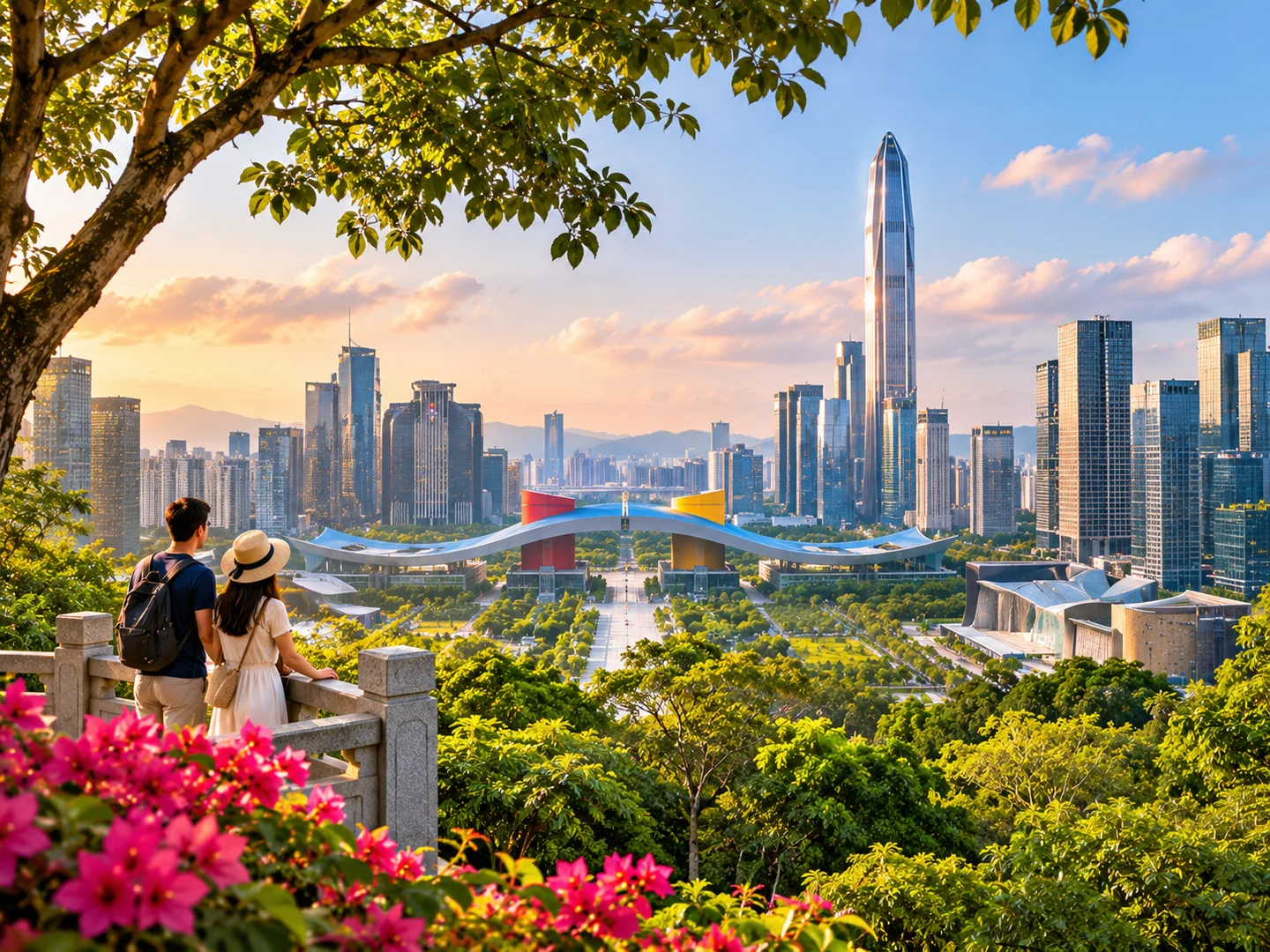
Start in Huaqiangbei (华强北), where electronics shopping takes place across multiple buildings and street-level stores. Then head toward the Civic Center and Lianhuashan Park (莲花山公园). The park offers an opportunity to see the central skyline without paying for an observation deck. The Ping An Finance Center is another recognizable part of the skyline.
Reserve time for the markets if electronics are a genuine interest; otherwise a brief look followed by a park visit is enough. The Civic Center district has large public spaces, so distances that appear short on a map can involve considerable walking.
Nanshan and OCT: Heritage and Creative Culture
Nantou Ancient City (南头古城) combines historic streets with contemporary shops, exhibitions and dining. Explore the lanes rather than expecting a completely preserved historic town. The contrasts between older buildings and new commercial uses are part of the experience.
The OCT-LOFT creative park offers a different setting, with reused industrial buildings, design spaces, cafés and changing exhibitions. Choose one of these neighborhoods for a short visit, or allow most of a day to enjoy both without rushing. Check exhibition schedules if a specific show matters to you.
Shenzhen Bay and Shekou: Waterfront Leisure
Shenzhen Bay Park is an extensive waterfront rather than a single viewpoint. Choose a section convenient to your next stop. Walk along the shore, watch the changing skyline or take a break in one of the public spaces. Shenzhen Talent Park offers another urban waterfront setting around Houhai.
Farther west, Sea World in Shekou combines dining and leisure spaces. It works well as an evening destination when you are already in Nanshan. Avoid treating the whole shoreline as one short walk; plan a suitable exit and connection back to your hotel. For evening alternatives, see Shenzhen at night.
Luohu and Dafen: Local Life and Art
Dongmen pedestrian street in Luohu is a lively commercial district where shopping and casual food are the main attractions. It is useful for visitors staying near the eastern part of the central city.
The Dafen Oil Painting Village is in Longgang, not Luohu. Its art shops and studios are a contrasting experience, but reaching Dafen from Dongmen requires another journey. Visit for the paintings and workshops, not on the assumption that every studio admits visitors or offers drop-in lessons.
Theme Parks: Choose One
The Window of the World features miniature landmark recreations, while Splendid China focuses on Chinese landscapes and cultural presentations. Happy Valley offers amusement rides.
Select the park based on your family’s interests, height requirements and the current operating calendar. A single park can occupy much of a day. The Shenzhen with kids guide provides more ideas for families who prefer a different pace.
Yantian and Dapeng: Coast and Maritime Heritage
Dameisha in Yantian is an option for beach time. Farther east, Dapeng Fortress preserves historic coastal-defense heritage, and nearby Jiaochangwei offers a seaside setting.
Dameisha and Dapeng are not neighboring attractions. Choose one area for a day away from downtown, or stay overnight on the peninsula if the coastline is your main interest. Check beach access, weather and any vehicle restrictions before departure.
For a wider selection, consult things to do in Shenzhen or focus on free experiences if you prefer parks and public spaces.
Technology and Innovation Experiences in Shenzhen
Exploring Huaqiangbei Electronics Market
Huaqiangbei is a district of specialist markets rather than a single mall. Browse phone accessories, components and consumer electronics at your own pace. Some businesses focus on wholesale supply and may not sell individual items. Before purchasing, confirm the model, language support, charging specifications, compatibility with your home network and the seller’s return terms. Keep receipts and check customs rules for your onward journey.
Technology Stores and Public Exhibitions
Public showrooms and official brand stores are more reliable choices than unannounced visits to corporate offices. The Shenzhen Science and Technology Museum, opened in 2025, is another option for travelers interested in science and innovation. It is in Guangming, so budget extra travel time from Futian or Nanshan and check admission arrangements before leaving. [1]
Robotaxis and Drone Delivery
Technology also appears in public spaces: drone delivery and automated services have been demonstrated in parks including Lianhuashan and Talent Park. [2] Treat these as optional experiences. Service areas, weather, account registration, payment and language requirements can determine whether you can actually participate. Do not organize an entire afternoon around a robotaxi ride without first confirming that an operator accepts your account and serves your route.
How Many Days Do You Need in Shenzhen?
| Available time | Recommended focus |
|---|---|
| 1 day | Futian and Huaqiangbei, or Nanshan and the waterfront |
| 2 days | Central technology and skyline plus western culture and coast |
| 3 days | Two core days plus one interest-based day |
| 4–5 days | More neighborhoods and an eastern coastal excursion |
Two days are enough for a useful introduction, while three allow you to see a distinct side of the city outside the central sightseeing areas. If you have only one day, stay on one side of the city instead of traveling repeatedly between eastern and western districts. A half-day visit after border clearance is not equivalent to a full sightseeing day.
Allow extra time for a trip to Dapeng, particularly if returning to the city before an early train or flight. For a short stop, use the one-day Shenzhen itinerary; for coastal excursions and nearby destinations, see day trips from Shenzhen.
Best Time to Visit Shenzhen
November and December are particularly useful months for combining parks, street walks and the coast. Shenzhen has a subtropical monsoon climate with a prolonged hot season. Around 86% of annual rainfall falls between April and September, according to the city meteorological bureau’s climate summary updated in September 2026. [3]
| Period | Typical conditions | Planning advice |
|---|---|---|
| March–April | Warming; variable weather | Keep an indoor backup |
| May–September | Hot, humid and wet | Outdoor visits early or late; watch warnings |
| October–December | Generally cooler and drier | Good for walking and waterfronts |
| January–February | Mild overall; occasional cold spells | Bring layers and check holiday schedules |
During summer, choose a museum, electronics market or other indoor activity for the hottest part of the day. Thunderstorms, tropical cyclones and heavy rain can affect outdoor attractions and transport, including ferry and cross-border services. Do not enter closed beach areas or continue an exposed coastal walk during hazardous conditions.
For seasonal trade-offs and packing considerations, see the best time to visit Shenzhen guide.
Getting to Shenzhen
Flying into Shenzhen Bao’an International Airport
Shenzhen Bao’an International Airport (SZX) is in Bao’an District. Metro Line 11 connects the passenger terminal area with parts of Nanshan and Futian. Taxis and ride-hailing are alternatives if you are traveling with heavy luggage or arriving after metro service ends. Airport, Airport North and Airport East are different metro stations, so match the exact terminal and station to your booking. Consult the Bao’an Airport guide and airport-to-city transfer guide before traveling.
Arriving by High-Speed Train
| Railway station | District | Planning advantage |
|---|---|---|
| Shenzhen North | Longhua | Major long-distance high-speed hub |
| Futian | Futian | Central location and selected cross-border services |
| Shenzhen Railway Station | Luohu | Eastern center and regional rail |
Shenzhen Airport railway station is also separate from these three. Check both departure and arrival stations before booking; the fastest train may not provide the fastest hotel-to-hotel trip. The Shenzhen railway station comparison explains the differences. If coming from Guangdong’s capital, compare the Guangzhou to Shenzhen options.
Arriving from Hong Kong
You can take high-speed rail from West Kowloon, cross a land checkpoint using local transport on both sides, or use an appropriate cross-border bus or ferry service. The best option depends on where you start, where you are staying and the current immigration requirements. Allow time for border checks rather than comparing only the time spent aboard a vehicle.
Getting Around Shenzhen
The metro is the most practical starting point for most central sightseeing journeys. Line 11 is useful for airport connections; Line 12 serves western neighborhoods including areas near Nantou and Sea World; Line 13 connects Shenzhen Bay Checkpoint with the Houhai area and provides access near Talent Park. Confirm the current route and nearest entrance before setting off.
Walking is best within selected neighborhoods or parks, not between distant attractions. Use ride-hailing or a taxi when the trip involves inconvenient transfers, substantial luggage or a destination far from the metro. In congested periods a road journey is not necessarily faster than rail. Outside central Shenzhen, especially on the Dapeng Peninsula, allow for slower and less frequent connections.
Save the Chinese name of your hotel and check the last return service for late evenings. The Shenzhen metro guide covers practical metro details, and getting around Shenzhen compares other transport choices.
Where to Stay in Shenzhen
| Area | Best for | Main trade-off |
|---|---|---|
| Futian | First visits, technology, central rail | Business hotels may cost more |
| Nanshan | Creative districts, waterfront | Longer trips to Luohu |
| Shekou | Seaside evenings and selected ferries | Far from eastern sights |
| Luohu | Shopping and Luohu crossing | Longer trips west |
| Bao’an | Airport or exhibition-related stays | Not always convenient for sightseeing |
| Dapeng or Yantian | Coastal breaks | Long commute to central city |
For an initial two- or three-day trip, choose Futian unless your main interests are in western Shenzhen. Nanshan is a good alternative for a relaxed waterfront and creative-culture itinerary. A hotel near the correct metro station can be more useful than a cheaper hotel in the same district but far from public transport.
If you intend to cross the border early, compare accommodation with the actual crossing you will use. Do not change hotels simply to visit another central district. Moving is more worthwhile when you plan a coastal overnight stay. See where to stay in Shenzhen for a fuller district comparison.
What to Eat in Shenzhen
Shenzhen’s food scene reflects Guangdong’s regional traditions and migration from across China. Cantonese dim sum, roast meats and rice noodle rolls are good starting points, rather than foods unique to Shenzhen. Shajing oysters are associated with the city’s western coastal area. Hakka stuffed tofu reflects a different regional culinary tradition, while Chaoshan beef hot pot comes from eastern Guangdong.
Make food part of your route rather than crossing town for every meal. Try dim sum before visiting a market, choose a casual lunch around a creative district, and leave time for dinner in Shekou or near your accommodation. If seafood is an important part of your plans, check current availability and prices before ordering. Travelers with allergies or dietary restrictions should confirm ingredients, sauces and shared cooking equipment rather than assuming a dish is safe based on its name.
For more local and regional dishes, read what to eat in Shenzhen.
Suggested Shenzhen Itineraries
One Day in Shenzhen
Choose either a technology-and-skyline route or a western culture-and-waterfront route. On the first, visit Huaqiangbei and then the Civic Center or Lianhuashan Park. On the second, select OCT-LOFT or Nantou Ancient City and spend the late afternoon at Shenzhen Bay. Neither route requires a theme park or a trip to Dapeng. If you are crossing from Hong Kong, shorten the plan to match your available time.
Two Days in Shenzhen
Day one focuses on Futian, with electronics markets and a public skyline viewpoint. Day two moves west to Nanshan for one heritage or creative neighborhood, followed by a waterfront walk or a Shekou dinner. Leave flexibility for rain, meal breaks and longer-than-expected shopping visits.
Three Days in Shenzhen
Keep the first two days and add one theme on day three: Dapeng Fortress and the nearby coast, a favorite theme park, Dafen for art, or the science museum and another technology experience if practical. Each has a different location and time commitment; do not combine them into a single checklist. Use the three-day Shenzhen itinerary to plan daily order and transport.
Shenzhen and Hong Kong: Planning a Combined Trip
Hong Kong and mainland China have separate immigration procedures. Check your eligibility to enter both jurisdictions before booking a round trip. Shenzhen’s six principal land checkpoints include Luohu, Futian, Huanggang, Shenzhen Bay, Wenjindu and Liantang. [4]
| Crossing | Planning advantage |
|---|---|
| Luohu | Hong Kong East Rail connection and eastern Shenzhen |
| Futian | Central Shenzhen and Lok Ma Chau branch |
| Shenzhen Bay | Western Shenzhen and cross-border buses |
| Huanggang | An option for late-night or early-morning crossings; confirm service |
Futian railway station is not Futian Checkpoint. Shenzhen Bay Park is not Shenzhen Bay Checkpoint. Check opening hours, transport availability and the exact crossing before departure, especially on a day trip with a fixed return deadline. For more details use the border crossing comparison and Shenzhen to Hong Kong transport guide. A longer regional journey can also follow the Guangzhou, Shenzhen and Hong Kong itinerary or continue with Shenzhen to Macau.
Practical Shenzhen Travel Tips
- Payments: Set up a mainland-compatible mobile payment option before arrival and have a backup payment method.
- Connectivity: Arrange a suitable SIM, eSIM or roaming plan and save offline copies of reservations and addresses.
- Language: Keep Chinese names for your hotel, attractions and departure stations to show drivers or staff.
- Purchases: Confirm electronics specifications, warranty coverage and applicable customs requirements before paying.
- Weather: Respect official weather alerts and temporary closures, especially at exposed coastal locations.
- Reservations: Check museum entry, theme park schedules and technology experiences before departure.
Your biggest budget differences will usually come from accommodation, paid attractions and cross-border transportation. Parks and walks can reduce costs, while theme parks and long transfers add expenses. Use the Shenzhen travel budget guide to compare the costs that actually apply to your trip.
FAQs About Visiting Shenzhen
Is Shenzhen worth visiting for tourists?
Yes, if you want to experience modern Chinese cities, technology markets, contemporary design and coastal public spaces. It also has historical neighborhoods and family attractions. Travelers focused almost exclusively on ancient monuments may prefer another destination when time is limited.
How many days should you spend in Shenzhen?
Two or three full sightseeing days suit most first-time visitors. One day is enough for a single central route, including a short visit from Hong Kong. Add time if you want a dedicated Dapeng Peninsula excursion or several theme parks.
Is Shenzhen better known for technology or tourist attractions?
Technology is its distinctive international reputation, but visitors can also enjoy waterfront parks, historic streets, creative neighborhoods and amusement parks. You do not need a business appointment or access to a corporate headquarters to experience the city as a tourist.
Can you visit Shenzhen on a day trip from Hong Kong?
Yes, provided you meet the applicable entry requirements and have a practical return connection. Choose sights near your arrival area and allow time for immigration procedures. Avoid trying to visit central Shenzhen and the distant Dapeng Peninsula on the same day.
Is Shenzhen or Guangzhou better for first-time visitors?
Choose Guangzhou for Cantonese food traditions, historic neighborhoods and Lingnan culture. Shenzhen suits travelers interested in modern architecture, technology, creative spaces and coastal recreation. Neither is universally better, and a longer regional itinerary can include both without sacrificing their different strengths.
Sources
[1] Shenzhen Government. Travel Guide
[2] Shenzhen Government. High-tech travel experiences in Guangdong
[3] Shenzhen Meteorological Bureau. Climate overview and seasonal characteristics
[4] Shenzhen Government. Six major border crossings and tips





