
Quick Answer
Give Shigatse one night for the monastery if your route is already arranged. A second night gives you more time to pace the visit and work around changing conditions.
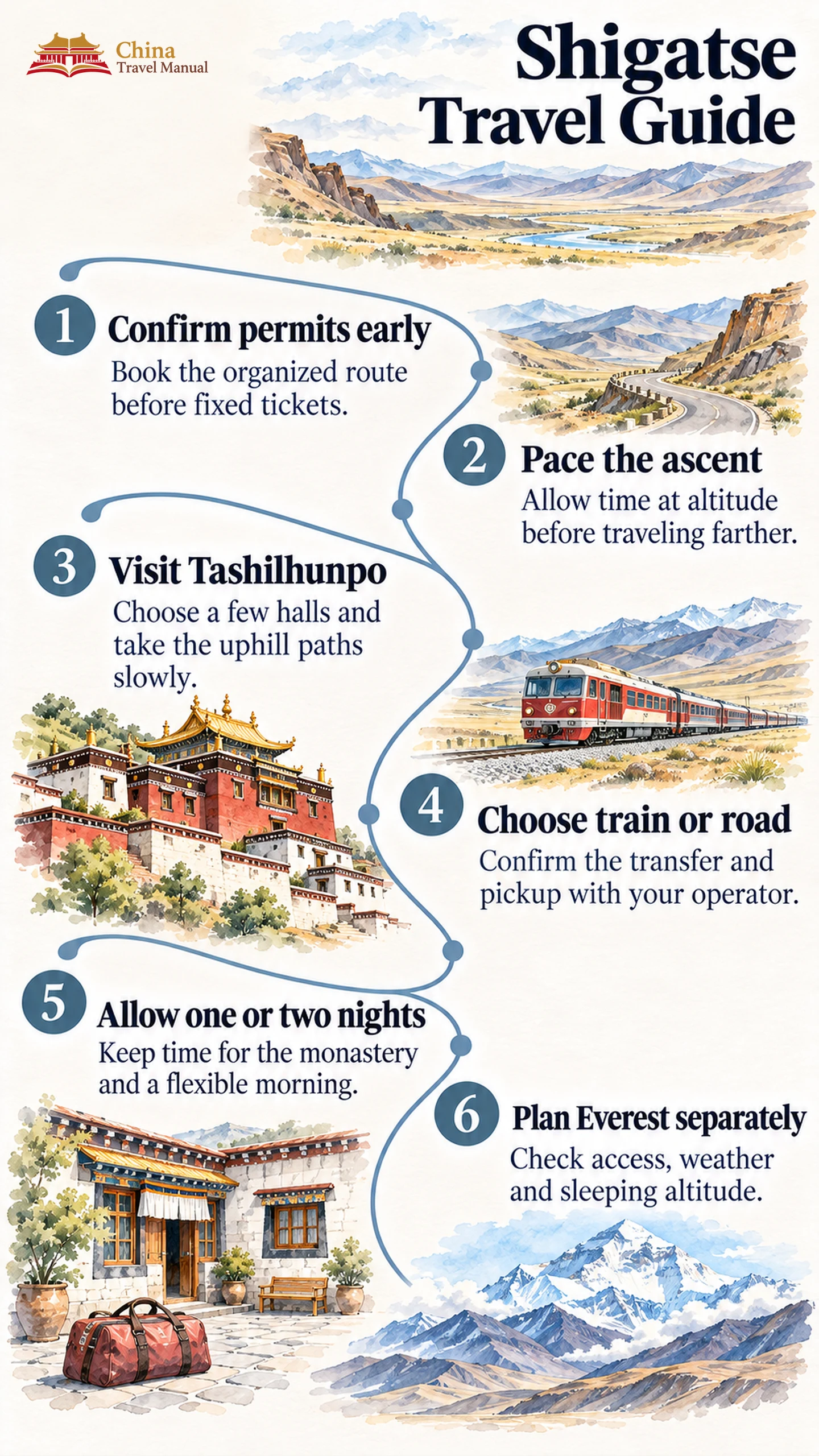
- Permits: If you travel on a foreign passport, arrange the required permit and organized tour before buying nonrefundable tickets.
- Altitude: Allow time to adjust before reaching the city at roughly 3,840 m (12,600 ft).
- Arrival: Take the train or road from Lhasa, according to the arrangements your operator confirms.
- Beyond town: Plan Gyantse, Sakya or Everest as separate route decisions.
Ask for the actual overnight locations and a lower-altitude fallback before finalizing the trip.[1][2][3][4]
Shigatse is the place to visit Tashilhunpo and a practical stop before higher terrain farther west. The city in Samzhubze District is distinct from the much larger Shigatse municipality, which also includes Gyantse, Sakya and the Everest area. Use the city stay for the monastery and allow separate time for any detour.[4][8]
Permits and Altitude Before You Book
Foreign passport holders generally need the Tibet Travel Permit and an organized tour arranged through a specialist travel agency in China. China entry documents and Tibet travel permissions are separate questions. Give your agency the complete route, including places such as Sakya or the Everest area, and ask it to confirm which additional authorizations apply. Check the Tibet travel permits guide as you discuss the actual cities, stations, and overnight stops.[1][2]
Central Shigatse sits around 3,840 m. Allow several quiet days after reaching Lhasa if your route begins there, with time for a more gradual ascent where possible. Keep the route flexible enough to postpone another ascent if symptoms develop. The Tibet altitude planning guide explains how sleeping heights affect the order of a route.[3][4]
Tell your guide promptly about headache with nausea, dizziness or fatigue after ascent. Avoid a higher overnight while symptoms are present. If symptoms worsen at the same elevation, descend and seek medical help. Severe signs such as confusion, difficulty walking straight or shortness of breath at rest call for urgent medical help and safe descent. Consult a clinician with travel-medicine experience ahead of time if you have a history of severe altitude illness or a relevant heart or lung condition.[3]
What to See in Shigatse
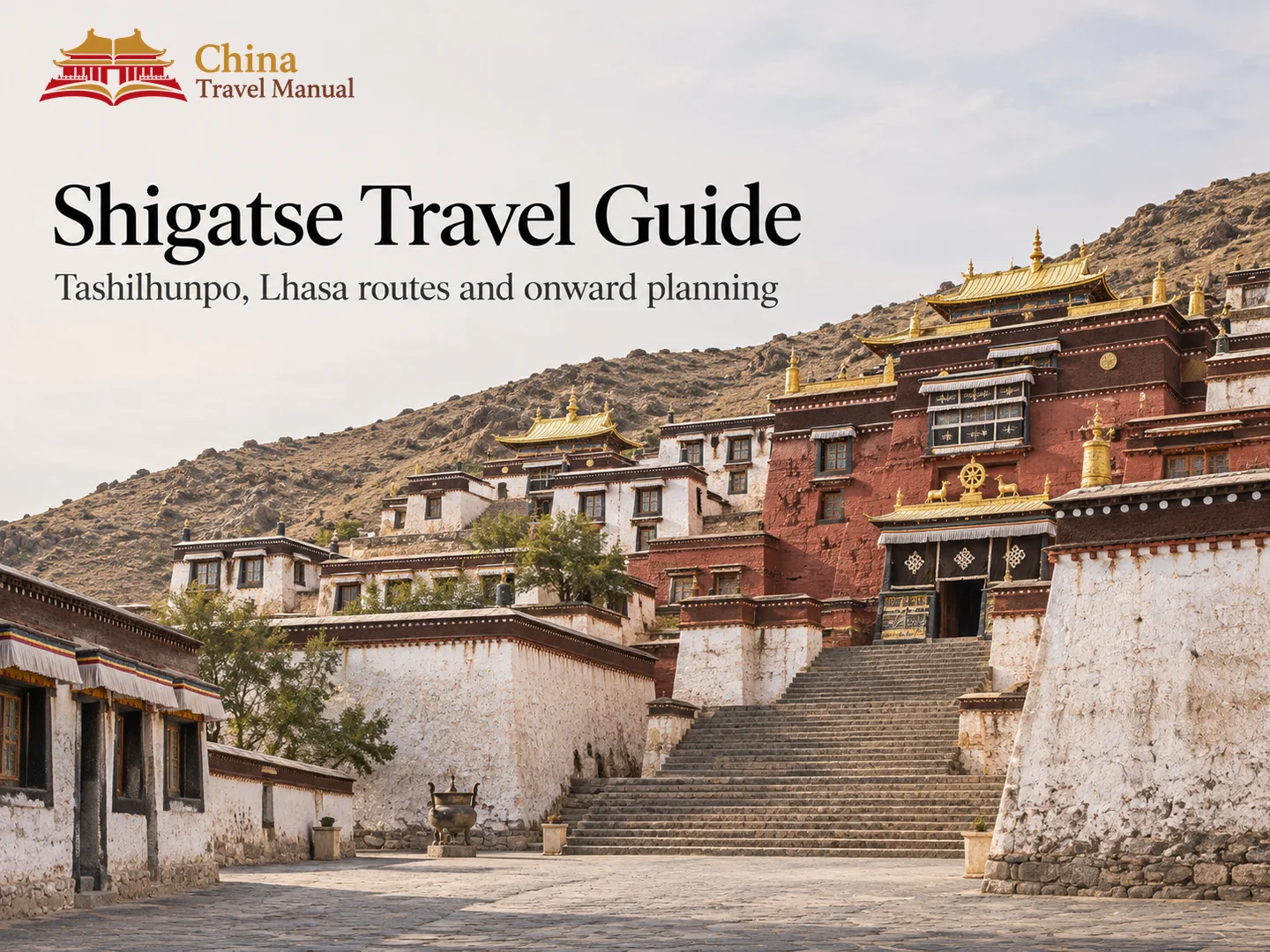
Begin with Tashilhunpo Monastery (扎什伦布寺, Zhāshílúnbù Sì), founded in 1447 and historically associated with the Panchen Lamas. One reason to allow time here is the large gilded statue of Maitreya (弥勒佛, Mílè Fó), known as the Future Buddha. Its hall and the chapels associated with past Panchen Lamas give the visit a focus even when sections of the complex are closed.[5]
The monastery rises up the hillside. Take the courtyards and stairs in short stretches, settle on a few halls with your guide and ask before taking photos. Give worshippers space and keep active doors and paths clear. Use the Tashilhunpo visitor guide for more about the complex before committing to extra walking.[1][5]
If the monastery is your main outing, keep the rest of the day light. See the hilltop silhouette of Samzhubze Dzong from the city and take a short walk or have tea near your accommodation. Check whether a fortress visit is possible before planning around entry. The Shigatse sights guide is useful if you have a spare half day.[8][11]
How to Get to Shigatse from Lhasa
| Route | Choose it for | Confirm first |
|---|---|---|
| Lhasa to Shigatse by train | A direct transport leg with more time in the city | Actual departure, operator support and pickup at Shigatse station |
| Road via Gyantse | A day that can include Yamdrok Lake, a high pass and Pelkor Chode | Road and weather conditions, confirmed stops and the time you reach the hotel |
| More direct road transfer | A city-oriented trip with fewer planned stops | Whether it saves time on the specific date and how much you climb on the way |
| Fly into Shigatse Heping Airport | A regional service that matches your wider trip | Current flight, approved arrival route, road transfer and how you will stage the ascent |
The rail service between Lhasa and Shigatse is established. Check current tickets with your operator, who can confirm both documentation and the meeting point. A scenic drive changes the day: it adds travel time and can briefly take you higher than your destination. Use the Lhasa to Shigatse route guide to compare the two kinds of trip. A direct arrival by air into a high area calls for more care in your acclimatization plan.[3][6][7][9][11]
Where to Stay and How Long to Allow
Stay near the monastery if you want to minimize the ride to your main visit. A central hotel near pickup points can be more convenient before an early onward journey and gives you options for dinner. Ask your operator for the actual location, access steps, room heating and which side of town the driver expects to collect you from. Compare the Shigatse hotel areas and local transport options when you get the itinerary.
With one night, visit Tashilhunpo either before or after sleeping in town, whichever gives you a comfortable window. With two nights, reserve a slower day for the monastery and keep the next morning free for a short local outing or a schedule change. The two-day Shigatse itinerary gives both days their own focus. An onward high-elevation trip needs its own time and health plan.
Gyantse, Sakya and the Road to Everest
Gyantse fits the slower road approach. Visit Pelkor Chode for the monastery and its tiered Kumbum stupa, and choose the fortress separately if you have time for another stop. Sakya lies farther out from central Shigatse. Give it a dedicated block if the monastery and its historic collections are important to you. Ask how much time it adds to the actual road plan, including access checks.[8][9][11]
An Everest visitor-area trip takes you into substantially higher terrain. Ask whether the plan goes to the designated tourist area near Rongbuk, which services are running, where you would sleep and what the guide will do if weather or a health issue changes the day. Allow a separate stage in the itinerary and decline further ascent if symptoms develop. A night closer to Everest is an additional altitude decision, even if the booking calls it a sightseeing tour.[3][10][11]
Use the eight-day Tibet itinerary to see how a westward route can fit together. If forest valleys and an eastward trip are a better fit, the Nyingchi travel guide covers a different part of Tibet. Confirm actual overnight elevations and access for either trip.
Best Time to Visit Shigatse
Late spring and early autumn are useful starting points for a Shigatse trip that includes open-air stops or mountain views. Summer can bring cloud and rain on the roads. In winter, choose shorter outdoor blocks, verify heating and ask which distant legs are practical. Conditions on the Rongbuk road and at the city monastery can differ on the same day. Review the Tibet seasonal guide and confirm the route close to departure.[11]
What to Eat in Shigatse
After a long transfer, a nearby canteen or Tibetan restaurant is easier than another ride. Try tsampa (糌粑, zānbā), roasted barley flour commonly served with butter tea, or order a warm bowl of noodles. Ask how the restaurant prepares the barley and which stock or dairy it uses if that matters to your group. See the Tibet food travel guide for more meal options.[8][12]
FAQs About Visiting Shigatse
Do foreign travelers need a permit for Shigatse?
Arrange Tibet travel through an agency with the required permit and organized itinerary. Ask the agency to check the exact route for additional permissions, especially if you continue toward Everest or other regulated areas.[1][2]
Can I go from Lhasa to Shigatse by train?
Yes, the cities have a rail connection. Work with your agency on the specific train, documentation and pickups, and reserve the scenic stops for a separate road route if they matter to you.[1][6]
Is Shigatse a good base for a day trip to Everest?
Treat Everest as a separate stage, with approved access, ground transport, a gradual ascent plan and a clear response to illness or weather. A long out-and-back has little room for change.[3][10][11]
Is one night enough for Tashilhunpo Monastery?
One night can work if your transport and access leave a clear stop at the monastery. Take two when your arrival will be late or you prefer a slower visit.
Sources
[1] UK Foreign, Commonwealth & Development Office. Organized travel and permits in the Tibet Autonomous Region
[2] China National Immigration Administration. Service guide on travel permits for foreigners
[3] U.S. Centers for Disease Control and Prevention. High-altitude travel and altitude illness
[4] Tibet Autonomous Region Department of Culture and Tourism. District and county elevations
[5] China Daily. History and collections of Tashilhunpo Monastery
[6] Tibet Autonomous Region Department of Culture and Tourism. Lhasa to Shigatse railway service announcement
[7] Civil Aviation Administration of China. Civil airports including Shigatse Heping Airport
[8] Tibet Autonomous Region Department of Culture and Tourism. Shigatse travel resources and local specialties
[9] Tibet Autonomous Region Department of Culture and Tourism. Gyantse heritage and Pelkor Chode
[10] Shannan Tourism Development Bureau. Designated Everest visitor area near Rongbuk
[11] Tibet Trails. Shigatse route and seasonal sightseeing
[12] China Daily. Tsampa and Tibetan butter tea





