
Quick Answer: What Should You Do First in Lhasa?
Start with a short look around Barkhor Street (八廓街, Bākuò Jiē) once you feel well enough. Visit Jokhang Temple (大昭寺, Dàzhāo Sì) on a reserved slot, then give Potala Palace (布达拉宫, Bùdálā Gōng) a separate visit when you are ready for the stairs.[1][2][10]
- For a monastery visit: Choose Sera Monastery (色拉寺, Sèlā Sì) for its debate tradition or Drepung Monastery (哲蚌寺, Zhébàng Sì) for a hillside complex.[6][7]
- For a gentler outing: Pick the palace gardens at Norbulingka (罗布林卡, Luóbùlínkǎ) or a gallery visit at the Tibet Museum (西藏博物馆, Xīzàng Bówùguǎn).[1][8]
- Before traveling: Foreign-passport tourists should arrange the Tibet travel permit and organized tour through a specialist agency in China.[9]
Use the arrival day to rest, then put the sights with more stairs and longer journeys later in your plan.[10]

The best first visit to Lhasa mixes the old town and the hilltop palace with one unhurried monastery, garden or museum visit. Organize the harder walks around how you feel at altitude. Book the named attractions separately from the permits and travel arrangements that get you to Tibet.[1][2][9][10]
Compare the Main Things to Do in Lhasa
Pick one main sight for each part of the day and leave room to change your plans. Historic interiors, religious activities and street visits may have separate arrangements.[1][2][6]
| Place | Why go | How to fit it in |
|---|---|---|
| Potala Palace | Hilltop palace, chapels and views above the city | Reserve ahead and save energy for the stairs |
| Jokhang Temple | An active Buddhist temple in the old town | Reserve a separate timed visit |
| Barkhor Street | A pilgrimage circuit and the lanes around the temple | Keep it as a short first outing if you feel well |
| Sera Monastery | Monastic courtyards and scholarly debates | Check access and whether debates are taking place |
| Drepung Monastery | A hillside of monastery halls and courtyards | Allow extra time for slopes and travel from the center |
| Norbulingka | Former summer palace, gardens and pavilions | Check open halls and choose a manageable walk |
| Tibet Museum | Exhibits for a broader view of Tibetan life and history | Check the dated admission and booking notice |
Use the Lhasa city itinerary to fit these choices around your arrival and a realistic number of full sightseeing days.
Potala Palace and the Old Town
Potala Palace and the Lower Shol Area
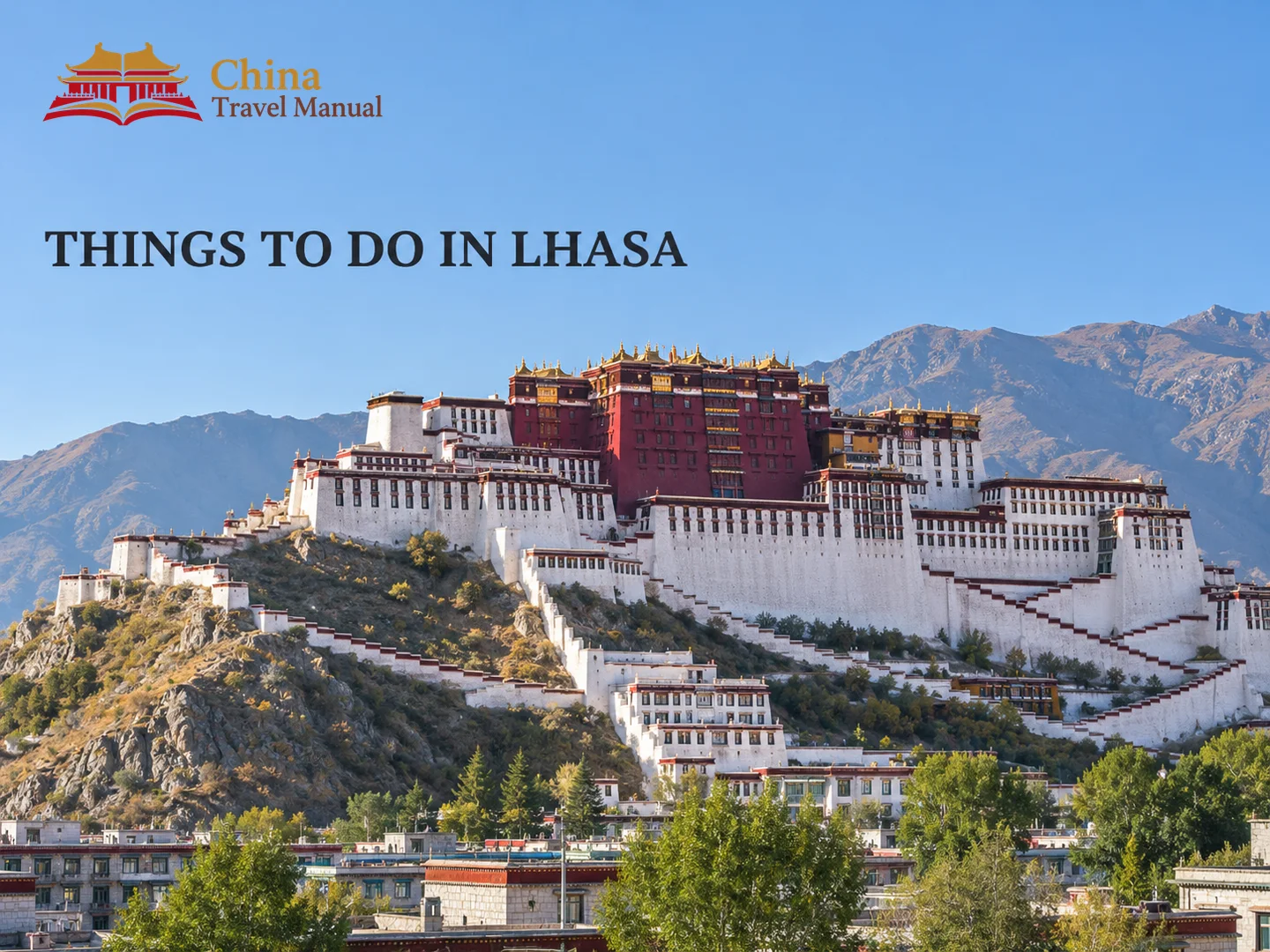
The White and Red Palaces rise from Red Hill (红山, Hóngshān). The complex served as a winter palace of the Dalai Lamas and a center of religious and administrative life. The interior visit involves stairs. Reserve the time first, then check which route the ticket covers. A palace visit belongs later in the stay if you are arriving directly from low elevation.[1][2][10]
The lower Shol area (雪城, Xuěchéng) has its own ticket and route as announced in September 2026. It gives you a way to see the buildings at the foot of the hill, and the route doesn’t enter the main palace. The palace ordinarily closes on Mondays under the current published notice, with exceptions for national holidays. Check both routes for your dates in the Potala Palace visitor guide and current notices.[3][4]
If a palace time is unavailable or the interior climb is too much for your plan, go to the square in front of the palace for an exterior view when it is open. You can see how the white and red buildings sit above the city without taking the palace stairs.[13]
Jokhang Temple and Barkhor Street
The Jokhang was founded in the seventh century and remains a place of worship. Treat the temple visit as a booked stop. Around it, Barkhor Street is part of a devotional circuit known as a kora. If you join the flow, walk clockwise, leave room for people prostrating and ask before photographing worshippers. Follow the posted rules inside and keep your voice low.[1][2][5][12]
For a break nearby, choose a sweet-tea house in the old neighborhood. You can make a short street walk and a tea stop your whole outing if you want to leave more time for rest. The Lhasa food guide explains what else to order on a longer visit.[14]
Monasteries, Gardens and the Tibet Museum
Sera or Drepung
Sera Monastery is known for its courtyard debates. The handclaps and exchanges form part of monastic training. Ask your guide whether visitors can observe on your date, and check the rules about where to stand and what you can photograph.[6]
Drepung Monastery is a hillside visit that gives you time to see halls and courtyards across a wider complex. Plan for a longer stop and uneven climbs. Shoton Festival gatherings are a separate event and can change access on the day. If you have one main monastery outing, choose one that suits your walking pace and interests.[7]
Norbulingka and the Tibet Museum
Norbulingka was a summer palace. The gardens and pavilions offer a different view of palace life from the hilltop complex. Check what is open and confirm the current ticket rules, including any procedure for a foreign tour group. At the Tibet Museum, choose a few galleries so you still have time to rest or eat nearby. Its exhibits provide context for the historical objects and material culture you see around the city.[1][2][8][11]
Pace Your Visit at Lhasa’s Altitude
Lhasa is around 3,700 meters above sea level. Plan only mild activity for the first 48 hours at altitude, particularly if you have come straight from a low-elevation city. Start with rest and a short walk if you feel well. Save the palace stairs and uphill monastery visits for later. Discuss symptoms with your guide and get medical advice if you are unwell. Avoid going higher while you have altitude illness symptoms. If symptoms worsen despite rest, seek urgent medical help and descend. Confusion, trouble walking or breathlessness at rest requires emergency care and prompt descent.[10]
Keep high passes and lake outings for later in the trip and plan them with your agency. See altitude planning for Tibet before selecting day trips from Lhasa.[9][10]
How to Plan Your Sightseeing in Lhasa
- Arrange the travel requirements. Check the passport, permit and organized tour process in the getting to Tibet guide before fixing your visit dates.[9]
- Reserve the main sights. Ask the agency which reservations it handles for the palace, temple and museum, which sightseeing days overlap closures, and what identification you need at check-in.[2]
- Keep arrival light. Hold the first day for rest and put the main climbs later. Confirm alternatives if you need to change a timed booking.[10]
- Leave space for one extra outing. Choose Sera, Drepung, Norbulingka or the museum according to interest and energy.
FAQs About Things to Do in Lhasa
How many full days should you spend in Lhasa?
Allow several nights so you can take arrival slowly and space out the main visits. For example, three full days can allow an old-town visit, the palace and one additional outing when you feel well. Lower-effort days give you room to adjust for altitude or ticket availability.[2][10]
Which sights should you book ahead?
Arrange Potala Palace and Jokhang Temple ahead. Check whether you also need to reserve the Tibet Museum or the separate Shol route. Confirm the exact dates and process with your tour agency.[2][4][9]
Can foreign travelers visit Lhasa independently?
Foreign tourists should plan an organized tour with a Tibet travel permit arranged through a specialist travel agency in China. Confirm what it can arrange for your passport, route and dates before committing to travel.[9]
Sources
[1] UNESCO World Heritage Centre. Historic Ensemble of the Potala Palace, Lhasa
[2] Lhasa Municipal Government. Reservation guide for Lhasa’s cultural sites
[3] Tibet Autonomous Region Department of Culture and Tourism. Potala Palace Monday closure notice
[4] Tibet Autonomous Region Department of Culture and Tourism. Separate Shol visitor route
[5] Smithsonian National Museum of Asian Art. Tibetan Buddhist pilgrimage and the Jokhang circuit
[6] China Daily. Role of debate in Sera Monastery’s scholarly tradition
[7] State Council Information Office. Drepung’s hillside setting and Shoton Festival
[8] Tibet Autonomous Region Department of Culture and Tourism. Tibet Museum galleries and collections
[9] UK Foreign, Commonwealth and Development Office. Tibet travel permit and organized tour requirements
[10] Centers for Disease Control and Prevention. High-altitude travel and altitude illness
[11] Tibet Autonomous Region Department of Culture and Tourism. Current seasonal conditions for Norbulingka bookings
[12] China Culture. Jokhang’s architecture and the clockwise Barkhor route
[13] Lhasa Municipal Government. Potala Palace viewpoints and city sightseeing
[14] Xinhua. Sweet-tea houses and everyday life in Lhasa’s old neighborhood





