
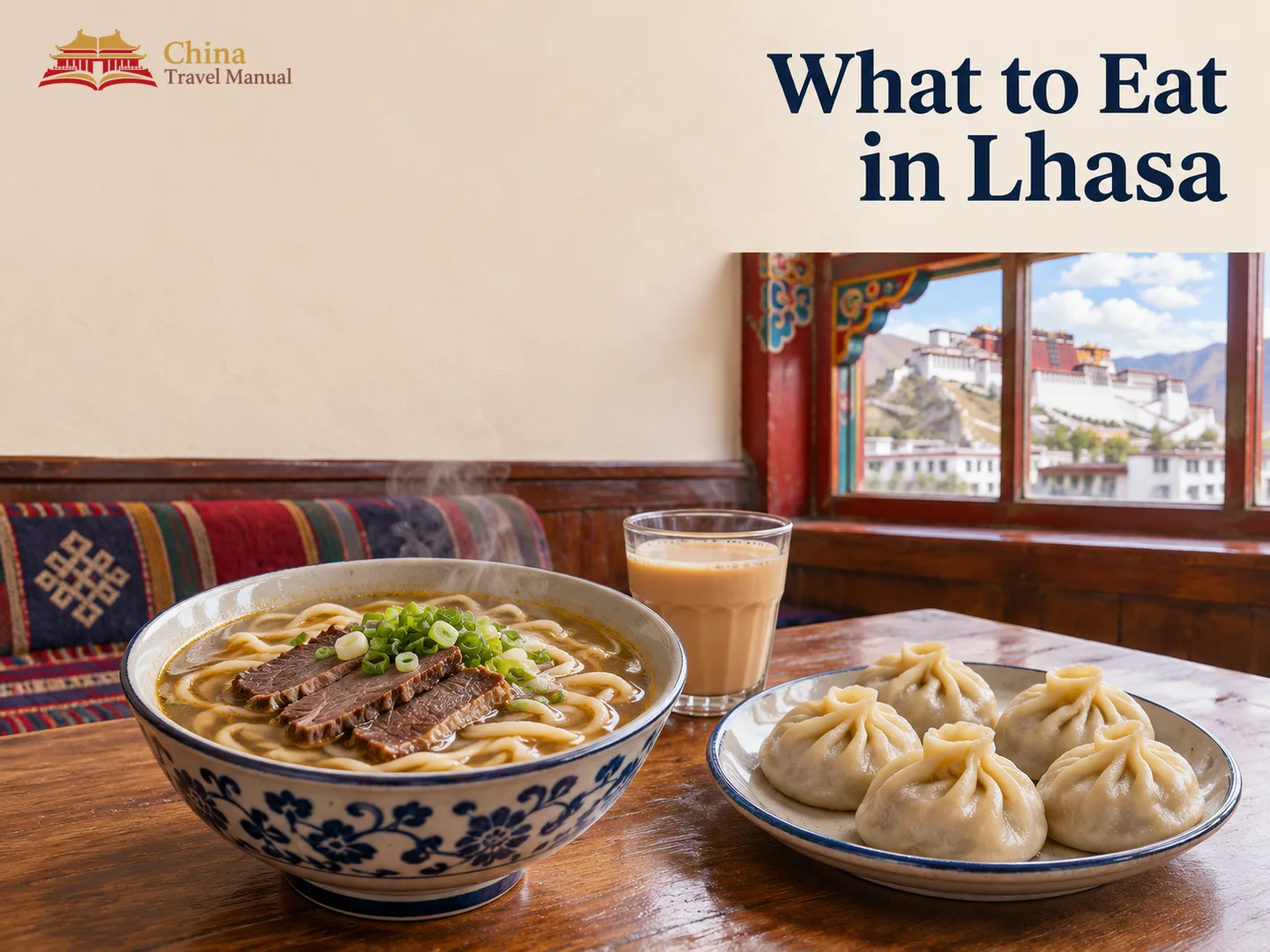
Quick Answer: What Should You Try First in Lhasa?
Start with Tibetan noodle soup (藏面, zàngmiàn) and a cup of sweet tea (甜茶, tiánchá) in an old-town teahouse. The soup can have yak meat or a meat-based broth. Sweet tea is milky and sweetened, and it makes a simple starting point if you are unsure what to order.[1][4]
- For dumplings: Order a plate of Tibetan dumplings called momos and confirm the filling. A steamed meat-filled momo is a common Tibetan style.[3]
- For a traditional pairing: Try butter tea (酥油茶, sūyóuchá), which is salty and rich, with tsampa (糌粑, zānbā), a roasted barley staple.[2]
- For a meal with vegetables: Ask whether the soup or sauce uses meat stock, even if the ingredients you can see are vegetables.[4][7]
Near Barkhor, choose a teahouse for tea and a snack or a restaurant if you want to order several dishes.[1][6]

A noodle shop, a sweet-tea house and a Tibetan restaurant give you three different ways to eat in Lhasa. Find one casual stop near your hotel, then choose a sit-down place for the dishes you want to share.
Tibetan Dishes to Order in Lhasa
| Dish | What to expect | How to order it |
|---|---|---|
| Tibetan noodle soup | A savory bowl. Yak meat and yak-bone broth are local examples. | Ask what is in the broth and whether the topping is included. |
| Momos | Dumplings that can be steamed and filled with meat. | Ask the shop which fillings it offers before ordering. |
| Tsampa | Roasted barley flour that can be mixed with butter tea or other ingredients. | Ask how it is served. Choose a small portion to try with tea. |
| Yak meat | One of the regional meats, served in noodles, cooked plates or dried strips. | Choose a cooked dish for dinner or buy a small amount of dried meat to taste. |
Noodles or dumplings work well for a quick lunch between visits. Choose tsampa and tea if you want to try a traditional staple in a small serving. The Tibet food guide covers dishes you can look for beyond Lhasa.[1][2][3][4]
Sweet Tea, Butter Tea and a Lhasa Teahouse Visit
Lhasa’s sweet tea is made with milk and sweetened tea. Butter tea has a savory, salty flavor from tea churned with butter and salt. Try one cup of each if the same shop serves both. Ask what style of tea a pot contains before ordering it for a group.[1][2][6]
Some teahouses seat customers together at long tables. Watch whether staff take orders at the table or at a counter, and ask whether the tea is sold by the cup or by the pot. For a short visit, you can order just a cup of tea or add a bowl of noodles when the shop serves them. The teahouse guide explains other ways tea is ordered around China.[1][6]
Teahouses are part of everyday life, especially around the old town. Make room at shared seating and ask before photographing other customers.
Where and When to Eat Around Lhasa
- Morning near Barkhor: Look for Tibetan noodles and sweet tea in the streets around Barkhor and Jokhang Temple. This works for a quick meal before an attraction reservation or a break after a walk.[1][6]
- Lunch or dinner in a Tibetan restaurant: Choose a place with several dishes if you want to share dumplings, cooked yak meat and vegetables. A translated menu or ingredient list helps if anyone at the table has a restriction.[1][3][4]
- Evening at a city market: Tianhai Night Market is a Lhasa example with stalls serving snacks, grilled food and drinks. Check the current opening time and pick a meal close to where you are spending the rest of the evening.[5]
If you are still booking accommodation, the Lhasa lodging guide can help you find a base with dinner within a short walk.
How to Ask About Ingredients
Check broth and sauces before ordering a dish marked as vegetable. Ask whether dumplings use meat, dairy or both, and whether a noodle broth is cooked with meat or bones. For tea, ask about milk or butter. Tell the kitchen about a food allergy and ask whether utensils or cookware are shared.[1][2][3][4][7]
Use the China food-ordering guide to work with unfamiliar menus. If you are avoiding meat, fish or animal broth, the vegetarian dining guide has phrases to explain what you need.
FAQs About Eating in Lhasa
What is the difference between sweet tea and butter tea?
Sweet tea is milky and sweetened. Butter tea combines tea, butter and salt for a savory taste.[1][2]
What is tsampa and how do you eat it?
It is roasted barley flour. One way to eat it is to add a little butter tea and mix it into small soft pieces. Some preparations use sugar or dairy as well.[2]
Are Tibetan noodle soups usually vegetarian?
Broth varies by restaurant, and Lhasa’s local noodle soups can use yak meat or yak bones. Ask about the stock as well as the visible toppings before you order.[1][4]
What is a simple first meal in Lhasa?
Try a bowl of Tibetan noodle soup and a cup of sweet tea. Start in a teahouse near the old town if you want both at the same stop.[1][6]
Sources
[1] Lhasa Municipal Government. Old-town tea shops, local noodles and dining
[2] Tibet Autonomous Region Department of Culture and Tourism. Tibetan food traditions, tsampa and butter tea
[3] Tibet Autonomous Region Foreign Affairs Office. Traditional Tibetan dumplings, barley and yak preparations
[4] Tibet Autonomous Region Government. Regional noodles, dairy and other dishes
[5] Lhasa Municipal Government. Night markets and evening meals in Lhasa
[6] Lhasa Municipal Government. Sweet-tea houses as neighborhood meeting places
[7] Food Allergy Research & Education. Questions about restaurant cross-contact





