
Quick Answer: How can you communicate dietary needs in China?
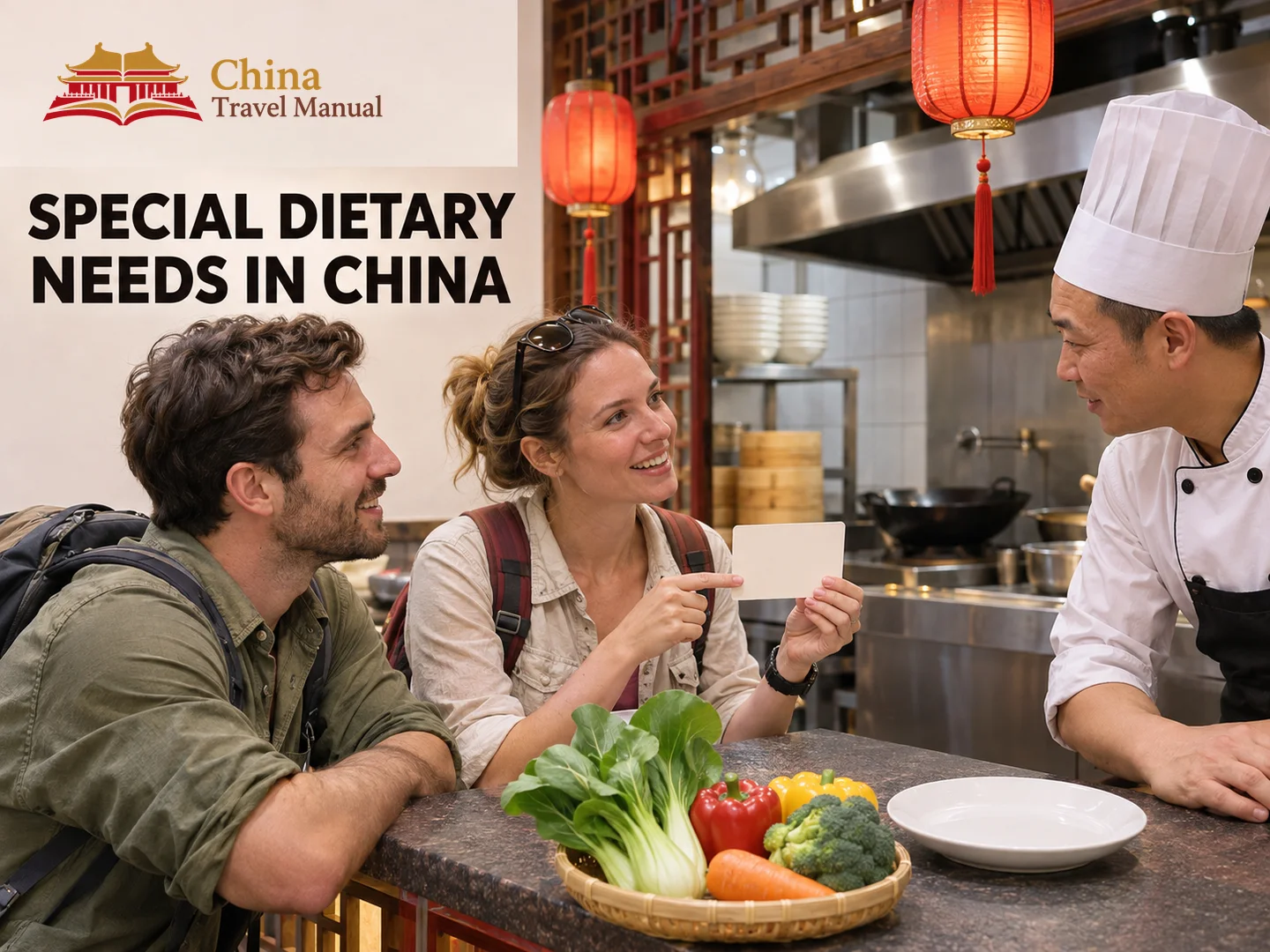
Show a short Chinese note listing the ingredients or preparation you need to avoid. Ask the server to check with the kitchen.
- For food allergy: State that you have an allergy and name the specific ingredient, including any oil, sauce or seasoning that contains it. Ask about shared utensils, cooking surfaces and frying oil.[1][2]
- For celiac disease: State that you cannot eat gluten, then ask about wheat, barley, rye and sauces. Check how the kitchen prevents cross-contact.[2][3]
- For vegetarian, vegan or halal meals: Give concrete limits on meat broth, lard, animal ingredients, pork and alcohol as relevant to your diet. Ask about supplier or certification where that matters to you.
For a medically necessary restriction, use a verified translation and an alternative meal if the kitchen cannot confirm ingredients or preparation.[1][2][3]

The most useful meal plan in China begins with the exact restriction. A food allergy or celiac disease requires ingredient and preparation checks. Vegetarian, vegan and halal requests need their own wording so the kitchen can understand the standard you follow. Save a short Chinese card, confirm what staff can check and plan a backup for journeys and unfamiliar kitchens.[1][2][3]
Chinese phrases for specific dietary checks
| When to use it | Chinese to show | Meaning or follow-up |
|---|---|---|
| Peanut allergy example | 我对花生过敏。请问这道菜含花生或花生油吗? | I am allergic to peanuts. Does this dish contain peanuts or peanut oil? Replace the ingredient only with an accurate translation. |
| Shared kitchen equipment | 这道菜会用同一个锅、厨具或炸油吗? | Will this dish share the same pan, utensils or frying oil? Name the trigger ingredient when you ask. For a peanut allergy, 这道菜和含花生的菜会共用厨具或炸油吗? asks whether the kitchen shares utensils or frying oil with peanut dishes. |
| Celiac disease | 我患有乳糜泻,不能吃含麸质的食物。请确认配料和酱料。 | I have celiac disease and cannot eat foods containing gluten. Please check ingredients and sauces. |
| Vegan request | 我不吃任何动物性食品,包括肉、鱼、蛋、奶和肉汤。 | I do not eat animal-derived foods, including meat, fish, eggs, dairy and meat stock. Add your restriction on honey or a specific ingredient if needed. |
| Halal request | 请问有清真餐吗?我不吃猪肉、猪油,也不吃用酒烹调的食物。 | Is a halal meal available? I do not eat pork, lard or food cooked with alcohol. Ask how the meat and other ingredients are sourced if needed. |
Print the relevant lines on one card and keep the card available offline. Carry a separately verified translation for any severe allergy or medical needs.[1]
Ask about ingredients and preparation separately
When ordering, ask if the item includes a premixed sauce, cooking oil, meat stock, chili condiment or garnish. Wheat can be present in soy sauce. A plain-looking rice dish may acquire gluten from seasoning or shared equipment. Read the gluten-free dining guide and the food allergy dining guide for the narrower questions that affect medical restrictions.[2][3]
Give the kitchen time to check the actual ingredients and preparation, even when the server understands the card. Ask about shared woks, knives, cutting boards and frying oil if contact matters. A dish can contain traces after an ingredient is removed. If the cook cannot verify the ingredients and preparation, choose the meal you brought or another provider. A shared hotpot or buffet can be hard to verify because serving tools and broth are used by more than one person. Ask about an individually prepared dish if you need to avoid contact.[1][2][3]
For packaged food, read the ingredient list and allergen wording. The updated Chinese labeling standard for prepackaged food is scheduled to take effect on March 16, 2027. It requires clearer disclosure for eight listed allergen groups used as ingredients and encourages precautionary cross-contact statements. Check the full label and your own requirements before relying on a packaged food.[4][5]
How to plan meals between cities
- Make the card before departure: List the trigger ingredients or dietary rule and have any medical-language translation checked.
- Check meals ahead: Contact the accommodation or carrier where relevant, especially when an early departure or late arrival limits food options.
- Pack a usable backup: Take familiar foods that fit your needs and are allowed on the route. For severe allergies, follow the travel plan you made with your clinician and keep prescribed medication accessible.[1]
- Confirm at the point of service: Ask again if the recipe or venue changes. For everyday ordering methods and menu vocabulary, use the China food ordering guide.
FAQs About Special Dietary Needs in China
Can I use a vegetarian label as a vegan check?
Ask whether a dish contains eggs, dairy, lard, stock or other animal-derived ingredients. A general vegetarian label such as 素食 is a useful starting point, then check the ingredients for the specific dish. Use the specific wording in the vegan dining guide if you avoid them.
Is a halal sign enough to settle every ingredient question?
Ask about meat sourcing, alcohol and preparation if you require a particular standard. The halal food guide helps you identify what to confirm with the venue.
Can I order a dish if the allergen was just removed?
For a medically significant allergy, do not rely on the removal of a visible topping. Ask for a separately prepared meal that meets your requirements or use your backup.[2]
Sources
[1] Centers for Disease Control and Prevention. Allergies and travel preparation
[2] Food Allergy Research and Education. Avoiding allergen cross-contact
[3] Celiac Disease Foundation. Dining and social eating with celiac disease
[4] National Health Commission of China. Questions on prepackaged-food labeling standard GB 7718-2025
[5] U.S. International Trade Administration. Dates and scope of China’s prepackaged food labeling standards





