
Quick Answer
Let people exit before you board, follow posted visitor rules, and ask before photographing someone at close range. At a shared meal, follow your host’s lead and use the utensils the table provides for shared dishes. In temples and museums, look for the rules for the specific hall you enter.[1][2][3][4]
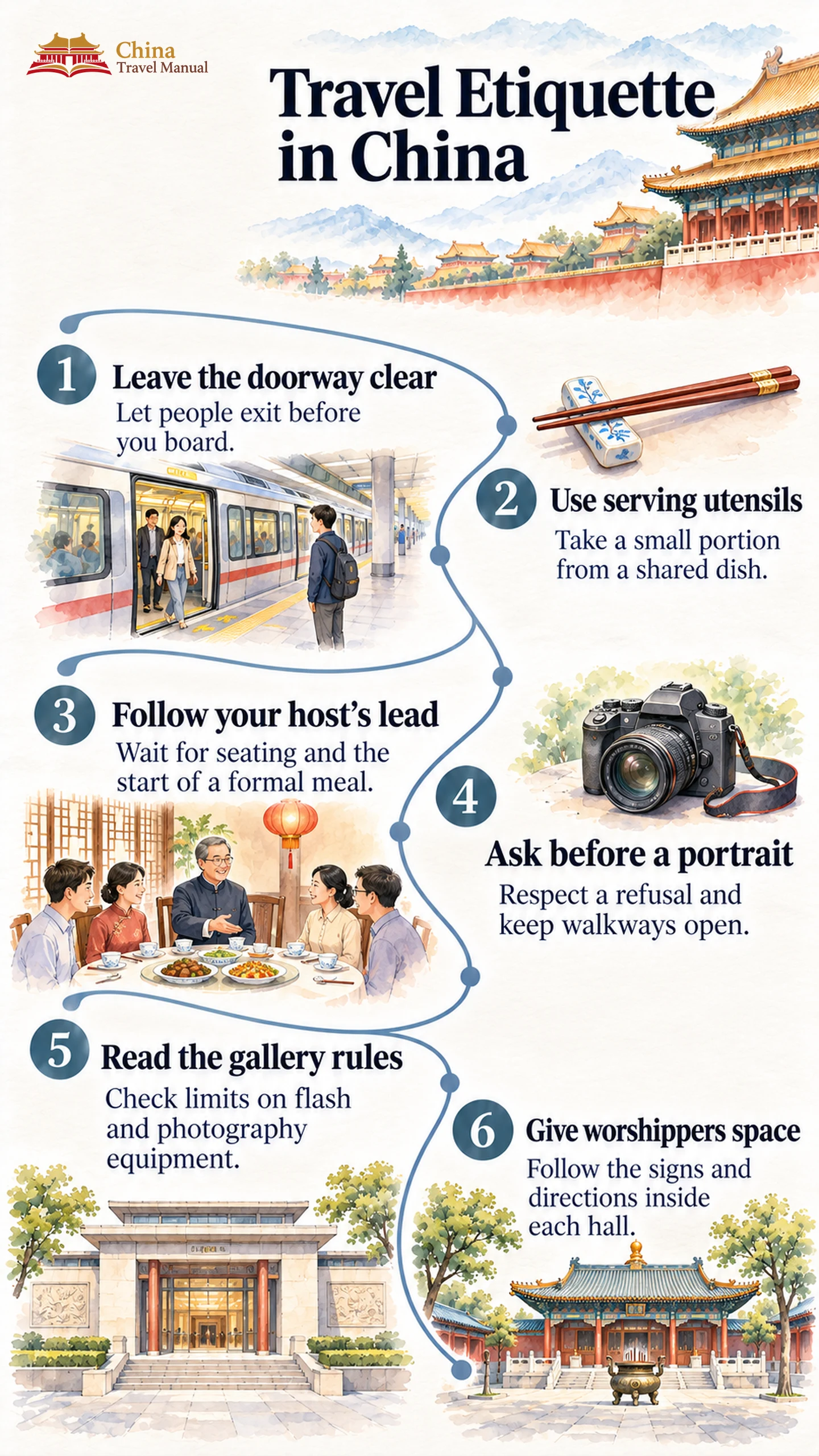
- Public transport. Queue where marked and leave room for people coming off the train.[1]
- Meals. Take modest portions from shared dishes and use any utensils intended for serving.[2]
- Photos. Check signs, stay clear of doors and take a portrait only if the person agrees.[3][4]
When you are unsure, a short question or watching what other visitors do can help.
Etiquette changes with the setting. A quick meal alone calls for fewer decisions than a hosted dinner. A museum courtyard can allow photos while a gallery next to it restricts flash or tripods. Follow the instruction that applies where you are standing.
Queues, Transit and Shared Space
Stand in the marked queue at a station or ticket desk. Beijing Subway tells passengers to let people get off before boarding. Move off the platform markings if you need to open an app or look at a ticket. On the train, keep bags and arms clear of the doors. On high-speed services, put luggage in the designated area and use headphones instead of playing audio across the carriage. The high-speed train guide gives the practical boarding steps.[1][3]
At a crowded attraction, move to the side to take a photo or check directions. Leave ramps and the paths between displays clear. Follow staff instructions if the queue separates groups, visitors with timed bookings or people who need special access. Public tourism guidelines emphasize queues, reasonable noise, and protecting heritage spaces.[3]
Sharing Food and Dining With a Host
At a meal with dishes in the middle, use the serving chopsticks (公筷, gōngkuài) or spoon if the table offers them. Transfer a small portion to your plate, then eat with your personal utensils. Keep chopsticks off food you will not take and avoid leaving them standing upright in a bowl. If there are two sets and you are unsure which is for serving, ask or watch which one the host uses.[2]
At a formal or hosted meal, wait for the host to show you where to sit. Follow their cue about when to begin, especially when dishes are set out before everyone has arrived. A quick restaurant meal or food court order can be much less formal. If you are offered a toast, respond politely and ask for tea or water if you prefer it. If you have a food allergy, explain it directly so the staff can check the ingredients.[2][6]
In ordinary settings where no gratuity is expected, pay the amount on the bill. If you are joining a private tour or dining somewhere that mentions a service charge, check the written terms. The China tipping guide gives the distinction between routine meals and prepaid services.[5]
Photographing People, Museums and Heritage Sites
Ask before taking a close portrait, especially of a worker, child or person who is worshipping. Accept a refusal and give people space. For broader street scenes, keep the camera clear of pedestrian routes and watch for staff directions. If the venue has a photography policy, check the signs at the particular gallery, hall or exhibition. The China photography travel guide can help you plan where to ask.[3][4]
Rules can change inside a venue. Beijing’s Palace Museum has published a ban on flash, selfie sticks and tripods in exhibition halls. Follow current venue instructions if they are more restrictive. Use the paths and viewing areas provided, and keep your hands off objects, painted surfaces and old woodwork unless a display is clearly interactive. The China museum reservations guide addresses booking and entrance checks separately.[3][4]
Visiting Temples and Other Places of Worship
Read notices at the entrance and again before entering a hall. Keep your voice down, give worshippers space and wait when a ceremony limits access. Ask staff for guidance if you are unsure where visitors can stand, whether a hall allows photos or whether you need to remove a hat or shoes for a specific area. Dress for a place where people may be worshipping. Ask staff about local requirements before joining any ceremony.[3][7]
Visit the areas the site opens to the public, and keep clear of offerings and objects placed for worship. If you want to watch a ceremony, ask where you can stand without interrupting. Use the guide to visiting temples in China to plan around several types of sites.[3][7]
FAQs About Travel Etiquette in China
Is it rude to ask someone to speak more slowly?
A short, polite request is fine. Show the address or booking if speaking is difficult. The Chinese phrases for travelers give a sentence you can show or say.
Can I use my own chopsticks on shared food?
Use the separate serving chopsticks or spoon when provided. Ask which utensil is for serving if the table has several sets.[2]
Can I take photos inside a temple or museum?
Check the hall’s signs and ask staff if you are unsure. Restrictions on photography equipment or flash can apply even where some photography is permitted.[3][4]
Is tipping necessary for an ordinary restaurant meal?
A tip is generally not expected in ordinary dining. Check the bill and any stated service terms, and pay the listed amount.[5]
Sources
[1] Beijing Municipal Government. Beijing Subway passenger guide
[2] Shanghai Municipal Government. Guide to table etiquette in China
[3] Qusum County Government. National scenic-area visitor conduct guidance
[4] Palace Museum. Visitor tips and rules for exhibition halls
[5] Shanghai Municipal Government. Is tipping necessary when dining in Shanghai?
[6] Food Allergy Research & Education. Tips for international travel
[7] Shanghai Municipal Government. Regulations on tourism





