Quick Answer: What should I check before buying food souvenirs in China?
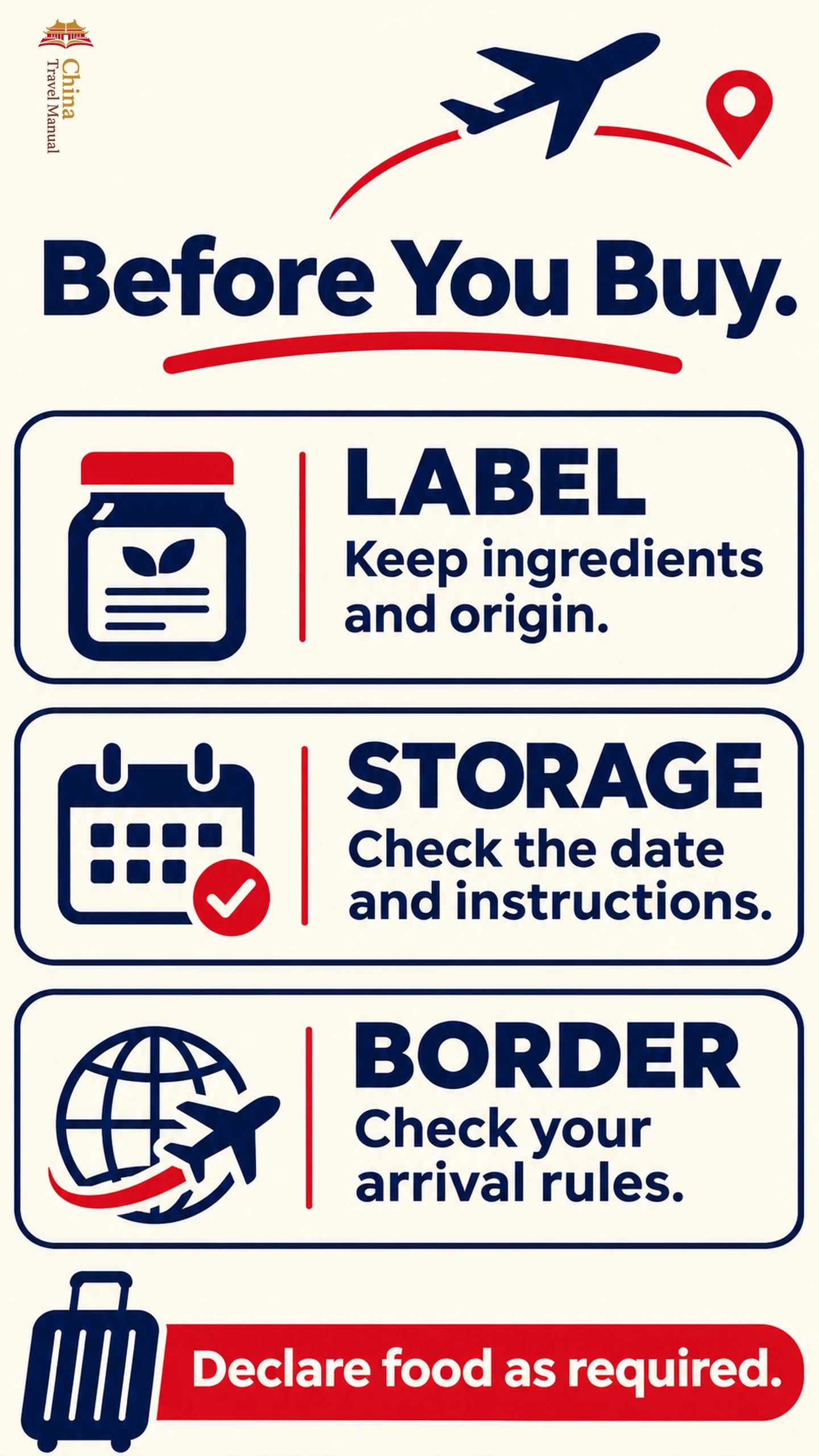
Start with a sealed retail package that shows the ingredients, origin and storage instructions. Match the exact product to the rules for your arrival country. A tin of plain tea, a tea blend with dried fruit and a pastry with an egg or meat filling can need different checks.[1][3][4][5]
- Read the back: Check what goes into the food and when the maker says to use it.
- Check the route: Look up the rules where you clear customs, including a connection if you enter that country.
- Keep the original package: Save the receipt and pack the food where you can show it at inspection.
These examples apply to personal gifts in passenger baggage. Check the rules again close to travel, including your declaration and any airline security limits for liquids.
Compare Common Food Gifts
| Gift | What to check on the package | What to look up before buying |
|---|---|---|
| Plain Chinese tea | Confirm that the ingredients list contains only tea leaves if you are buying plain tea. | Check tea-leaf rules separately from rules for herbal, fruit or seed blends.[3] |
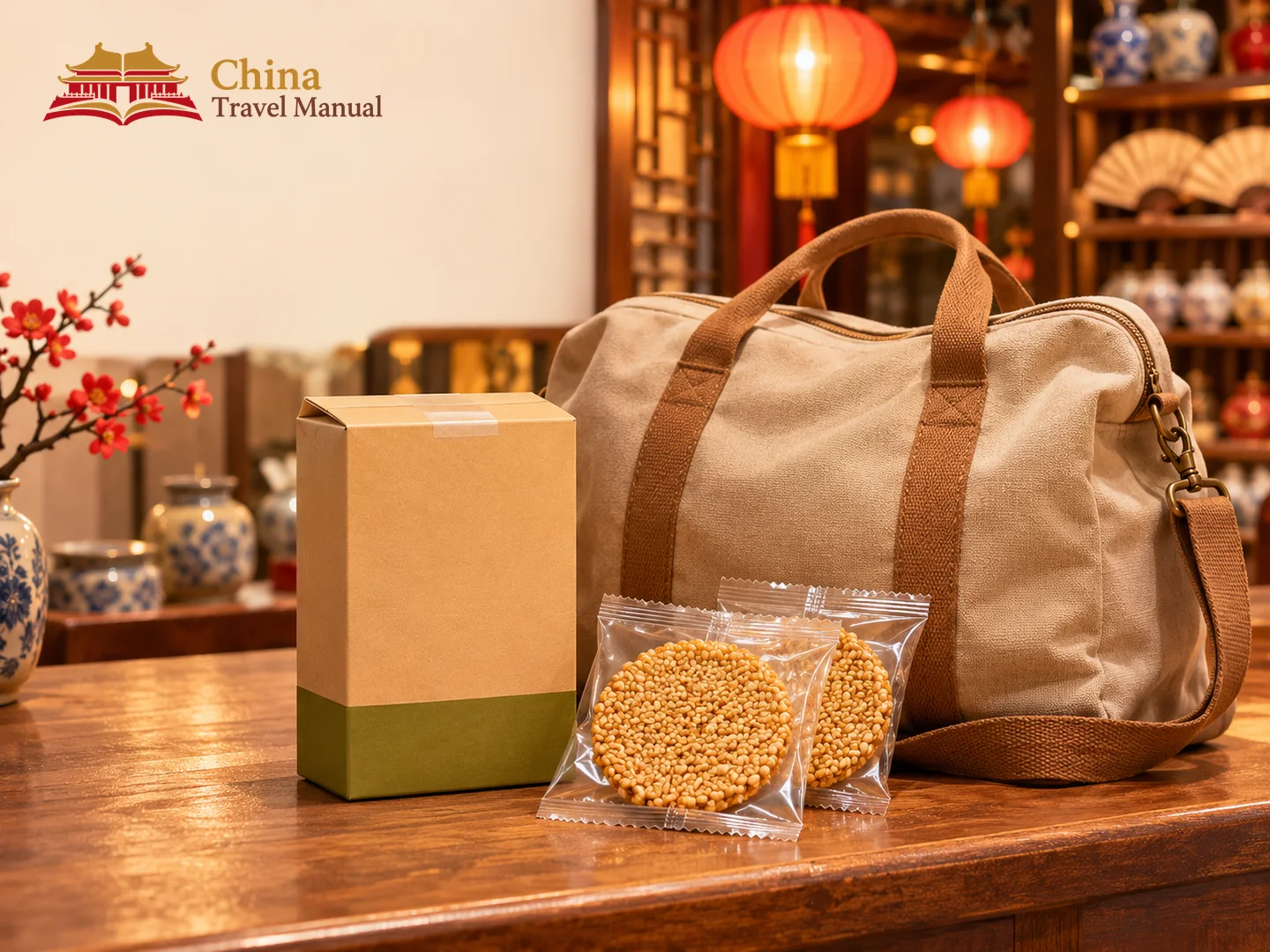
| Biscuits or sesame crisps | Look for a full ingredient list, original seal and enough time on the date label. | Check the destination’s processed snacks category and any exception that applies to the actual ingredients.[4][5] |
| Mooncakes and filled pastries | Read the filling. The name or the front picture may tell you little about meat, yolk or dairy. | Check rules for baked goods and the filling. Great Britain restricts meat from China, and Australian conditions depend on the ingredients.[4][8] |
| Chili crisp or hot-pot base | Check for meat, seafood or animal fat, and whether the package is a jar or a pouch. | Look up both the ingredient import rules and security rules for liquids and pastes on your route.[2][4][5] |
For fresh fruit, unlabeled meat or chilled gifts, look for the specific arrival rule before buying. If you cannot identify the contents or keep the package as directed, choose another gift.
Read the Date and Storage Together
Look for 配料表 (ingredients), 生产日期 (production date), 保质期 (shelf life) and 贮存条件 (storage conditions). An inked date on a seam or lid can be the production date. Look for the wording that identifies which date it is. Under China’s existing labeling standard, shelf life can be shown as a date or a duration tied to the production date. Updated rules are scheduled to take effect March 16, 2027, so packages may present the information differently.[6][7]
If a box says that it keeps for a set number of days, check the production date before buying. Count the trip, the days until you give it to someone and any delay you might reasonably have. Shelf life assumes the labeled storage conditions. If the packet says 冷藏 (keep refrigerated) and you cannot follow that instruction, choose another gift for the flight.[6]
Buy the item with the outer box or sleeve intact. An inner wrapper may omit the ingredients or origin that was printed on the outside. Use the China shopping guide for other gifts and places to shop.
Check the Country Where You Enter
Read the rule for the exact product and where it was made. If you reclaim baggage and enter a country on a connection, check that country too. If you remain airside, confirm the transit arrangement with your airline before relying on it.
- United States: CBP asks travelers to declare all food. USDA APHIS lists products made solely from tea leaves separately from other teas. Check blends and other gifts by their ingredients, and keep the packaging available for the officer.[2][3]
- Australia: Use BICON via the Australian agriculture department for the exact import conditions. Read the Incoming Passenger Card carefully and declare the items the form requires. Biosecurity officers may inspect them.[4]
- Great Britain: GOV.UK lists biscuits and several other processed foods in its general guidance, with exceptions. It also restricts meat products arriving from outside its listed European country group. Check the correct page for any ingredient exception and use separate guidance for Northern Ireland.[5][8]
For example, if you are entering the United States with a tin of plain oolong and a box of assorted mooncakes, verify each separately. The tea entry in the USDA guide does not cover pastry fillings. If you cannot identify each filling, keep the purchase to the clearly labeled gift and declare what you carry.[2][3]
FAQs About Food Gifts from China
Does a vacuum seal guarantee entry?
Inspectors may use the packaging to identify the item. The ingredients, origin and destination’s requirements determine whether it can enter.[2][4]
Can I remove the box to save space?
Keep the packaging that shows the product’s identity, origin and ingredients. Original packaging and receipts are especially useful if an officer needs to identify the contents.[3]
What if the date printed on a Chinese snack is unclear?
Ask the seller which date it is and confirm the shelf life and storage instructions. Choose a different package if you cannot work out whether it will keep until you give it to the recipient.[6]
Sources
[1] National Health Commission of China. Prepackaged food labeling standard and scope
[2] U.S. Customs and Border Protection. What to declare on entry
[3] USDA Animal and Plant Health Inspection Service. Tea and other agricultural products in baggage
[4] Australian Department of Agriculture, Fisheries and Forestry. BICON conditions and biosecurity declarations
[5] GOV.UK. Personal food imports into Great Britain
[6] China’s national health authority. How production date and shelf life are marked
[7] Beijing Administration for Market Regulation. Label standard transition and March 2027 effective date
[8] GOV.UK. Rules on meat, dairy, fish and other animal products