

Quick Answer
Choose November for a first visit with harbor walks, Victoria Peak and an island day. Choose December for cooler weather and less rain on average. June is much wetter, and July through September have the highest likelihood of tropical cyclones affecting Hong Kong.[1][2]
| Month | Mean temperature | Mean monthly rain | Useful planning implication |
|---|---|---|---|
| April | 23.0°C | 153.0 mm | Mild but allow for humid or foggy days.[1][2] |
| June | 28.3°C | 491.5 mm | Prioritize short outdoor windows and indoor alternatives.[1] |
| October | 25.7°C | 120.3 mm | Warmer than November, with more rain on average.[1] |
| November | 22.2°C | 39.3 mm | Plan for outdoor time and keep a clear morning for the Peak.[1] |
| December | 18.2°C | 28.8 mm | Pack a layer for the harbor and higher ground.[1][2] |
These are Hong Kong Observatory headquarters averages for 1991–2020. Your trip may be wetter, warmer or cooler, and conditions on an exposed ridge can differ from the city.[1][2]
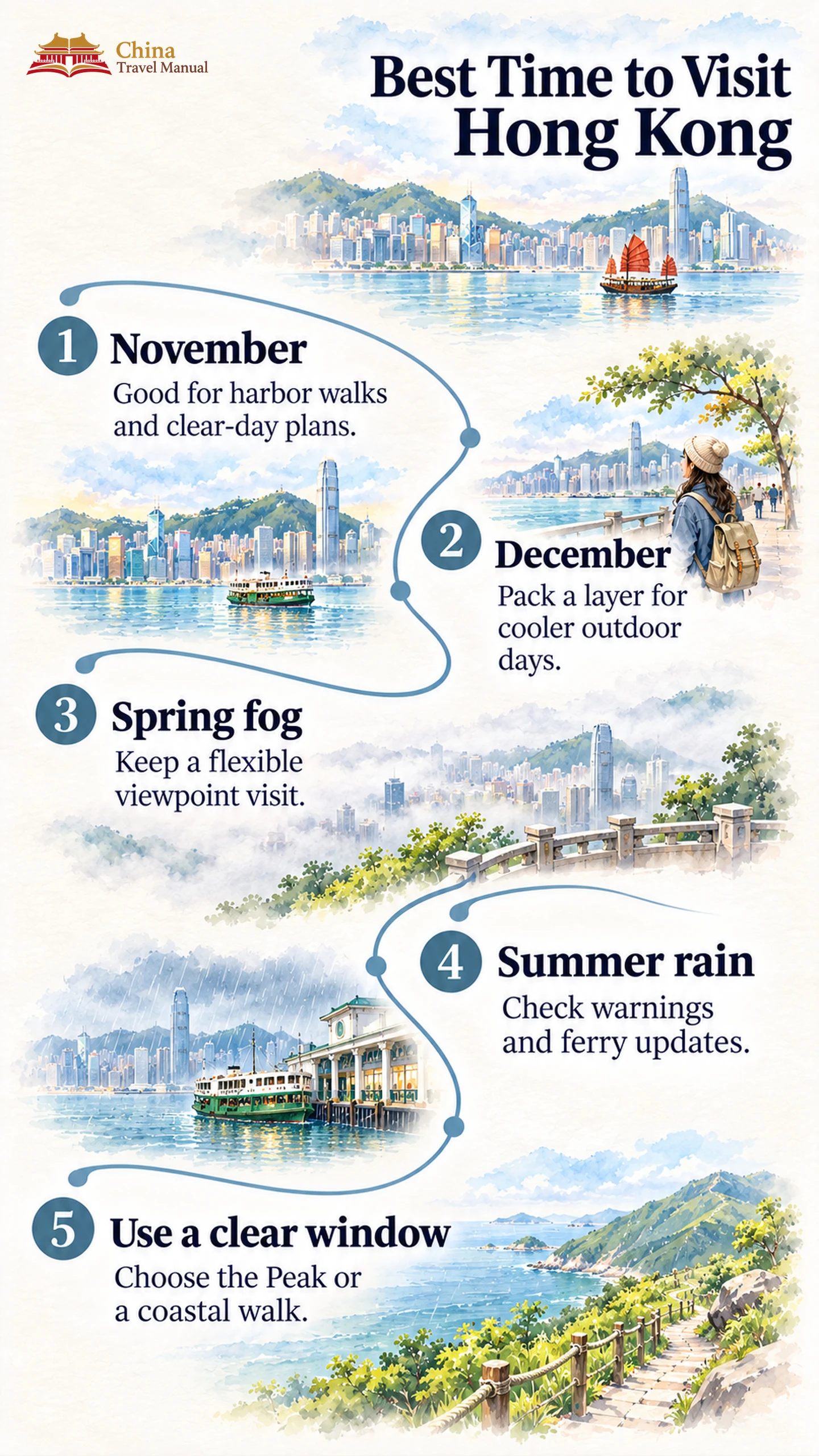
November is the easiest month for a first Hong Kong trip that includes outdoor time. If you prefer cooler days, choose December. If your dates are fixed in spring or summer, you can still make a good trip by keeping the Peak, ferries and coastal walks flexible.
November and December for Harbor Walks and Hikes
November is a good balance if you want lunch outdoors and time by the harbor without summer heat. December is drier in the long-term observations and suits longer walks if you prefer a cooler day. High ground can feel colder and windier, so bring a light layer if you plan a ferry ride or sunset visit.[1][2]
Check morning visibility before buying a same-day upgrade to a paid viewing deck. Use the Victoria Peak visitor guide to choose how you will go up. For an exposed ridge such as Dragon’s Back, check temperature, rain and warnings together.[3]
Spring, Summer and the Start of Autumn
March and April
Spring is mild. The Observatory notes that drizzle and fog can occasionally affect air and ferry services. Split outdoor and indoor plans across the harbor rather than putting every viewpoint on the only day you have free. Use a city museum or neighborhood food stop while you wait for visibility to improve.[1][2]
May Through September
Hong Kong receives about 80% of its annual rainfall between May and September. June and August are usually the wettest months, and July through September are the most likely months for tropical cyclones to affect the city. If those are your only dates, book around a few activities that can operate in different conditions and keep high views or outlying island plans moveable.[1][2][4]
Start exposed walks early when conditions are stable, and check the latest alerts before leaving. Do not use a normal departure timetable as proof that a ferry is running during a weather warning. The Hong Kong transportation guide helps you choose a rail or indoor alternative closer to your base.[3][4]
October, January and February
October works if you want warmer weather than November, with a higher chance of rain. January is typically dry, while January and February tend to be cloudier and can have cold fronts. Around Lunar New Year, confirm the opening hours of any smaller businesses or restaurants that matter to you. Check the current government holiday list before reserving on a specific date.[1][2][5]
How to Adjust a Short Trip to the Forecast
- Clear and relatively calm. Start with the Peak or take an early island ferry if services are running.
- Low cloud or patches of drizzle. Stay near a museum, covered market or neighborhood where you can take breaks indoors.
- Thunderstorms or heavy rain. Move exposed ridges and coastal walks to a better day, and use official weather guidance and attraction notices.[3][4]
- Holiday weekend. Book fixed attractions in advance and leave more time to cross the harbor or get to the airport. Use the three-day Hong Kong itinerary to keep two outdoor options interchangeable.
FAQs About the Best Time to Visit Hong Kong
Is October or November better for a first Hong Kong visit?
November is generally cooler and drier. The Observatory’s normals show an average of 22.2°C and 39.3 mm of rain in November, compared with 25.7°C and 120.3 mm in October.[1]
When can typhoons disrupt Hong Kong travel?
The Observatory identifies May to November as the broader period and July to September as the months most likely to see tropical cyclones affecting Hong Kong. Check warnings and your specific transport operator before traveling.[2][4]
Can I visit Hong Kong in winter?
Yes. December offers cool, usually dry conditions for city walks. January and February are often cloudier and cold fronts can bring much cooler days, so check the forecast and pack accordingly.[1][2]
Sources
[1] Hong Kong Observatory. Monthly meteorological normals 1991–2020
[2] Hong Kong Observatory. Climate of Hong Kong
[3] Hong Kong Agriculture, Fisheries and Conservation Department. Hiking safety guidelines
[4] Hong Kong Observatory. Tropical cyclone warning precautions
[5] Hong Kong SAR Government. General holidays for 2027





