
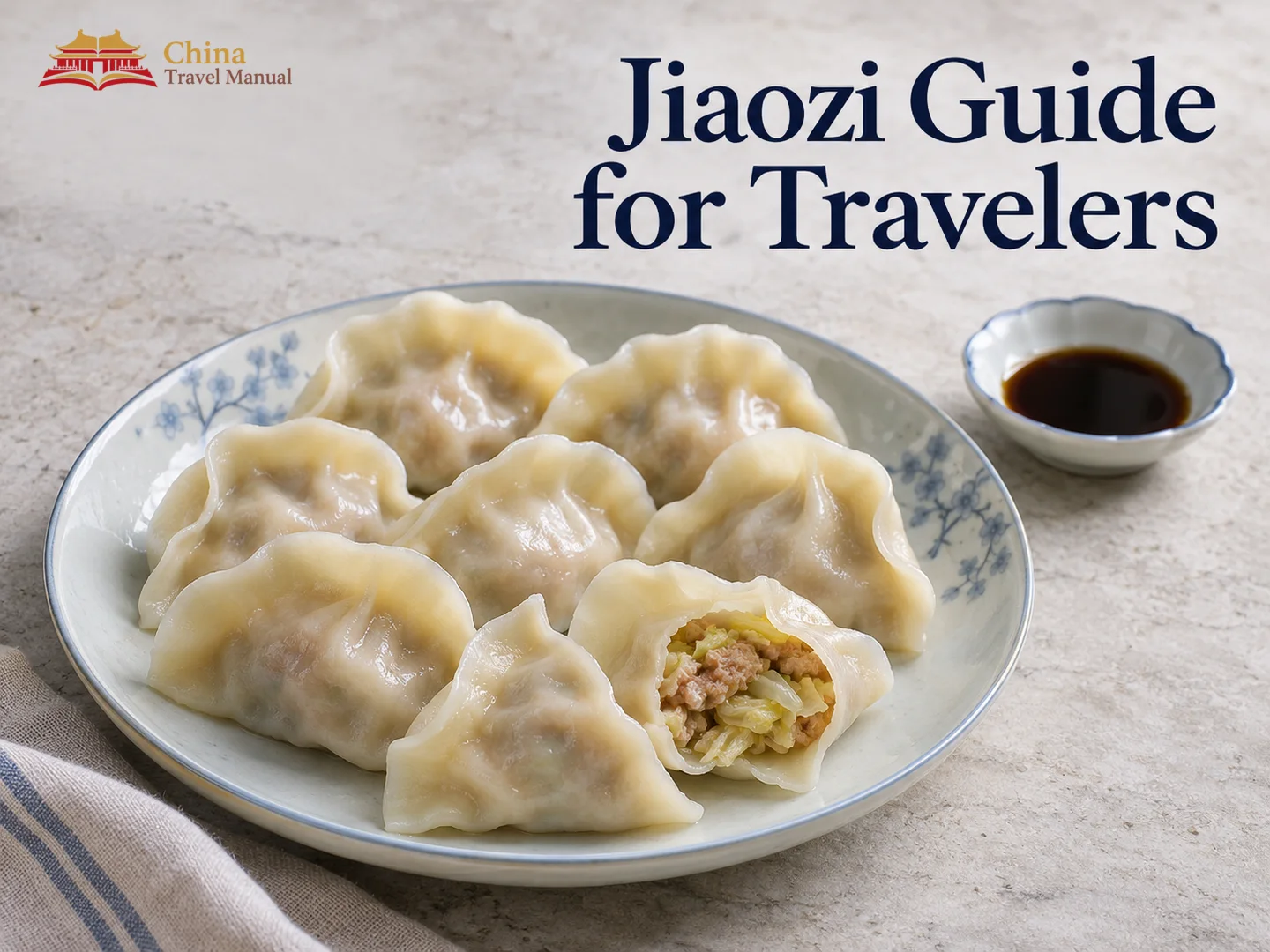
Quick Answer: How Do You Order Jiaozi in China?
For a first plate of jiaozi (饺子, jiǎozi), order boiled dumplings and choose a filling such as pork and cabbage or chive and egg if available. Confirm how many are in the plate. Try vinegar on the side, and look for a fried option if you prefer a crisp base.[1][2][3]
- Cooking method: Look for 水饺 for boiled or 蒸饺 for steamed.
- For a crisp base: Check for 煎饺 or 锅贴, which may be listed separately.
- Fillings: Ask about the specific meat or vegetable mix.
- Portions: Ask for the approximate count if the menu lists weight.
Choose the wrapper texture and filling together before deciding how much to order.
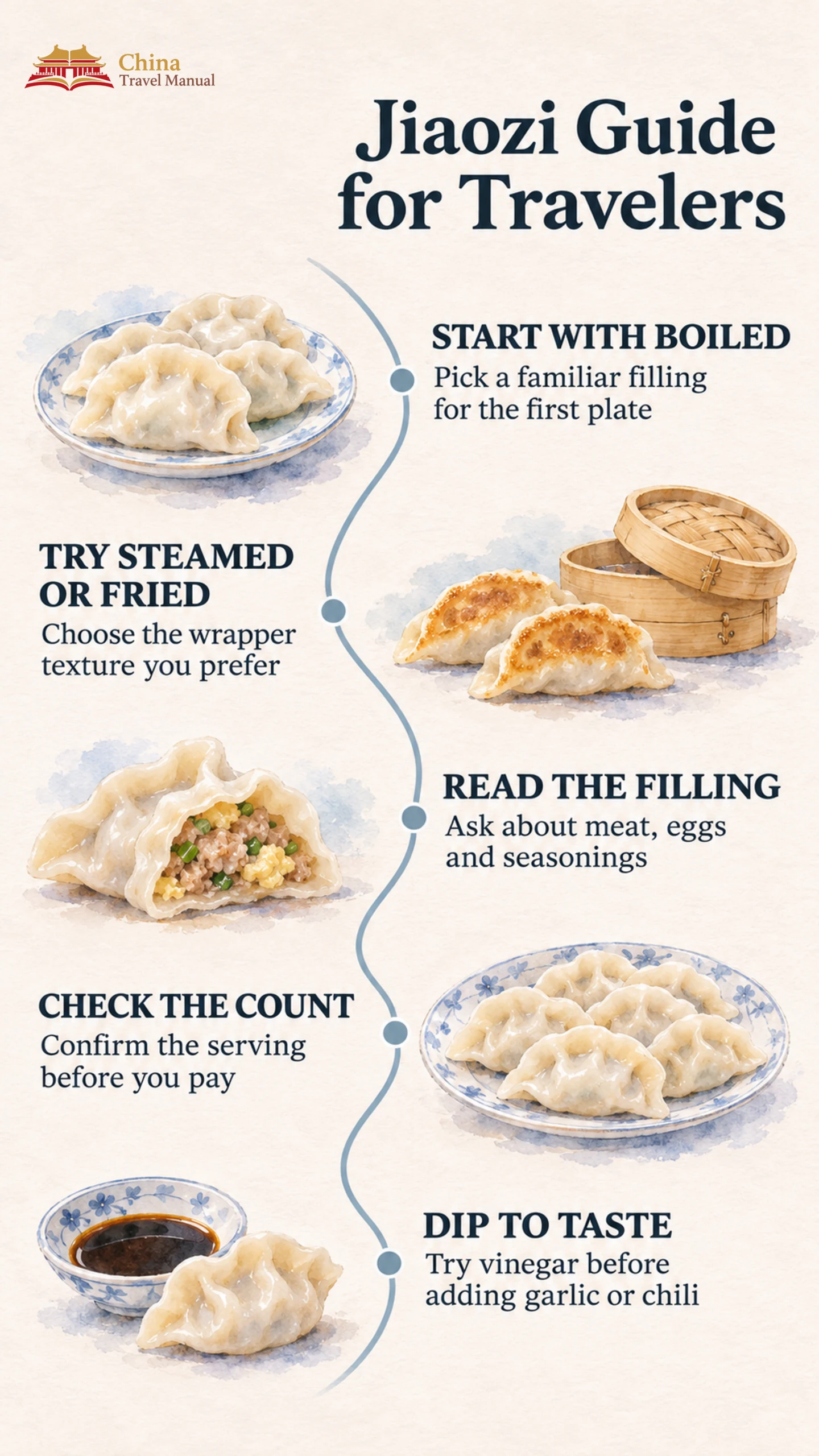
A dumpling menu can look longer than it is. Most entries describe the filling, the cooking method or the size of the order. Read them separately, so a plate of tender boiled dumplings does not turn into a fried snack or a second helping you did not expect.
Boiled, Steamed or Pan-Fried?
| Menu word | What to expect | Choose it when |
|---|---|---|
| 水饺, shuǐjiǎo | Boiled dumplings with soft, slightly chewy wrappers | You want a simple first plate |
| 蒸饺, zhēngjiǎo | Steamed dumplings | You prefer the steamed wrapper and texture |
| 煎饺, jiānjiǎo, or 锅贴, guōtiē | Pan-cooked items with a crisp underside | You want a browned base |
A shop may distinguish guotie from other fried dumplings by the shape, filling or cooking method. Treat the two labels as useful clues, then look at the actual menu picture if it matters. Compare the thin wrappers with baozi and the bready pan-fried wrappers of Shanghai shengjianbao.[1][2][3]
Pick a Filling and Check the Portion
Read the filling before you choose the count. 猪肉白菜 means pork and Chinese cabbage, and 韭菜鸡蛋 means chives and egg. Neither label tells you whether the kitchen uses stock or other seasonings in the filling. Ask the vendor about ingredients you avoid.[2][3]
If the menu lists 两 (liǎng) or 斤 (jīn), ask the staff approximately how many dumplings they will serve. A weight label is a poor way to guess the number of pieces without knowing the house’s size and pricing convention. Order a small serving first if you want to try several fillings.[3][4]
Eat With the Dipping Sauce You Prefer
Dip one dumpling into vinegar before adding garlic or chili. That lets you taste the filling on its own and keeps the shared plate unseasoned. If the group is ordering two fillings, keep them on separate plates.[3][4]
In northern China, dumplings also belong to many families’ Spring Festival meals, where their shape can evoke old ingots and good fortune. You can order them year-round. For more ways to fit a dumpling meal into a trip, see the Northeast China food guide.[1]
FAQs About Jiaozi
Do boiled dumplings come in soup?
A boiled dumpling order is often served drained. Ask whether the restaurant serves it in broth if you want a soup meal.[2]
What is the easiest choice for a first plate?
Start with a small order of boiled dumplings in a filling you recognize and add dipping sauce after tasting.
Can vegetarians order jiaozi?
Ask what is in the filling and the seasonings. A chive-and-egg filling includes egg and may have other additions.
Sources
[1] State Council Information Office. Dumpling shapes, cooking methods and Spring Festival customs
[2] China Panorama. Menu names and differences among boiled, steamed and fried dumplings
[3] Chinese Food Atlas. Common jiaozi fillings, cooking methods and dipping sauces
[4] Field Guide to China. Serving-weight labels and table condiments





