
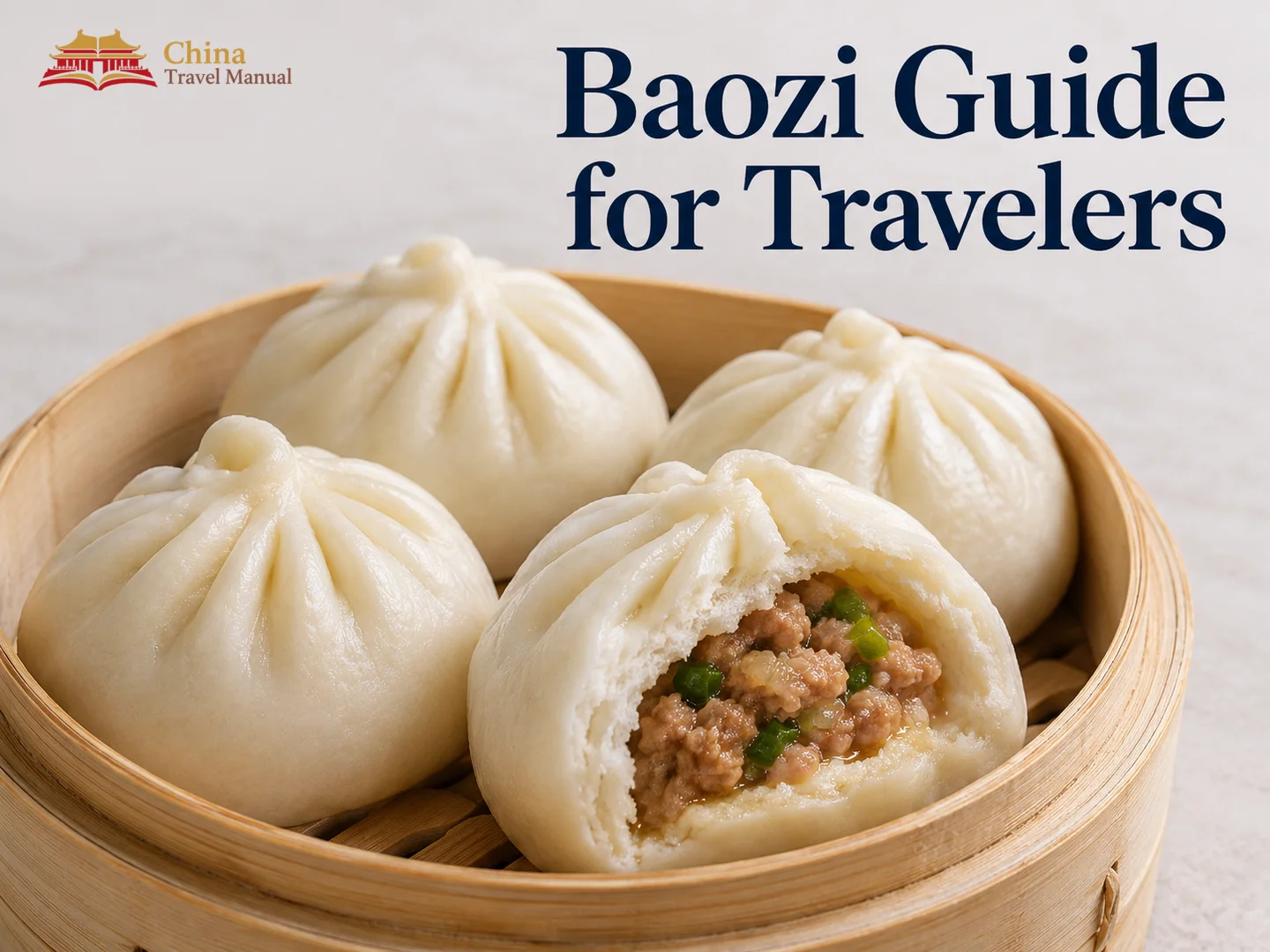
Quick Answer: How Do You Order Baozi in China?
Order baozi (包子, bāozi) by choosing a filling and checking the count. Start with a freshly steamed meat, vegetable or sweet bean bun. The outside often looks similar across fillings, so point to the label or ask what is inside before paying.[1][2]
- For a savory breakfast: Try pork or a vegetable-filled bun and confirm the filling.
- For something sweet: Look for a bun filled with red bean paste.
- For plain bread: Ask for mantou, the usual name for an unfilled steamed bun.
- Before you pay: Ask whether the price is per bun or for a basket.
Read the filling first and decide whether you want a single bun or a small basket.
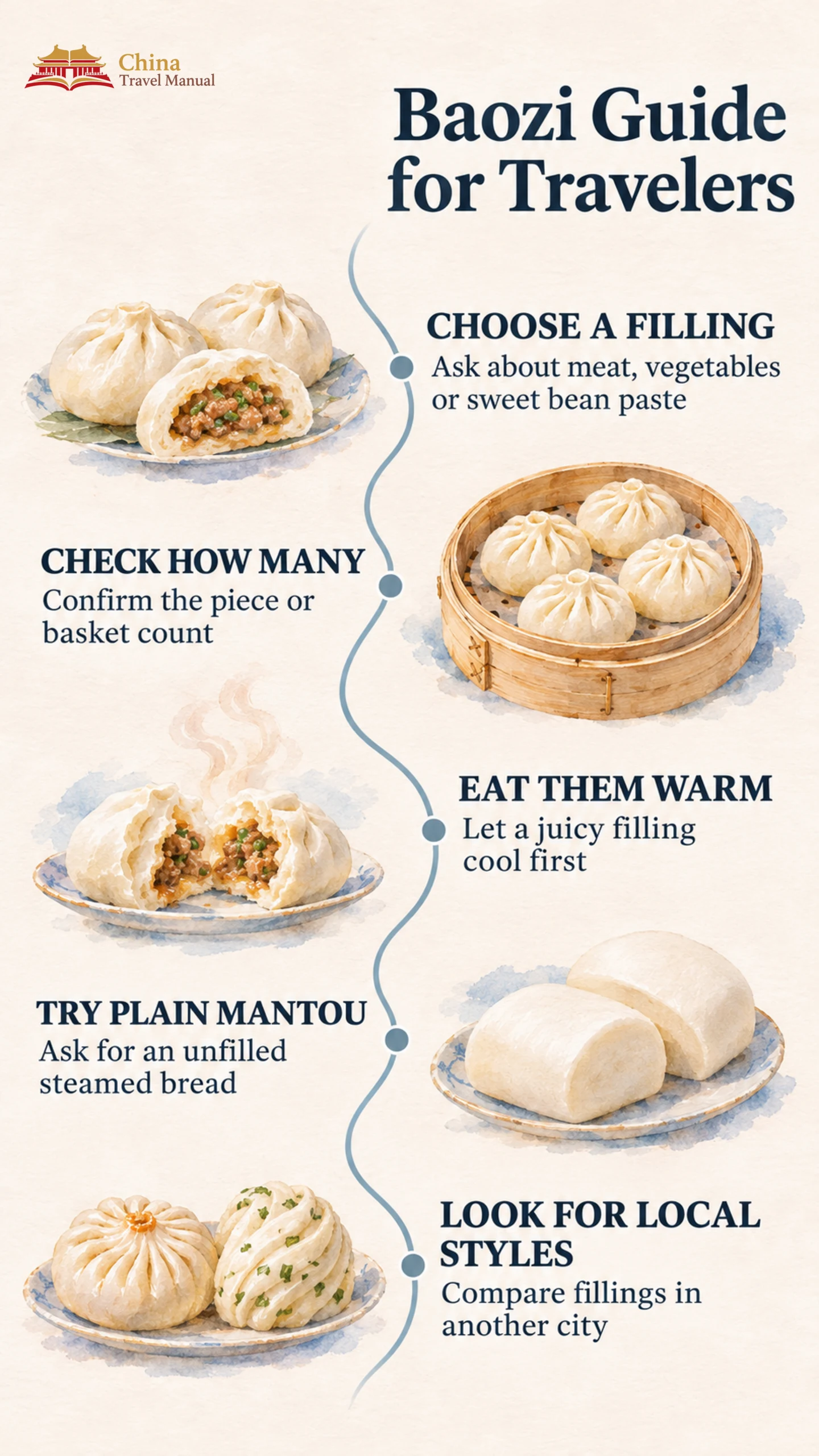
From the steamer, several buns can look nearly identical. The important part at breakfast is the word beside each tray or the answer the vendor gives you. Once you know which bun holds what, it is easy to build a quick breakfast without guessing from the pleats.
Read the Filling Labels
| Label | What it usually means | What to confirm |
|---|---|---|
| 肉包, ròubāo | Meat bun | Which meat is in the filling |
| 菜包, càibāo | Vegetable bun | Whether it also contains egg, meat or animal fat |
| 豆沙包, dòushābāo | Sweet bean paste bun | Which bean paste is used if that matters to you |
| 馒头, mántou | Plain steamed bread | A regular unfilled bun |
These labels tell you the general order, but vendors can use different mixes and sizes. The dough is commonly wheat-based. Ask about the exact filling or cooking fat if you have dietary requirements, since visual inspection will not reveal them.[1][2][3]
How to Order at a Breakfast Counter
Point to the filling you want and say 两个 (liǎng ge) for two. Ask about the size before ordering several. A breakfast counter may sell by the piece, while a sit-down place can list a basket or set. If the menu gives only one number, ask how many buns it covers.[1][3]
Eat a steamed bun warm, but give a large or juicy filling a moment to cool. An ordinary stuffed bun can be a quick meal with a drink or congee. If you want something crisp on the same trip, try jianbing on a different morning.
Baozi, Mantou and Other Dumplings
Plain mantou (馒头, mántou) and stuffed baozi have a related steamed-bread texture, but only the latter is usually filled. Jiaozi usually use a thinner wrapper and can be boiled, steamed or fried. Shanghai shengjianbao are pan-cooked with a crisp base. If the menu specifies soup, the filling can be especially hot.[2][3]
In Tianjin, look for traditional pleated styles if you have time for a sit-down basket. A national heritage entry documents a local technique with semi-leavened dough and a moist filling. The technique is one example within the broader bun family, so use the menu to identify what you are ordering in each city.[4]
FAQs About Baozi
Are baozi breakfast food?
They are a common breakfast or snack. Buy one or two according to their size and what else you want to eat.[1][3]
Are vegetable buns vegan?
Ask the vendor. A vegetable filling can still be prepared with egg, animal fat or other ingredients you avoid.
Are baozi and mantou the same?
Both can be steamed wheat breads. Baozi are generally filled, while mantou usually refers to the unfilled bread.[2]
Sources
[1] Trip.com. Baozi breakfast orders, common fillings and sale by piece
[2] China Daily. Chinese names for filled and unfilled steamed breads
[3] Chinese Food Atlas. Baozi dough and fillings, comparable buns and ordering
[4] China Intangible Cultural Heritage Digital Museum. Traditional pleated bun-making technique in Tianjin





