
Quick Answer: Stay near Dongjiekou for the old lanes. Give the Min River neighborhoods a separate half-day or evening.
Give Fuzhou two days if you want to see the historic lanes and both sides of the Min River. Start in Gulou at the old courtyard district. Use the second day for old merchant lanes in Shangxiahang and the hillside streets of Yantai Mountain. For a short visit, stay around Dongjiekou for easier metro and old-town access.[1][2][3]
- Day one: Walk the Gulou lanes and choose an interior or two if they are open.
- Day two: Explore Shangxiahang and Yantai Mountain across the Min River.
- Rail arrival: Check whether your train uses Fuzhou or Fuzhou South.
- Flying in: Use the Binhai Express to reach Fuzhou Railway Station or change for your hotel.
Check individual house opening times and airport services before building a schedule around them. Public lanes and admission to specific buildings are separate.

Fuzhou’s best first stops are historic neighborhoods where the detours down side streets are part of the visit. Start in Gulou for old houses, then take a separate walk around the Min River. With a second day, you can spend time on both banks and sample a few dishes between the walks instead of fitting every stop into one afternoon.
Start in the lanes and courtyards of Gulou
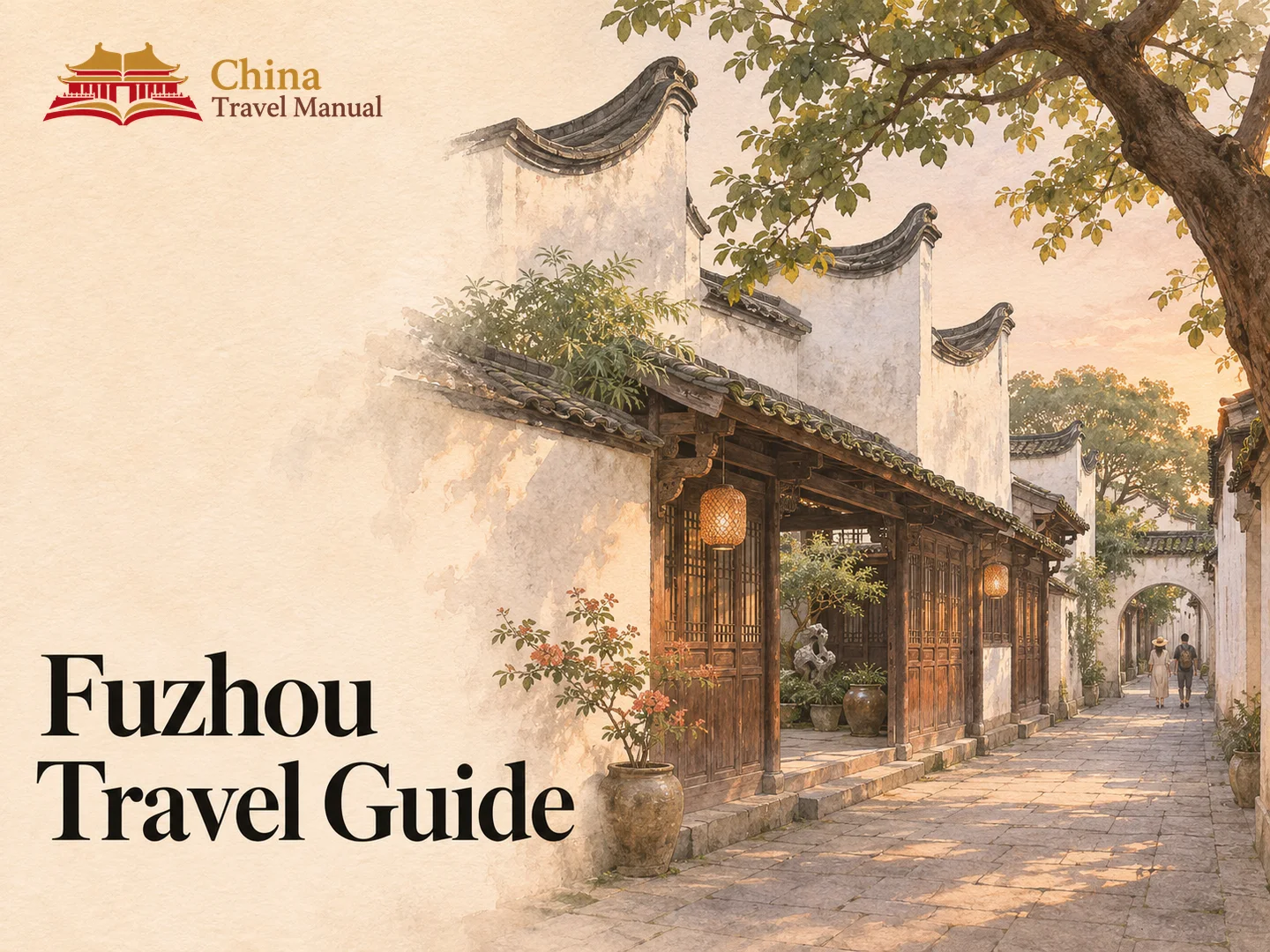
Three Lanes and Seven Alleys (三坊七巷, Sānfāng Qīxiàng) is a set of residential lanes and houses around Nanhou Street. Use the main street to orient yourself, then walk into quieter lanes such as Wenru Lane and Yijin Lane. The notable former residents include translator Yan Fu and writer Bing Xin. Choose an interpretation stop that interests you, such as a former residence, and check its specific admission arrangements. The Three Lanes and Seven Alleys guide covers the site in more detail.[1][2][4]
Leave an hour for a tea break, lunch or one more short loop. Some lanes look similar at first until you notice the way high walls screen the courtyards from public paths. When the main street is busy, a shorter loop with time to look into one or two houses works well. If you prefer more open space, add Fuzhou’s West Lake Park after the lanes. See things to do in Fuzhou for more stops.[1][2][5]
Explore both sides of the Min River
Shangxiahang’s old trading lanes and waterside paths show a different side of Fuzhou’s history. Take a few turns away from the biggest pedestrian routes to find slower corners, then stop for a meal or tea. The historic area works as a walk on its own. Check ahead if a specific shop, gallery or house is the reason for your visit.[2][4]
Across the river in Cangshan, Yantai Mountain has sloping streets and historic buildings. It suits a later walk with stops as you go. If your group has trouble on grades, check the path and start near the area you most want to see. If you want to cross by water, check the current Min River water-bus schedule for Cangxia and Yantai Mountain piers. It runs at published times, so use a road ride if the boat would leave you waiting. Keep enough time for a river walk in the late afternoon.[2][4][13][14]
How to arrive and where to stay
Fuzhou Railway Station and Fuzhou South serve different train schedules and are in different parts of the city. Search for both in China Railway 12306 according to your origin and check the actual departure or arrival address. Reaching Dongjiekou is straightforward on Line 1 from Fuzhou Railway Station. From the south station, plan the longer city leg around your hotel. The Xiamen to Fuzhou route guide compares the intercity choices.[3][6][7]
From Changle Airport, take the Binhai Express, called F1, to Fuzhou Railway Station or a suitable interchange. Some trains skip intermediate stops. Check that your chosen departure calls at the stop you need. For a hotel, choose Dongjiekou and central Gulou for the first-day walk or Cangshan for the south bank. See the Fuzhou airport transfer guide, Fuzhou transport guide and where to stay in Fuzhou.[3][8][9]
What to order in Fuzhou
Start with fish balls in broth, a local specialty available as a quick meal. Some styles contain meat filling. Ask about the filling and stock if you avoid a particular ingredient. Rouyan is a different dumpling with a thin wrapper made partly of minced pork. It is served in soup and works well as a small order alongside another plate.[10][11]
Leave one meal for a longer sit-down if you want to sample Fujian cooking beyond snacks. The provincial food guide notes how important stocks and broths are in Fuzhou. Try a soup alongside a second dish and ask about portion size before ordering. Choose a place near the neighborhood you are walking through so you can use the remaining daylight outside.[10][12]
A practical one- or two-day Fuzhou plan
On one day, start with the courtyard district and use the late afternoon for one river neighborhood. Choose Shangxiahang for merchant history and a short water-level walk, or Yantai Mountain for hillside streets and an evening meal. Add the second bank only when you have enough time to enjoy it.[1][2][4]
With two days, keep Gulou and the lake together on the first day. Visit the two Min River neighborhoods on day two, taking a break between them. When your longer trip continues to Wuyishan, book the train before locking in a late second-day dinner. Adapt the two-day Fuzhou itinerary and use the Fuzhou to Wuyishan route guide for that next leg.[2][5][6]
FAQs About Fuzhou Travel Guide
Is one day enough for Fuzhou?
Yes, for the historic quarter and one river area. Use two days if you also want West Lake Park and an unhurried visit to both Shangxiahang and Yantai Mountain.[1][2][5]
Which station is handy for the old town?
Fuzhou Railway Station has a direct Line 1 link to Dongjiekou. Compare that onward journey with the train times and prices for Fuzhou South before booking.[3][6][7]
Can you take a train from Fuzhou Airport into the city?
Yes. The F1 Binhai Express connects the airport station with Fuzhou Railway Station. Check the stopping pattern if you plan to change at an intermediate stop.[8][9]
Sources
[1] Fujian Provincial Government. Historic lanes and courtyards
[2] Fujian Provincial Government. Three historic Fuzhou districts
[3] MTR High Speed Rail. Fuzhou sights and Dongjiekou access
[4] Fujian Provincial Government. Heritage visits and arts in the old town
[5] Fuzhou Foreign Affairs Office. City sites and signs including West Lake Park
[6] China Railway 12306. Date-specific rail booking
[7] Fujian Agriculture and Forestry University. Fuzhou rail and metro connections
[8] Fuzhou Municipal Government. Binhai Express operating service
[9] Fuzhou Municipal Government. Binhai Express stopping pattern changes
[10] Fujian Provincial Government. Fuzhou fish ball tradition
[11] Fujian Provincial Government. Pork wrappers and rouyan
[12] Fujian Provincial Government. Fuzhou broths and Fujian cooking
[13] Fujian Provincial Government. Min River water-bus service update
[14] Fuzhou Municipal Government. Yantai Mountain district and riverside





