Quick Answer: Where Should You Shop in Fenghuang?
Visit Cuicui Street first if you want to ask a maker about the metal and workmanship. Use the shops around Hongqiao to compare light textile gifts, and save the produce market for food you will eat in town.[1][2][3][4]
| Area | What to look for | First check |
|---|---|---|
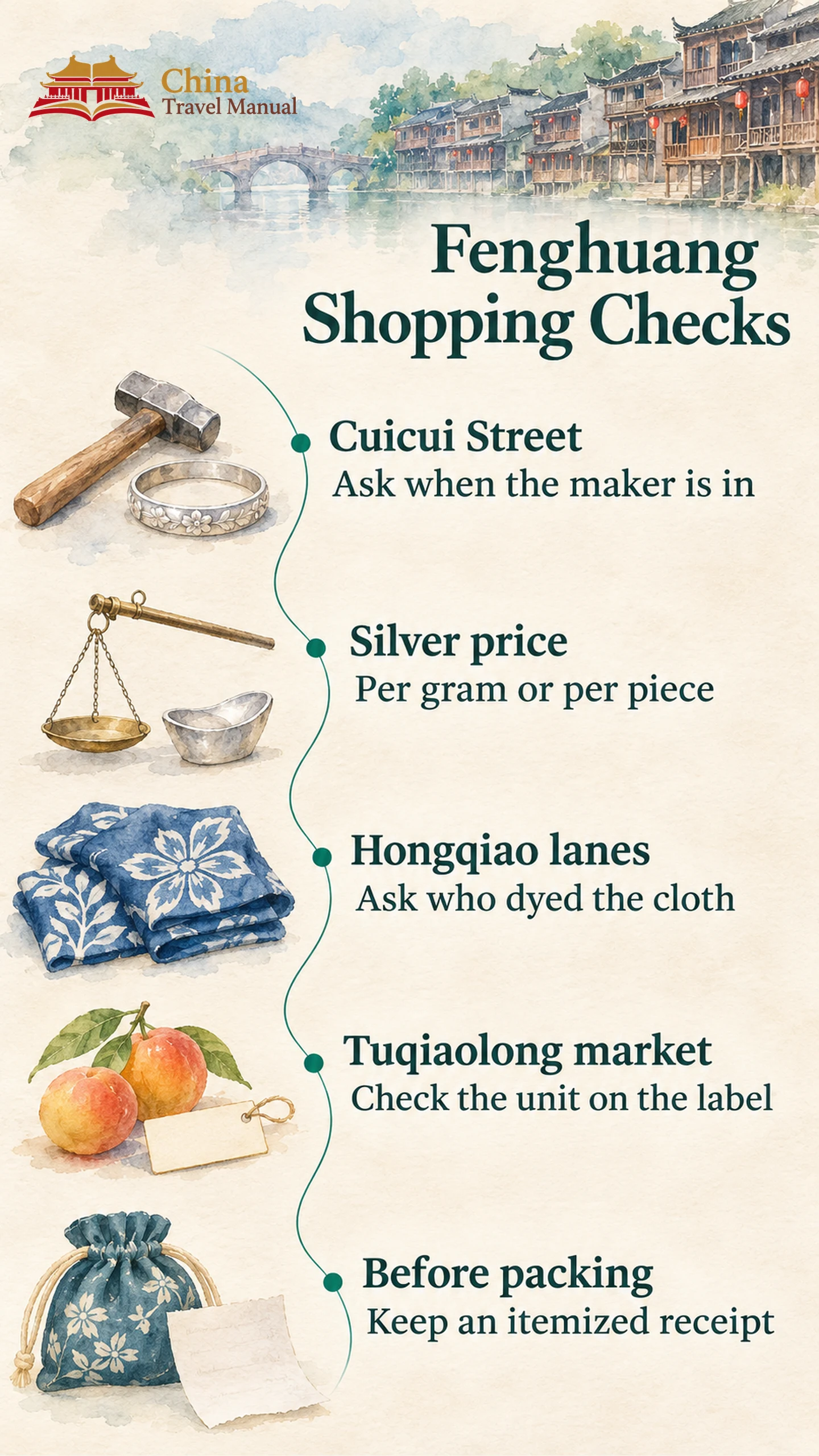
| Cuicui Street | Miao silverwork (苗族银饰锻制技艺, Miáozú yínshì duànzhì jìyì) | Ask whether a silversmith is demonstrating that day and whether the piece is sold by weight. |
| Hongqiao and the old-town lanes | Fenghuang blue printed cloth (凤凰蓝印花布, Fènghuáng lányìn huābù) and small textile gifts | Ask where the cloth was dyed and whether the finished item was sewn locally. |
| Tuqiaolong Farmers’ Market | A look at local produce and an edible stop | Confirm stall hours and check the unit on any price by weight. |
In Fenghuang Ancient Town, you can watch a silversmith hammer a piece and find blue-and-white cloth in the lanes around the Tuo River. If you want one gift connected to this part of western Hunan, decide whether you care most about who made it, what it is made of, or how easily it will travel. Those priorities lead to different shops.
A Shopping Circuit in the Old Town
**Cuicui Street (翠翠街, Cuìcuì Jiē)** sits in Hongqiao Community. A county report from October 2026 records a Miao silverwork teaching studio and artisan demonstrations there during the holiday. Use the street as your first stop for silver, and ask a vendor or the visitor center what is on that day. The report establishes where demonstrations have taken place, but gives no ordinary weekday times or workshop booking calendar. Ask what is included before paying for a hands-on session.[1][5]
**Hongqiao (虹桥, Hóngqiáo)** has a covered bridge-level passage with shops. Use the bridge as a meeting point, then compare textile shops in the surrounding lanes. The Hunan culture department has documented dyeing workshops and shops in the old town, but the listings do not establish who made every item on sale. Nanbian Street (Nánbiān Jiē, 南边街) hosted a county-organized batik demonstration in February 2026. Ask for a current event before going there to see an artisan at work.[2][6][7]
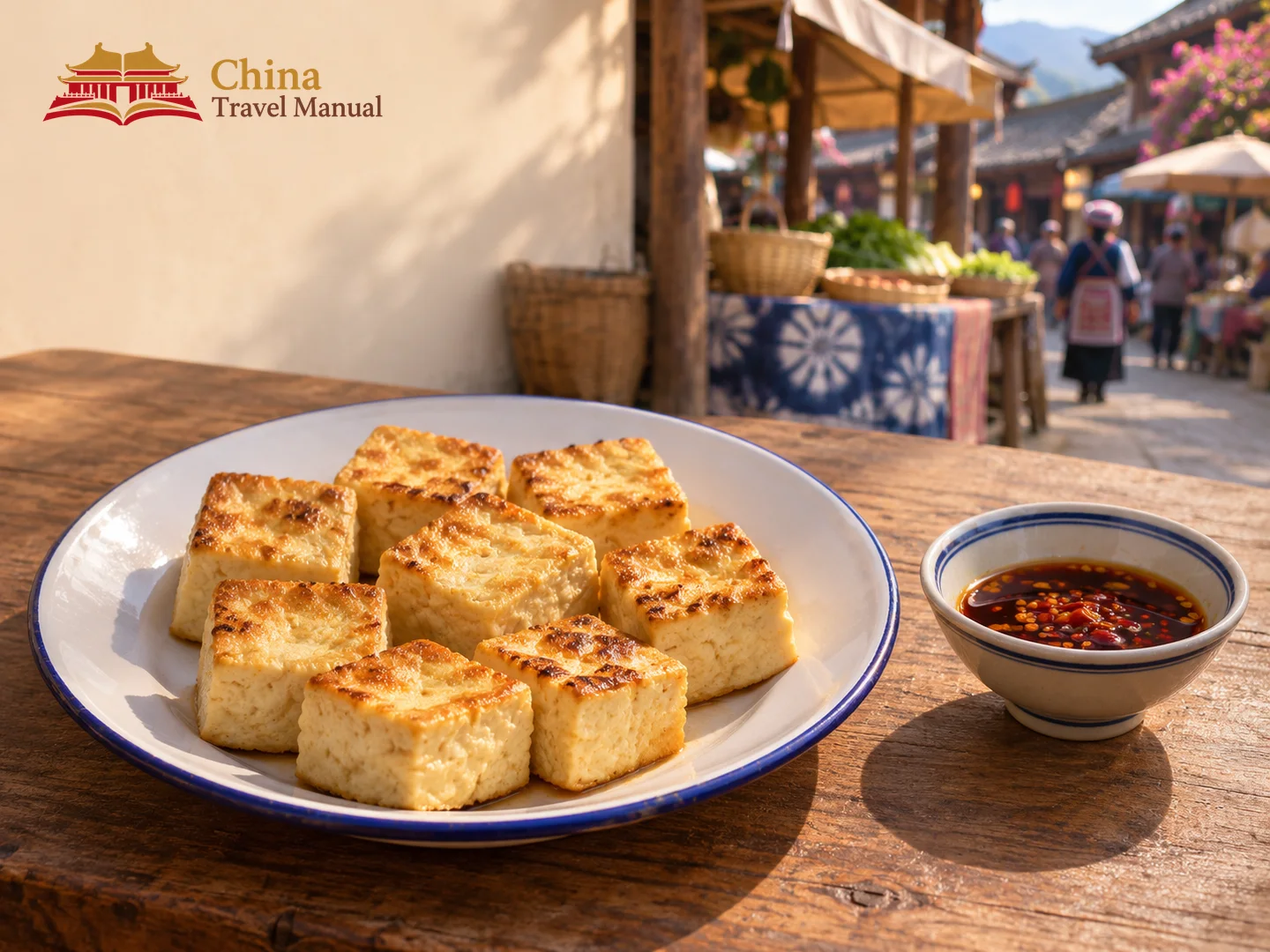
**Tuqiaolong Farmers’ Market (土桥垅农贸市场, Tǔqiáolǒng Nóngmào Shìchǎng)** is the produce stop. Save the Chinese name for a taxi or ask your host for the entrance facing the road. Treat it as a separate stop if your time is short. Ask your host when the produce vendors open. The county notice identifies the market but does not give the regular vendors’ hours.[4]
From **Fenghuanggucheng Railway Station (凤凰古城站)**, the county shuttle guide lists Line 1 to Qifeng Square Visitor Center, a starting point for the Hongqiao side, and Line 2 to Nanhuali. Ask for the current return point before leaving the visitor center. Expect to walk the shop lanes. For a market detour or bulky purchases, arrange the taxi pickup on an accessible road. See the Fenghuang transportation guide for station details.[8]
What to Check on Silverwork
The county’s heritage demonstration describes melting, hammering, drawing wire and assembling parts. At the shop, ask which of those steps went into the item in the case. Compare similar earrings or bracelets across two shops.[7]
- **Material and maker.** Ask whether the item is solid silver, silver-plated or another alloy. Ask who made it and where. For a costly piece, ask for the stated metal and fineness on the receipt and any test report that matches that exact piece.
- **Price basis.** Ask **按克还是按件?** (*Àn kè háishì àn jiàn?*, By the gram or by the piece?). For a by-weight quote, confirm which parts were weighed and whether workmanship or fittings cost extra. Ask for the final price in yuan before paying. For example, on a per-gram sale the total is the billed weight times the unit price plus any separately quoted labor or fittings.
- **Fit and finish.** Check the clasp, stone setting if present and sharp joins. Ask whether the maker can adjust the size and what proof you would need for a repair or return.
What to Check on Local Textiles
Fenghuang’s documented blue-cloth tradition includes stencil work, resist paste and indigo dyeing. Fenghuang batik (凤凰蜡染, Fènghuáng làrǎn) uses wax as the resist. In tie-dyeing, parts of the cloth are bound before dyeing. Ask a seller which process was used if the label only says “handmade.” If you want embroidery, look at the reverse for the stitching and ask which parts, if any, were sewn by hand. Appearance alone cannot establish the workshop or maker.[3][6][7]
For a scarf or table runner, unfold the whole piece, check both faces, look at the hems, and ask how to wash it and whether the dye transfers. Prefer a small finished piece if you have little bag space. Ask the seller to write down the dyer or workshop name if local manufacture affects what you are willing to pay.
Choose Gifts You Can Take Home
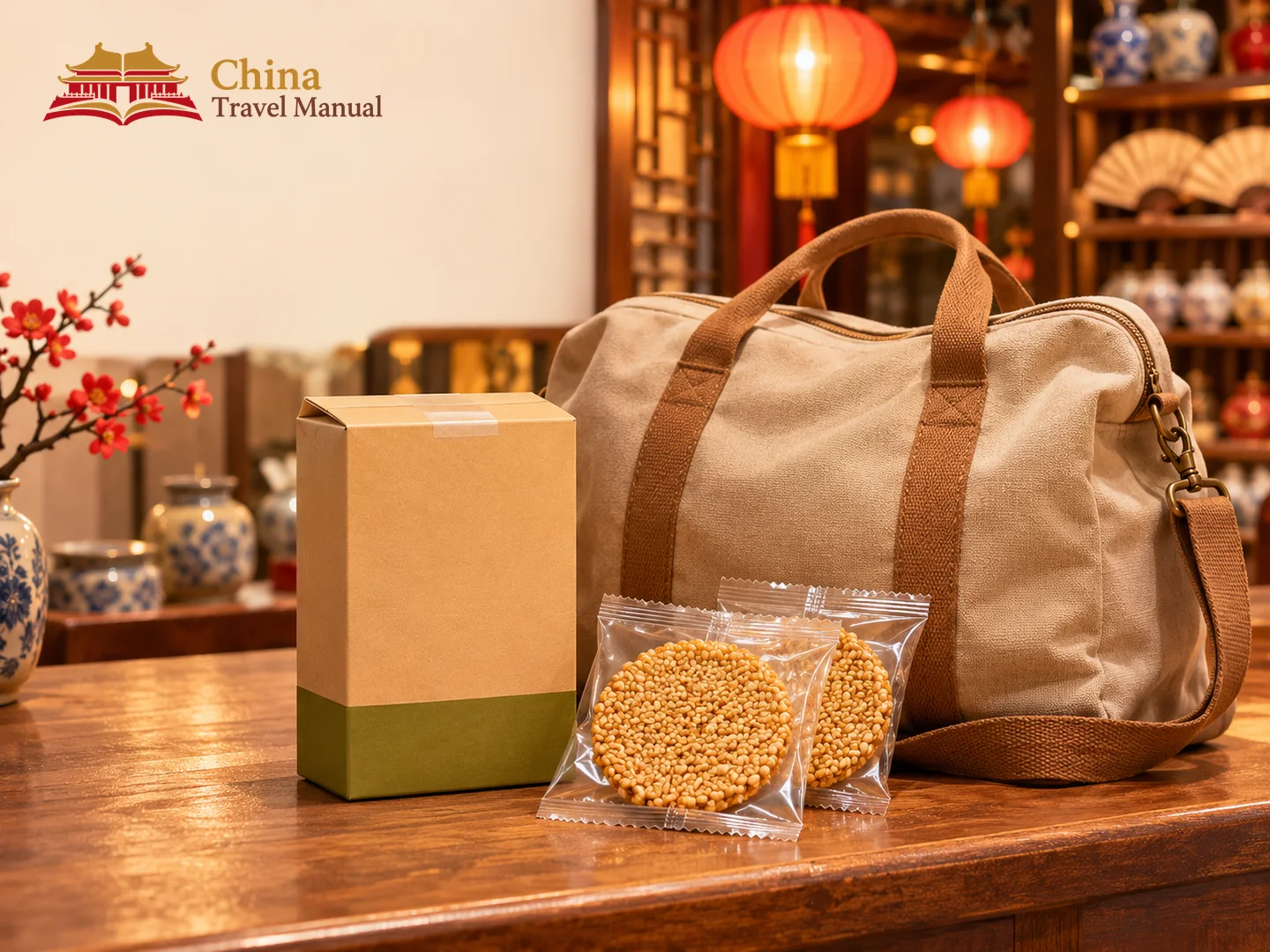
Ask whether a food price is by piece, bag, kilogram or **jin (斤, jīn)**, which is 500 g in mainland China. The county’s heritage center identifies ginger candy (姜糖, jiāngtáng) as a local craft. If you want to pack some, read the ingredients, producer and best-before date and keep the original wrapper. Eat meat snacks locally unless your destination permits your exact product. Travelers entering the United States must declare agricultural products, and a sealed packet alone cannot establish entry eligibility.[7][9]
For old coins, textiles or jewelry sold as antiques, get the provenance clear before paying. China requires customs declaration and an export permit for eligible cultural relics. For a gift on a short visit, choose a newly made textile or jewelry piece and get an itemized receipt. Read the Fenghuang travel guide to fit the shopping circuit around the rest of your stay.[10]
FAQs About Shopping in Fenghuang
Where can I see Miao silverwork in Fenghuang?
Start on Cuicui Street in Hongqiao Community. A heritage teaching studio there has held demonstrations. Ask about the day’s schedule before making a special trip.
How can I check the price of a Miao-style bracelet?
Ask whether the seller charges by the gram or by the piece. Get the final price including workmanship and any fittings, and ask the seller to list the material and stated fineness on the receipt.
What is a practical Fenghuang gift to pack?
A small contemporary blue printed cloth piece or scarf packs flat. Ask who made it, check the hems and laundering instructions, and keep the receipt.
Sources
[1] Fenghuang County Media Center. Cuicui Street shops and silverwork teaching studio in October 2026
[2] Xinhua. Hongqiao’s covered passage and shops
[3] China Intangible Cultural Heritage Digital Museum. Fenghuang blue printed cloth and the dyeing process
[4] Fenghuang County Urban Management and Enforcement Bureau. County notice identifying the Tuqiaolong Farmers’ Market area
[5] Fenghuang County Hongqiao Community. Location of Cuicui Street within Hongqiao Community
[6] Hunan Department of Culture and Tourism. Fenghuang tie-dyeing and its old-town textile workshops
[7] Fenghuang County Intangible Cultural Heritage Protection Center. Silverwork, batik and ginger candy at Nanbian Street’s 2026 event
[8] Fenghuang County Culture and Tourism Working Committee. Rail shuttle routes, visitor centers and enquiry numbers
[9] USDA Animal and Plant Health Inspection Service. Declaring food and agricultural products in the United States
[10] State Administration for Market Regulation. China’s revised Cultural Relics Protection Law, articles 77–78