
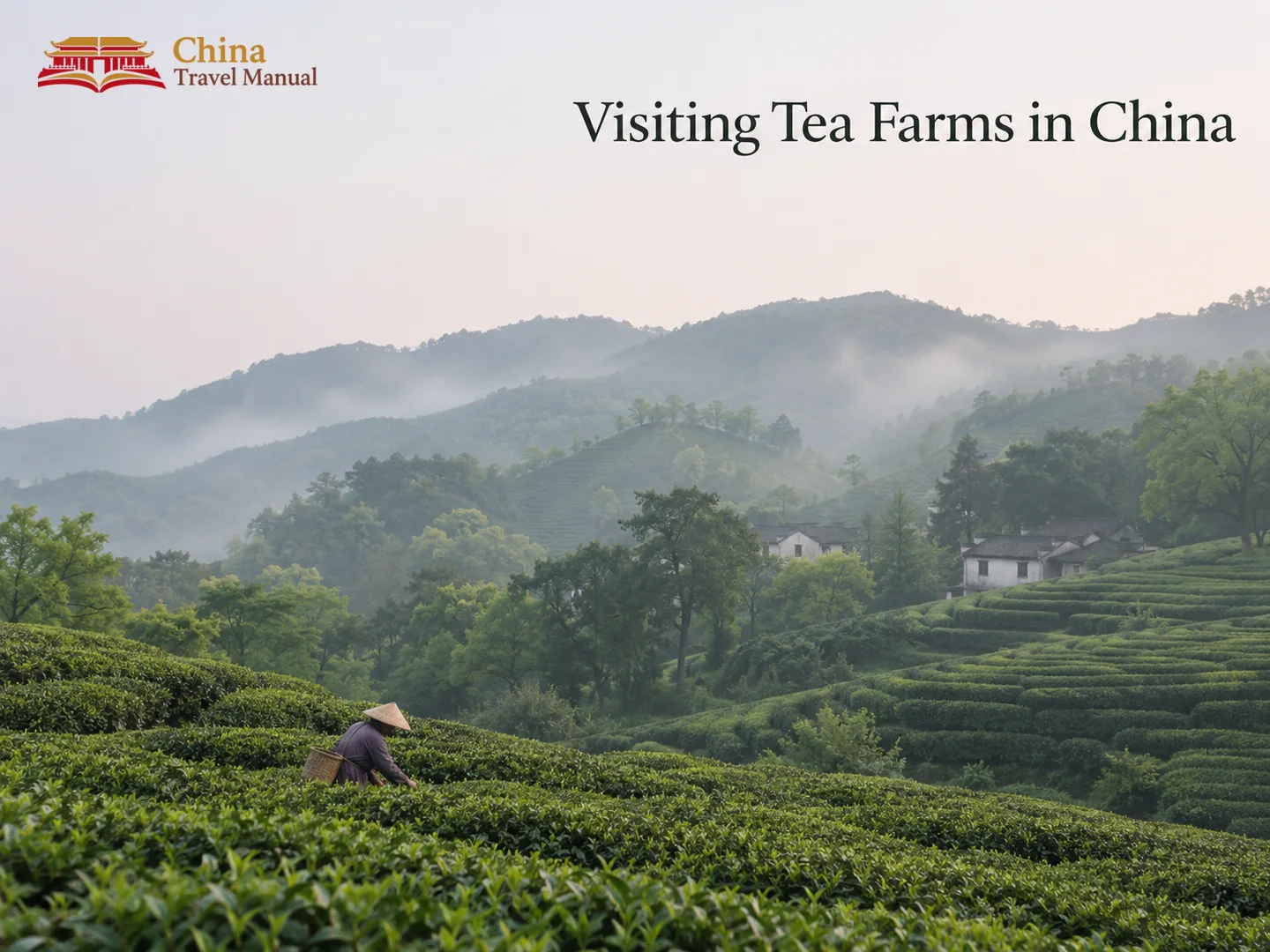
Quick Answer: Where Should You Visit a Tea Farm in China?
Choose Hangzhou for an easy tea village outing, Wuyishan for a closer look at processing, and Jingmai Mountain in Yunnan for old tea forests and village stays. If you want to pick leaves or see a producer at work, arrange it with your host and confirm what is possible on your date.[1][2][4][5][6]
- Easiest from a city: Visit a West Lake tea village from Hangzhou.[2][3]
- Best for seeing processing: Ask a Wuyishan producer whether the workshop is operating.[4]
- Best for an overnight: Arrange a village stay and a locally guided walk on Jingmai Mountain.[5][6]
- Most important booking question: Confirm whether you will walk the fields, watch harvesting, pick leaves or try making tea.
A village walk is easier to arrange than a visit that depends on the harvest.

A tea landscape can be worth visiting even on days without picking. Decide whether your priority is the setting or time with a grower before you set aside a half day or book a transfer.
Pick the Right Type of Tea Farm Visit
| If you want to | Ask for | What can change |
|---|---|---|
| See tea growing | An agreed village path or guided farm walk. | Plots may be private and paths may get muddy. |
| Watch or try picking | A hosted session with the field and time confirmed. | Plant growth, weather and the farm’s work schedule. |
| See how leaves are made into tea | A working room tour or a hands-on demonstration. | The specific stage and whether visitors can participate.[1][4] |
| Drink locally grown tea | A tasting hosted at the farm or in the village. | Where the session happens and which harvest you will taste. |
If the cups are your main interest, the China tea-tasting guide can help you choose a shorter session.
Where to Visit Tea Farms in China
Hangzhou for an Easy Tea Village Visit
Longjing (龙井, Lóngjǐng) is the green tea to ask for in the West Lake hills. Use the Longjing Tea Village guide or choose Meijiawu if you want rolling rows of tea and a village stop. The first West Lake harvest in the Wengjiashan area began on March 17 in 2026. Use that as one example of spring timing. Ask your Hangzhou tea host whether harvesting and visitor picking are available that week before paying for a picking session.[2][3]
Wuyishan for Tea Processing
For Wuyi rock tea (武夷岩茶, Wǔyí yánchá), ask a producer which stage of their work you can see. In this part of Fujian, the preparation can include shaking fresh leaves on bamboo trays, while later stages can happen on different days. Start with the Wuyishan tea experiences guide if you want to combine a tea garden and processing visit. Ask if their demonstration is a regular class or part of real production that week.[1][4]
Jingmai for Old Tea Forests
Jingmai’s old tea trees grow beneath a forest canopy around living Blang and Dai villages. Arrange a stop through your accommodation or a local host. Ask which parts of the walk are open to visitors and where you can taste tea. Use the Yunnan tea culture itinerary to see how a longer stop fits. Compare Pu’er ground transport before assuming you can do a quick half-day outing from the city.[5][6]
How to Book a Farm Visit
Ask for the Chinese name and map pin of the meeting place. Check whether it is the field, a tea house or a village entrance, and whether you must arrange a driver yourself. Confirm the activity, duration, cost, language and whether a tasting is included.
If picking is the point of the trip, ask how much time you get in the field and whether the host provides a basket or tools. Ask what replaces a field visit in poor weather, such as an indoor tasting. If you want to take home tea you helped process, confirm whether it will be ready when you leave. Allow for a transport buffer if there is no obvious return ride.
What to Expect in the Fields and Workshop
- Use the paths your host shows you. Ask before entering cultivation rows, picking any leaves or photographing workers.
- Prepare for outdoor walking. Wear shoes with grip and carry a light rain layer if the forecast suggests showers.
- Leave production work to the host. Let them handle hot pans and working equipment unless a supervised demonstration is set up for visitors.
- Check before buying. Use the tea shopping guide to ask where the leaves were grown and how a package is priced.
FAQs About Visiting Tea Farms in China
Can tourists pick tea in China?
Some farms may offer a guided picking activity. Ask a specific host if it is available on your travel date and what happens if rain or harvest timing changes the plan.[1][3][4]
Is it worth visiting outside the harvest?
Yes, if you are interested in village walks, tasting or a scheduled demonstration. Confirm what will be available before arranging a transfer.[1][2][6]
Can you visit Jingmai from Pu’er on a short trip?
Check the exact start point and return transport before committing. An overnight makes more sense if you want time for a village walk and a tasting with a local host.[5][6]
Sources
[1] UNESCO Intangible Cultural Heritage. Traditional tea growing and processing
[2] Hangzhou Municipal Government. Tea gardens in Meijiawu
[3] Hangzhou Municipal Government. West Lake Longjing’s first 2026 harvest
[4] Fujian Provincial Government. Wuyi rock tea harvest and production
[5] UNESCO World Heritage Centre. Cultural Landscape of the Old Tea Forests of Jingmai
[6] Yunnan Department of Publicity. Jingmai villages and local tea hosting





