
Quick Answer: Which Grottoes Should You Visit in China?
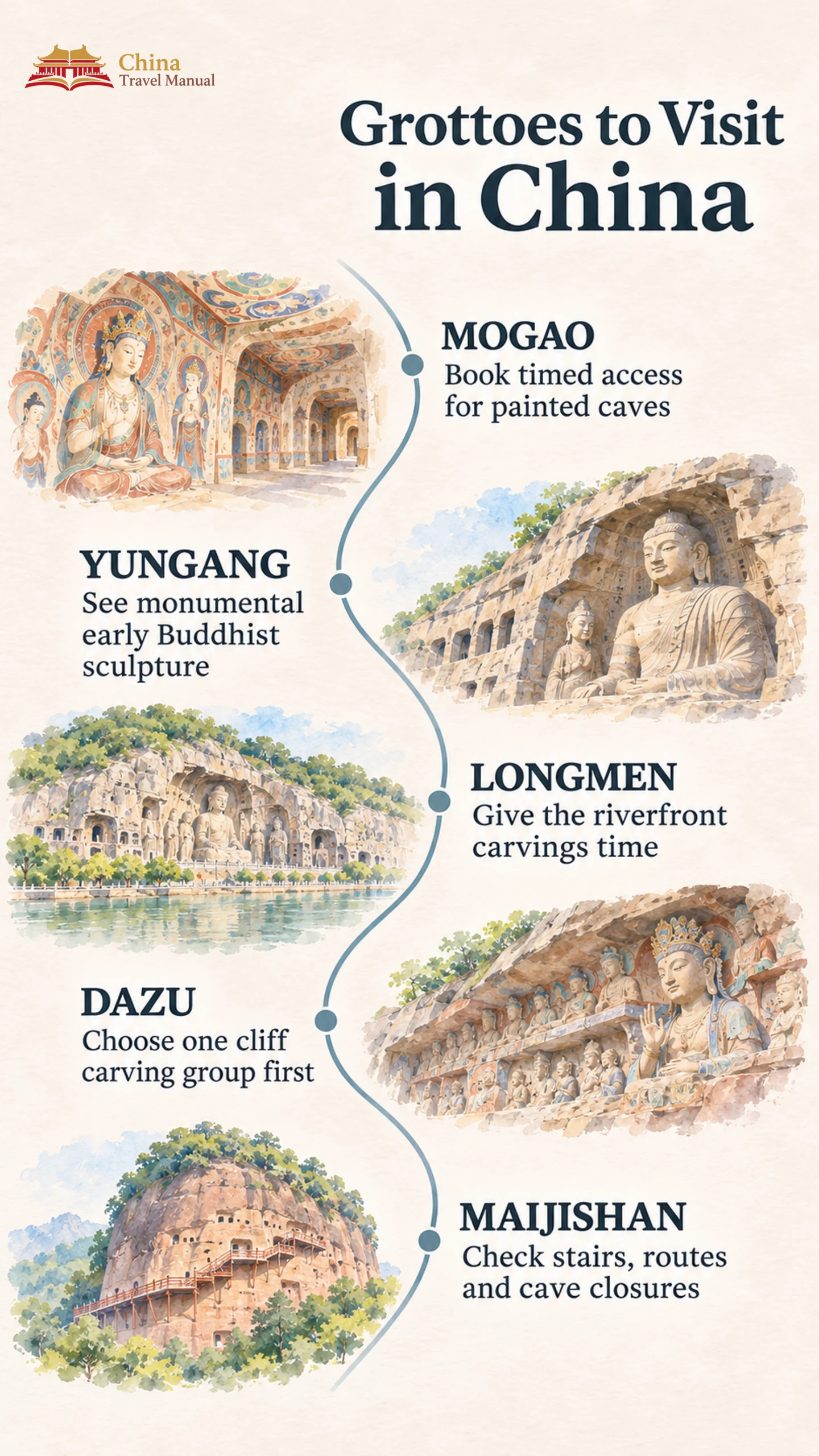
Choose Mogao for its painted cave interiors, Yungang for early monumental Buddhist sculpture and Longmen for a riverfront visit from Luoyang. Choose Dazu if you are based in Chongqing or Maijishan if the Tianshui route fits and you are comfortable on elevated walkways.[1][2][3][4][5][6]
- Murals: Book a timed visit to Mogao in Dunhuang.
- Early sculpture: Make Yungang the main outing from Datong.
- Luoyang rail route: Allow time for Longmen’s riverfront carvings.
- Cliff sites: Compare Baodingshan at Dazu with Maijishan’s walkway.
Start with the type of art you most want to see and then check where the visit begins.
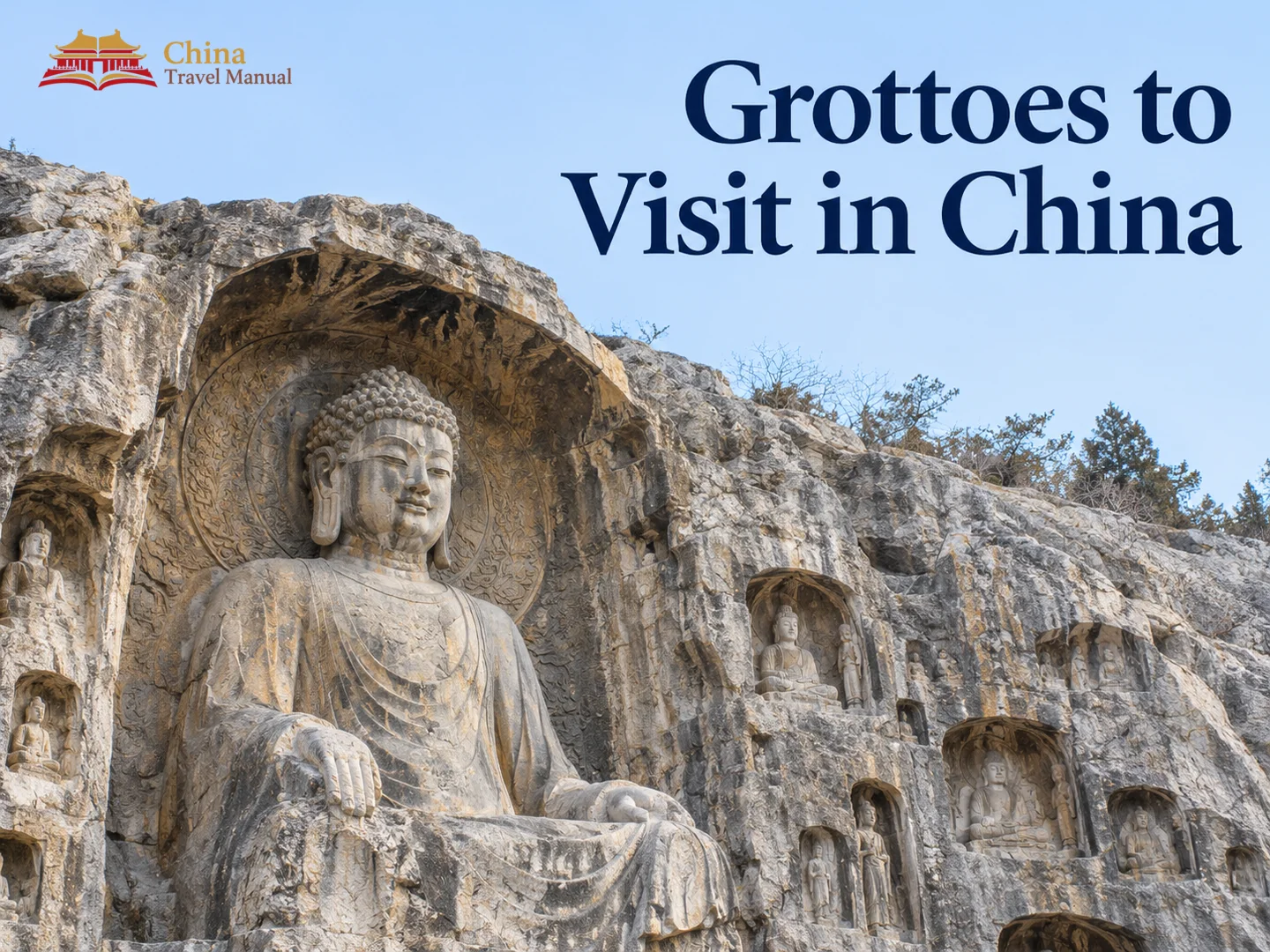
China’s grottoes include rock-cut sanctuaries, painted interiors and reliefs carved into cliffs. The sites differ in scale and in how much visitors can enter. Pick one that fits your route and allow time for the way you actually reach the artwork.
Five Grotto Sites at a Glance
| Site | Best city base | Main reason to visit |
|---|---|---|
| Mogao Caves | Dunhuang | Painted caves and Silk Road context |
| Yungang Grottoes | Datong | Large Northern Wei figures and carved cave interiors |
| Longmen Grottoes | Luoyang | Riverfront carvings from the Northern Wei and Tang eras |
| Dazu Rock Carvings | Chongqing or Dazu | Detailed cliff reliefs, particularly Baodingshan |
| Maijishan Grottoes | Tianshui | Cliffside niches and an elevated walkway |
Mogao: Choose the Ticket for the Painted Caves
In Dunhuang, make Mogao the main commitment. The caves preserve Buddhist paintings and sculpture associated with the Silk Road. The 2026 operator notice listed a timed standard visit with a digital film and eight physical caves. Check the actual product and meeting point before booking, since the number or set of caves can differ between modes. Use the Mogao booking guide for the ticketing details.[1][2]
Yungang and Longmen: Two Stone-Carving Routes
At Yungang, make time for the scale of the main Northern Wei figures and the smaller carvings. Start with the part that interests you most. A short pause between groups makes it easier to compare figure sizes and details inside the niches.[3]
At Longmen, the Yi River setting makes the walk between galleries part of the visit. Look for both smaller niches and larger Tang figures. If you are working through a Luoyang itinerary, give the grottoes a dedicated block and avoid placing them immediately before a train.[4]
Dazu and Maijishan: Check the Ground Route
At Dazu, start with Baodingshan if one group is enough for the day. The property consists of several cliff collections, including Beishan. Check the ground journey from Chongqing and whether your ticket includes the group you intend to enter.[5]
At Maijishan, ask about the exposure of the raised walkway and which circuit is open. The operator closed Cave 135 for conservation beginning October 16, 2026, with reopening to be announced. Check the current notice for your date, especially if you are traveling from Tianshui just for the climb.[6][7]
Check Photography and Cave Access at Each Site
Ask about photography before taking a camera into a protected space. Operators can limit cave access, change the circuit or separate exterior viewpoints from climbing admission. If you want to visit underground chambers formed through geology, the China caves guide covers that kind of trip and its separate access questions.
FAQs About Grottoes in China
Which grottoes are best for murals?
Start with Mogao and check the visit format and open caves for your date.[1][2]
Which grottoes fit a Datong or Luoyang trip?
Choose Yungang from Datong and Longmen from Luoyang. Give the grottoes the largest block of your sightseeing day.[3][4]
Are grottoes suitable if I dislike heights?
Ask what can be seen from a ground-level path and whether stairs are optional. Maijishan’s operator has offered circuits with different levels of exposure.[6]
Sources
[1] UNESCO World Heritage Centre. Mogao Caves and the development of Buddhist art
[2] Dunhuang Academy. 2026 Mogao visiting notice and standard ticket contents
[3] UNESCO World Heritage Centre. Yungang Grottoes listing and Northern Wei art
[4] UNESCO World Heritage Centre. Longmen Grottoes and Northern Wei–Tang chronology
[5] UNESCO World Heritage Centre. Dazu’s five cliff-carving groups
[6] Maijishan Grottoes Art Research Institute. Maijishan visitor circuits with different levels of exposure
[7] Maijishan Grottoes Art Research Institute. Maijishan Cave 135 conservation notice from October 2026





