

Quick Answer: How Do You Take a Ferry in China?
First identify the type of ferry: a city crossing, a scheduled island boat or a vehicle ferry. Confirm both terminals before paying. For a real-name ticket, use your passport details when you book and bring the original to board.[1][2][4][6]
- Match the piers: Save the exact departure and arrival terminals.
- Check the fare: Use the local payment method or reserve the sailing you need.
- Bring the right documents: Confirm passport verification and how early to arrive.
- Check the return: Confirm the last boat and check the operator’s notices for changes.
This guide covers domestic mainland crossings. Use the separate guides for the Hong Kong Star Ferry or Yangtze river cruises.
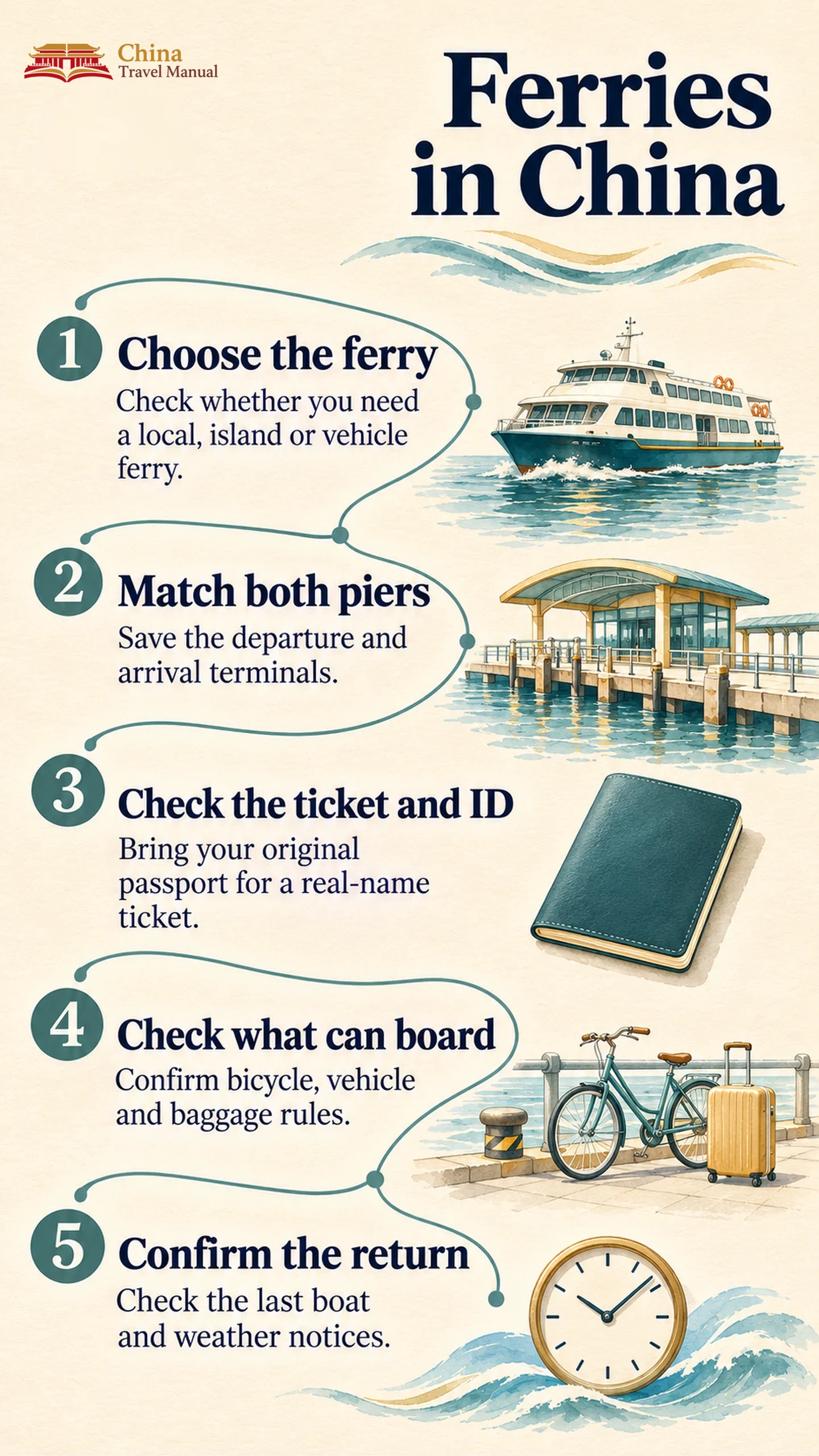
Before leaving for the ferry, save the exact name of the pier and its address. A city can have several terminals for the same island, and the last boat back may use a different pier.
Identify the Ferry You Need
| Type of ferry | What to check |
|---|---|
| Urban passenger ferry | Look for the route and its operating hours, the correct pier for boarding, and how to pay the local fare. |
| Scheduled island ferry | Check whether you need a reservation for a specific sailing and whether the pier changes with the time of day. |
| Vehicle ferry | Check whether the sailing accepts the vehicle and passengers you are bringing. Confirm the vehicle booking and follow the port’s driving directions. |
On Shanghai’s Huangpu River, the Dongjin ferry links East Jinling Road Pier in Puxi with Dongchang Road Pier in Pudong. The city lists that line for pedestrians only and publishes local transit-code options for Shanghai ferries. If you plan to take a bicycle, find a route that accepts it. Check the line you want in the Shanghai transportation guide.[2][3]
On a Gulangyu visit, look for the tourist sailing, its departure terminal and its island pier. Xiamen Ferry lists daytime tourist routes from several terminals, including Dongdu Passenger Terminal. Its evening tourist guidance points passengers to Xiamen Ferry Terminal near Zhongshan Road. Verify the current sailing and address before making the trip to the pier.[4][5]
Buy a Ticket and Board the Ferry
- Confirm the sailing: Match the operator, date, pier, direction and arrival stop to your plan.
- Choose the correct fare: Check the ticket or payment method for a pedestrian, bicycle, or vehicle and its occupants.
- Use the required passport details: On a real-name route, use the name and document number on your passport. Save the booking and carry the original.
- Check in at the terminal: Check when boarding closes and whether you must collect a ticket first. If the gate cannot read your document, ask staff about a manual check.
- Board when called: Follow boarding directions, keep your ticket or record, and check the landing pier again if the operator has moved you to a different boat.
Xiamen Ferry describes an online purchase route for overseas passengers using a verified Alipay account and the passport option under other documents. It notes that some bookings need a manual ticket check. Contact the operator or ask about a staffed window if the booking screen does not accept your passport or payment method.[1][4][5]
Keep a screenshot of the booking with the date, sailing number and Chinese terminal name. Some piers serve more than one type of boat. At the port, show the sailing number to staff if the display lists several boats going to the same place.
Check the Rules for Bikes, Cars and Luggage
Bike access varies by service, even within one city. Check whether the line accepts your bicycle and charges a separate fare. If you use a wheelchair, ask whether the terminal ramps and boarding gangway work for you at both ends, including any transfer at the arrival pier. See the accessible travel guide.[2]
If you are crossing the Qiongzhou Strait to or from Haikou, make sure the booked sailing matches the vehicle type and port. Zhanjiang’s official October 2026 guidance tells motorists to put their car and all occupants, including children, on the same booking. If you have a rental car, confirm the rental agreement allows the crossing before paying. Save the vehicle port entrance and ask when vehicle check-in closes. Ask the ferry operator about restrictions for your vehicle type, including new-energy cars.[6]
Confirm suitcase limits, screening and any special rules for oversized items with the ferry. Ask whether you keep the luggage with you, use a designated cabin area or need help from the crew.
Plan the Return and Check for Weather Disruptions
Check the landing pier and the last return before leaving. Xiamen Ferry describes outbound tourist bookings by date, sailing and terminal, with separate return instructions. The return route can take you to a different mainland terminal after dark, so check it again before planning an evening train or hotel transfer.[5]
Check the operator’s service status on the day. High winds, rough seas, heavy rain or fog can disrupt crossings. During a Qiongzhou Strait suspension, Zhanjiang’s notices direct passengers to official channels for resumption times and advise against driving to a closed port. If sailings resume later, ask whether your existing booking is still valid or whether you need to change the departure before going to the port. If you are meeting a driver at the other end, send them the revised terminal and sailing time once the operator confirms it. If the ferry is one leg of a longer trip, leave room to replan the next connection. See the China travel delays guide.[7][8]
FAQs About Ferries in China
Do I need a passport to take a ferry in China?
For a real-name ferry ticket booked with a passport, bring the original passport and the ticket or confirmation. Staff check that the passenger and document match. A local urban crossing can have a different fare process.[1][2][4]
Can I buy a ferry ticket without a mainland phone number?
It depends on the route and booking platform. Ask the ferry operator about a staffed counter or a supported wallet that can verify your account. Confirm before traveling to a terminal where tickets may sell out.[4][5]
Do I need to book the return ferry separately?
Read the fare conditions. Some tickets include a return subject to separate boarding instructions, while other services sell each direction separately. Check the route, time and pier for the return.[2][5][6]
Sources
[1] Ministry of Transport. Real-name identification rules for water passenger transport
[2] Shanghai Municipal Government. Exploring Shanghai by boat
[3] Shanghai Municipal Commission of Transport. Shanghai unified transport QR availability
[4] Xiamen Ferry. Online ticket questions for visitors
[5] Xiamen Ferry. Tourist routes and boarding information
[6] Zhanjiang Municipal Government. Qiongzhou Strait ferry booking and vehicle guidance
[7] Zhanjiang Transport Bureau. August 2026 ferry suspension notice and operator channels
[8] Guangdong Provincial Government. Qiongzhou Strait ferry transport regulations





