
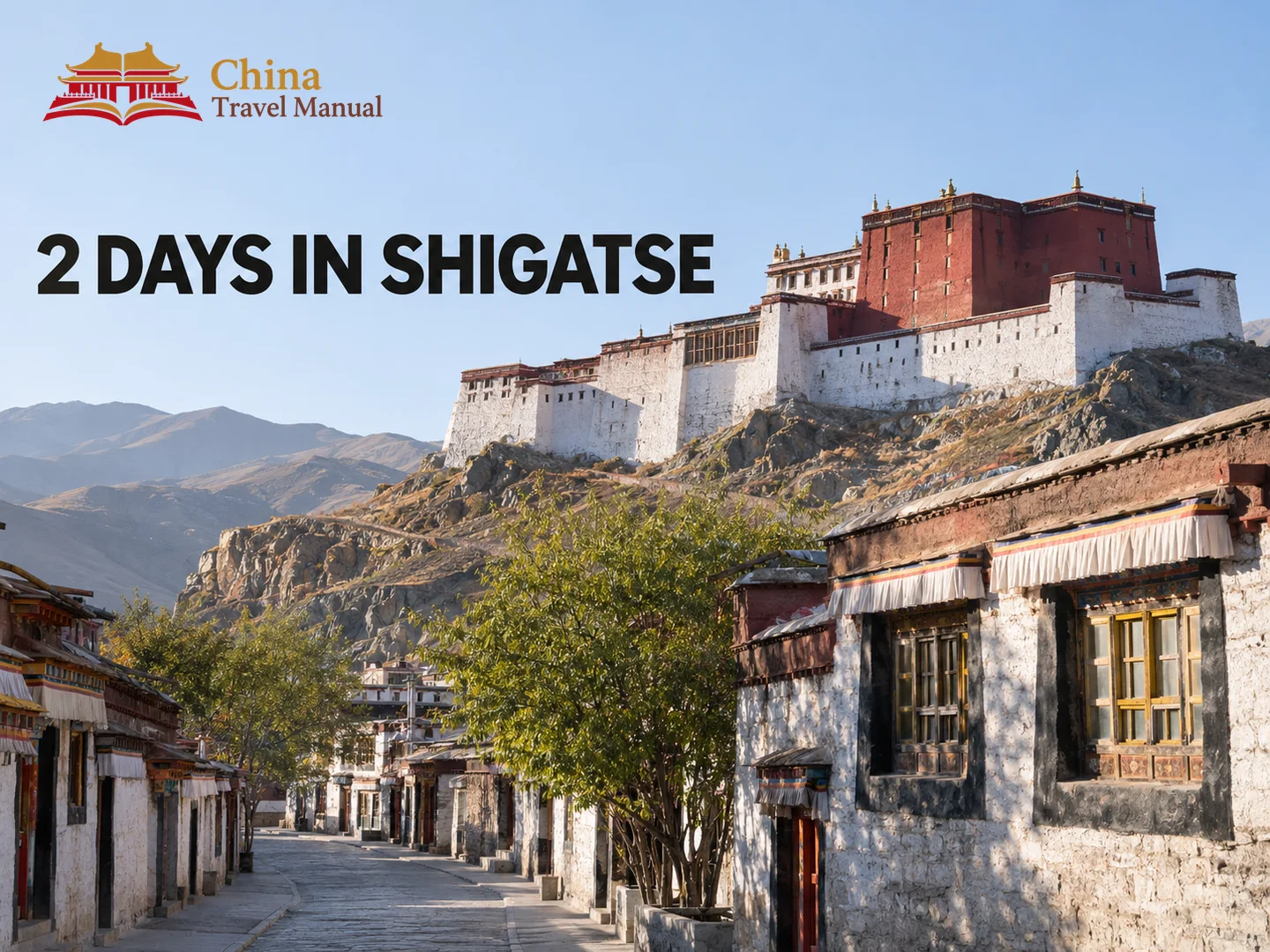
Quick Answer: How should you spend two days in Shigatse?
Start with Tashilhunpo and a gentle old-town walk. Use Day 2 for Gyantse if you can spend most of the day out of town, or choose Shalu for a shorter temple visit.
- Day 1: Visit the monastery during confirmed visitor hours, then see the fortress from the streets below.
- Day 2: Visit Palkhor Monastery and the Kumbum in Gyantse, with old-town time if the return drive allows it.
- Shorter Day 2: Go to Shalu if your transport and temple entry are confirmed. Stay in town if your departure leaves little room for delays.
Arrange your Tibet itinerary through an authorized agency if you travel on a foreign passport.[5]
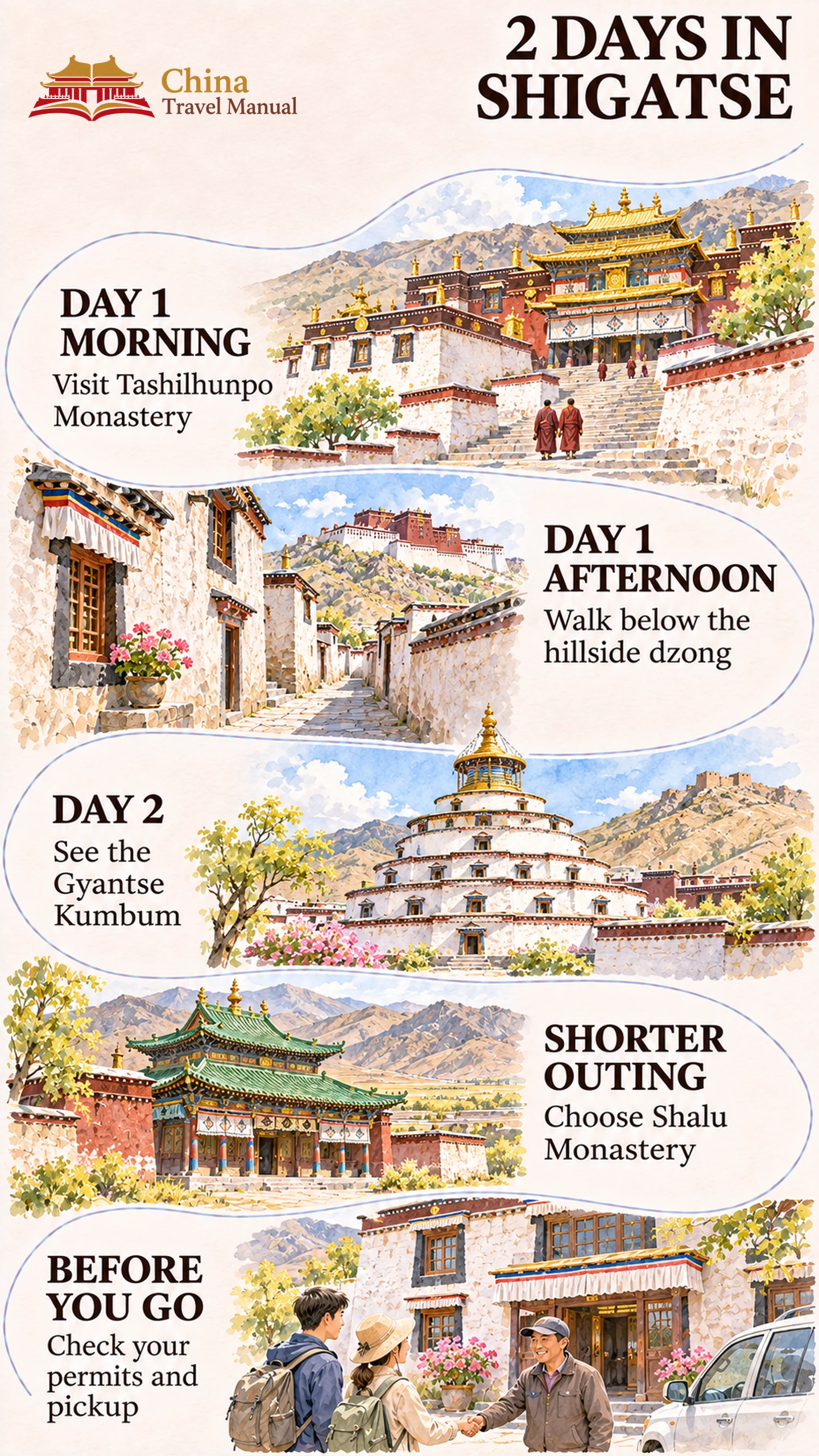
Spend your first day in Shigatse at Tashilhunpo Monastery and in the lower old streets. For the second day, choose Gyantse if you have a full day for the drive and several sites. Pick Shalu if you need a shorter outing. Keep an early train or flight day in the city rather than fitting in a last-minute road trip.
Shigatse Two-Day Itinerary at a Glance
| Time | Plan | How to adapt it |
|---|---|---|
| Day 1, morning | Tashilhunpo Monastery | Confirm the Maitreya hall and main courtyard access with your guide |
| Day 1, afternoon | Old streets below Shigatse Dzong | Keep the walk short if you are adjusting to the altitude |
| Day 2, full road day | Gyantse and Palkhor Monastery | Add a lower old-town walk only if your return time allows it |
| Day 2, shorter option | Shalu Monastery | Confirm the halls are open and set a fixed pickup time |
| Day 2, early departure | Central breakfast and station or airport transfer | Leave a buffer for the station or airport transfer |
A central base makes Day 1 simple and lets you meet your driver outside your room on Day 2. If you haven’t booked, compare where to stay in Shigatse for walking, luggage handling and road pickups.
Day 1: Tashilhunpo and the Old Streets
Morning at Tashilhunpo Monastery
Start at the monastery and let the open halls dictate the order. Tashilhunpo was founded in 1447 and became the historic seat of the Panchen Lamas. Focus on the Maitreya hall and the assembly and memorial spaces when your route includes them. Allow time for a pause between courts and for any paths that involve steps.[1]
If you reach Shigatse by train late in the day, move the monastery to Day 2 morning and replace the regional outing with Shalu if you have a generous afternoon. Use Lhasa to Shigatse to plan arrival and the Tashilhunpo Monastery guide to plan the visit itself.
Afternoon near Shigatse Dzong
Have lunch in town and walk the lower streets for a view of the red-and-white fortress, also called Sangzhutse Dzong. Regional tourism guidance describes the former museum interior as closed, so build the afternoon around the view and lanes. You can also choose a short stretch of the monastery’s devotional circuit with your guide. Keep space for worshippers and turn back before you tire.[2]
On an arrival day, you can end the afternoon after the monastery and leave the old streets for the next morning.
Day 2: Gyantse or a Shorter Visit to Shalu
Full day: Gyantse and the Kumbum
Arrange a return vehicle and start with Palkhor Monastery. The Kumbum is the multi-level stupa in the compound. Leave time to look at it from the courtyard even if some upper spaces are closed.[8] After lunch, choose a lower walk near the dzong or around the old streets, depending on current access and the drive back. Local notices have documented work around the old streets and fortress visitor facilities, so ask about the best entrance for your date.[3]
Make Gyantse your only county outing that day. If you are already crossing Gyantse on an approved overland itinerary, it can work as a planned stop between two bases and free up your second day in Shigatse. The Gyantse travel guide can help with that choice.[3]
Shorter day: Shalu or more time in town
Shalu Monastery is roughly 20 kilometers southeast of Shigatse. It is known for murals and green glazed roofs that reflect Tibetan and Han Chinese architectural traditions. Ask your driver and the temple about access before leaving, and confirm when you need to start back. If you have a tight rail or flight connection, skip the out-of-town drive and choose a short walk or a longer breakfast near the hotel.[4]
Check Timing, Permits and Altitude
Before confirming Day 2, use the Shigatse transportation guide to verify where you will meet your driver and which railway station or airport your ticket shows. For foreign passport holders, the travel agency should confirm the exact route and any required documents. Save the Everest area for a longer plan with current border-area access and a gradual altitude schedule.[5][6]
Keep activity light as you acclimatize and avoid ascending higher if altitude symptoms develop. Get medical help promptly if symptoms are severe or worsening. The Tibet altitude planning guide covers overnight stops and travel pace.[7]
FAQs About Two Days in Shigatse
Is two days enough for Shigatse?
Yes for Tashilhunpo, some of the old streets and one nearby outing. Both days need useful daylight if you want to reach Gyantse and return without rushing.
Can I see both Shalu and Gyantse on Day 2?
It may fit on a long road day if your driver confirms the route and both sets of visitor hours. Choose one if you want time at the sites or have an onward departure.
Can I use Day 2 to go to Everest?
Plan Everest as a separate onward journey with confirmed access and enough time to acclimatize. For a short stay based in Shigatse, Gyantse or Shalu is a better fit.[6][7]
Sources
[1] Ministry of Culture and Tourism. Tashilhunpo Monastery background and principal halls
[2] Tibet Autonomous Region Department of Culture and Tourism. Setting and visitor access at Shigatse Dzong
[3] Tibet Autonomous Region Department of Culture and Tourism. Gyantse’s historic streets and visitor facilities
[4] Shigatse Municipal Committee. Shalu Monastery’s location, architecture and artwork
[5] Shannan Municipal People’s Government. Tibet travel and documentation requirements
[6] National Immigration Administration. 2026 notice on electronic border-area permits for Shigatse
[7] Centers for Disease Control and Prevention. Travel pace and acclimatization at high altitude
[8] Embassy of the People’s Republic of China in Indonesia. The Kumbum at Palkhor Monastery





