
Quick Answer: What Can You Actually Make in One Session?
Start at the China Yixing Ceramics Museum’s experience area for an introductory activity, or contact a local studio in advance for a specific teapot-making session. Ask which piece you make, how it is formed and whether drying, firing, collection or shipping are included. [1][2][3]
- Book the action you want: Specify whether you want to form, carve or decorate clay, or watch a maker assemble a pot.
- Settle pickup before paying: Ask when the fired piece will be ready and whether the studio can ship it to your destination.
- Save the workshop address: A museum, heritage street, former factory and individual studio may have different meeting points.
A venue’s listing for pottery experience does not establish that a complete teapot or traditional hand-forming is part of the session. [1][2][4]

A teaware visit in Dingshu (丁蜀镇, Dīngshǔ Zhèn), Yixing, can mean making a cup, decorating a piece, watching a teapot maker or taking a booked studio class. Choose the activity by what you will do with your hands and what can leave the studio with you. If your main interest is a traditional pot, a demonstration can teach more about its construction than a short decorating session. [1][2][3]
Choose a Workshop, Demonstration or Heritage Visit
| Format | What you can expect to do | Ask before booking |
|---|---|---|
| Museum introduction | Make or decorate a small item when the relevant activity runs | Which activity is on, and does the fee include materials and firing? |
| Booked studio lesson | Work on a defined component or vessel with a maker | Will I form the body, attach parts or work on a prepared blank? |
| Maker demonstration | Observe construction, fitting or finishing | Is this a scheduled demo, and may I ask questions or photograph the process? |
| Heritage visit | See clay origins, old manufacturing sites or a kiln | Which exhibits are open, and is any firing scheduled? |
The city’s account of the museum experience base lists purple clay cup-making, clay painting, carving and celadon decoration among its activities. Ask for the specific offering available to individual visitors. If you want to make a pot, confirm which parts you complete yourself and which an instructor prepares. See the China pottery workshop booking guide for countrywide booking and shipping details. [1][2][3]
Watch How Traditional Yixing Teaware Is Formed
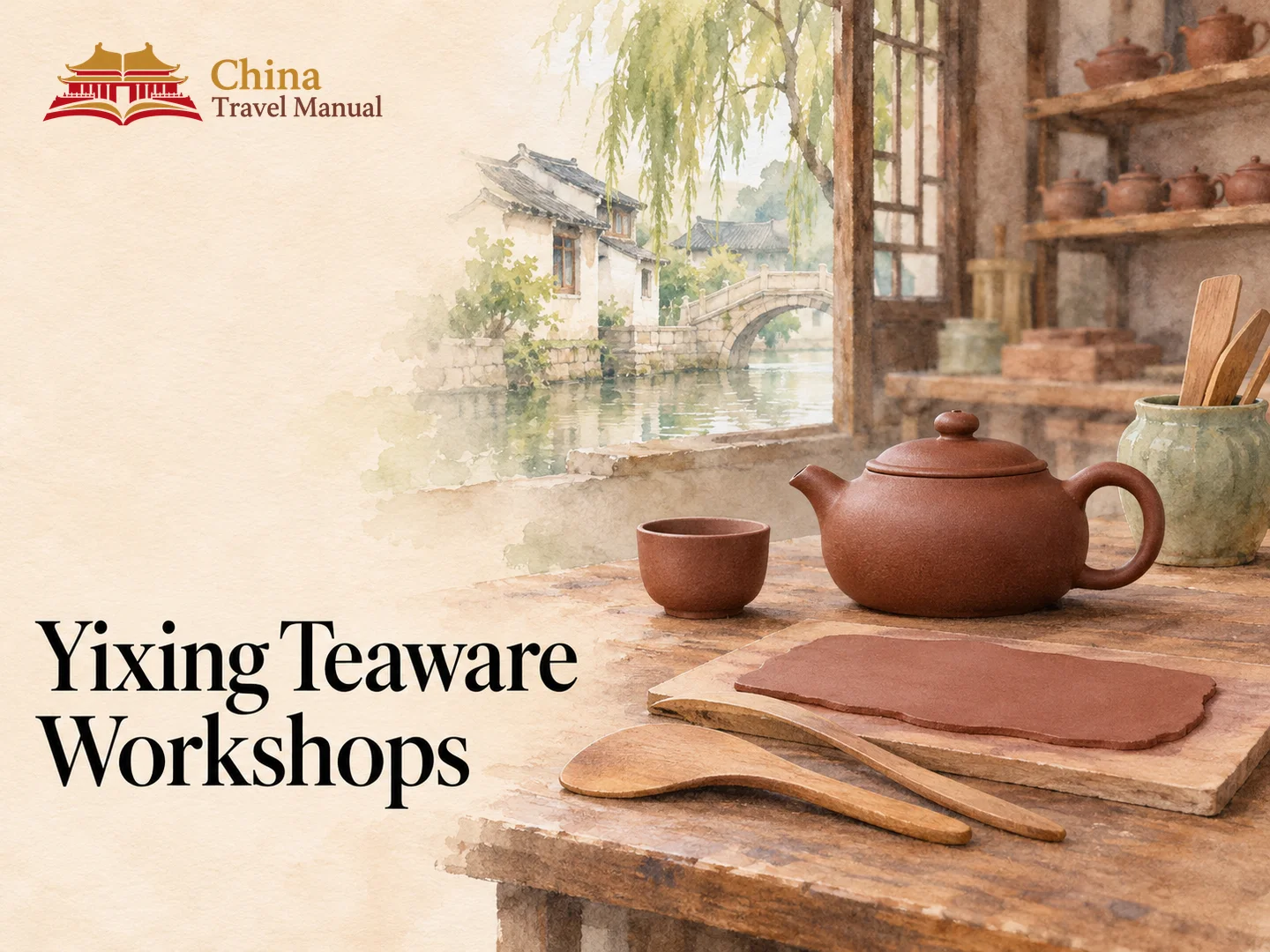
The national heritage listing describes zisha pottery (紫砂陶, zǐshā táo) as a set of traditional methods developed around the local clays. For a traditional round vessel, a maker may prepare a slab and paddle the body into shape. Angular forms can be built by joining shaped clay panels. Then come fitting, finishing and, for some pieces, carving. These are helpful steps to ask about when comparing classes. [2][5]
If a lesson advertises wheel-throwing, painting or working from a mold, ask what the session is intended to teach. These can be enjoyable experiences with different skills. For an observation-based visit, ask to see how the body, spout, lid or handle are fitted instead of assuming all steps happen during your appointment. [2][4][5]
Build a Dingshu Route Around the Appointment
Start at the museum on Dingshan North Road if you want to see historical teapots before working with clay. The Dingshu heritage circuit also includes Shushan Old South Street (蜀山古南街, Shǔshān Gǔnánjiē) for maker and shop visits, the Huanglongshan mining site for the source materials, the former No. 2 ceramics factory district for exhibitions and classes, and Qianshu Dragon Kiln for firing history. Choose one or two extras after you know where the session is held. [1][3][4][6]
Ask the venue to send its exact address, check-in time, teaching language and individual booking rules. If you are specifically hoping to see a kiln firing or opening, check the dated event program. A kiln visit can show the structure and explain how it works even on a day without a firing. [1][4]
Agree on Firing, Collection and Any Teaware Purchase
Before paying, ask if the quoted amount covers clay, tuition, firing, packing and delivery. Ask for a pickup window after firing and have the studio explain its policy if the piece cracks before completion. If you are leaving town soon, check whether international shipping is available, who pays for it and whether you will receive tracking. A fresh clay piece may be too fragile to carry right after class.
If you buy a finished pot, ask the seller to describe how it was made, who made it and what is documented in writing. Check the lid fit, inspect the inside and, with permission, watch how it pours. Consider a straightforward piece you will use if the purpose is daily tea. The guide to buying teaware in China covers packing and shopping questions. For a different ceramic tradition, see pottery workshops in Jingdezhen. [2][5]
FAQs About Yixing Teaware Workshops
Can a beginner make a whole Yixing teapot in one visit?
Ask the studio what a complete piece means for its class. Some sessions focus on cups or decoration, while a teapot course may use components prepared in advance. Drying and firing can continue after your visit. [1][2]
Where can I see Yixing clay before visiting a workshop?
The Huanglongshan mining-site exhibition in Dingshu presents clay sources and samples. The ceramics museum displays historical teaware and other ceramics. [3][6]
Do I have to buy a pot to take part?
Ask whether the activity fee covers the class and piece independently. A museum activity or a studio lesson has its own terms. [1][2]
What should I tell a studio before booking?
Give the date, group size, teaching language and the object you want to work on. Ask what you will form yourself and how the finished piece reaches you. [1][2]
Sources
[1] Yixing Municipal Government. Ceramics museum craft experience base
[2] China Intangible Cultural Heritage. Yixing zisha pottery-making technique
[3] Wuxi Municipal Government. China Yixing Ceramics Museum and its collections
[4] Yixing Municipal Government. Dingshu craft district and Qianshu Dragon Kiln
[5] Wuxi Municipal Government. Origins and production of Yixing purple clay pottery
[6] Yixing Municipal Government. Huanglongshan exhibition of local clay materials





