
Quick Answer: How Should You Visit Yangguan Pass?
Plan a half-day outing from Dunhuang and reserve your ride back before leaving. At the site, give yourself time for both the Silk Road exhibits and the outdoor viewpoint.[1][4]
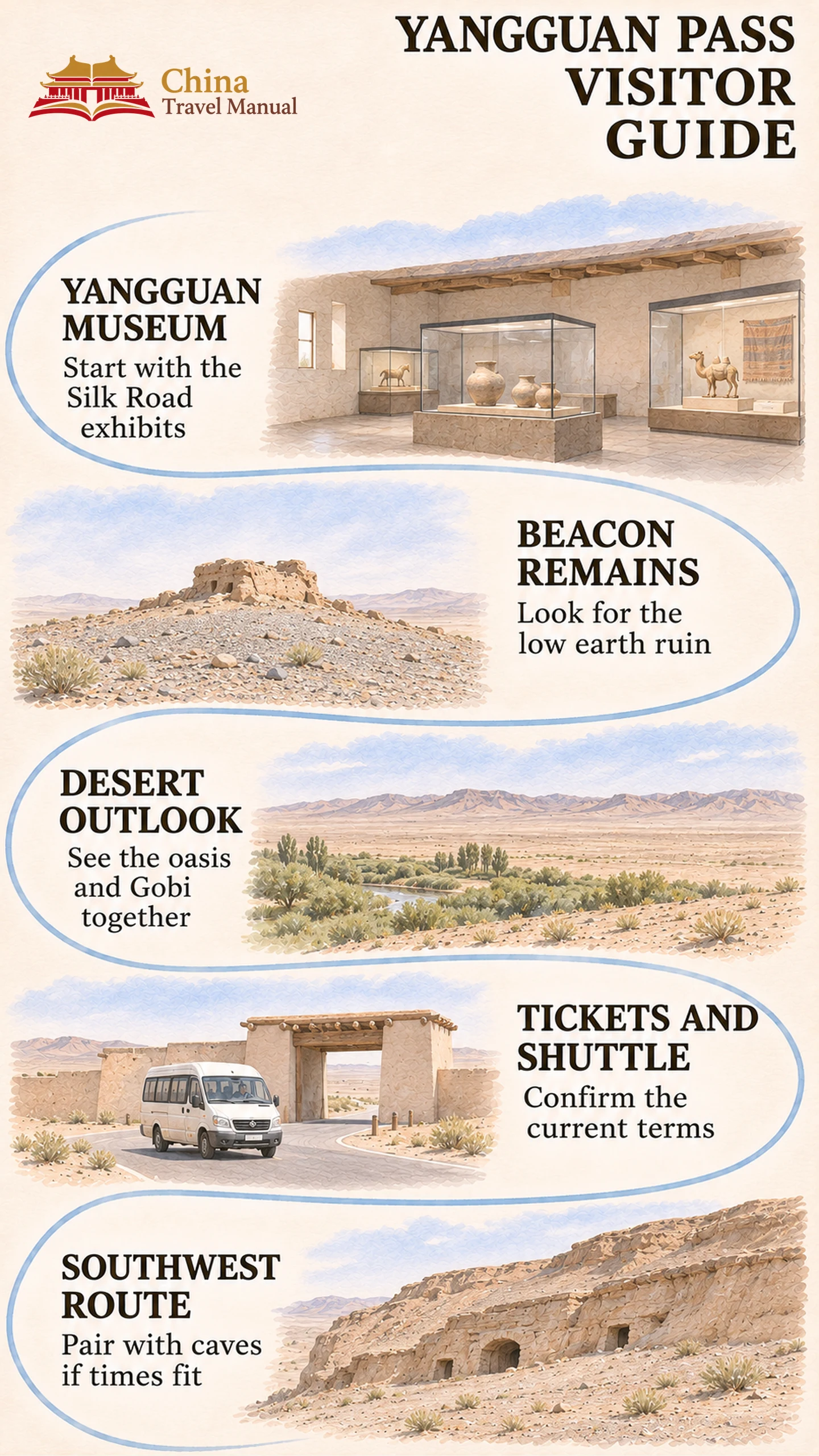
- Start indoors: The Yangguan Museum (阳关博物馆, Yángguān Bówùguǎn) puts the southern routes and frontier settlements into context.[1][2]
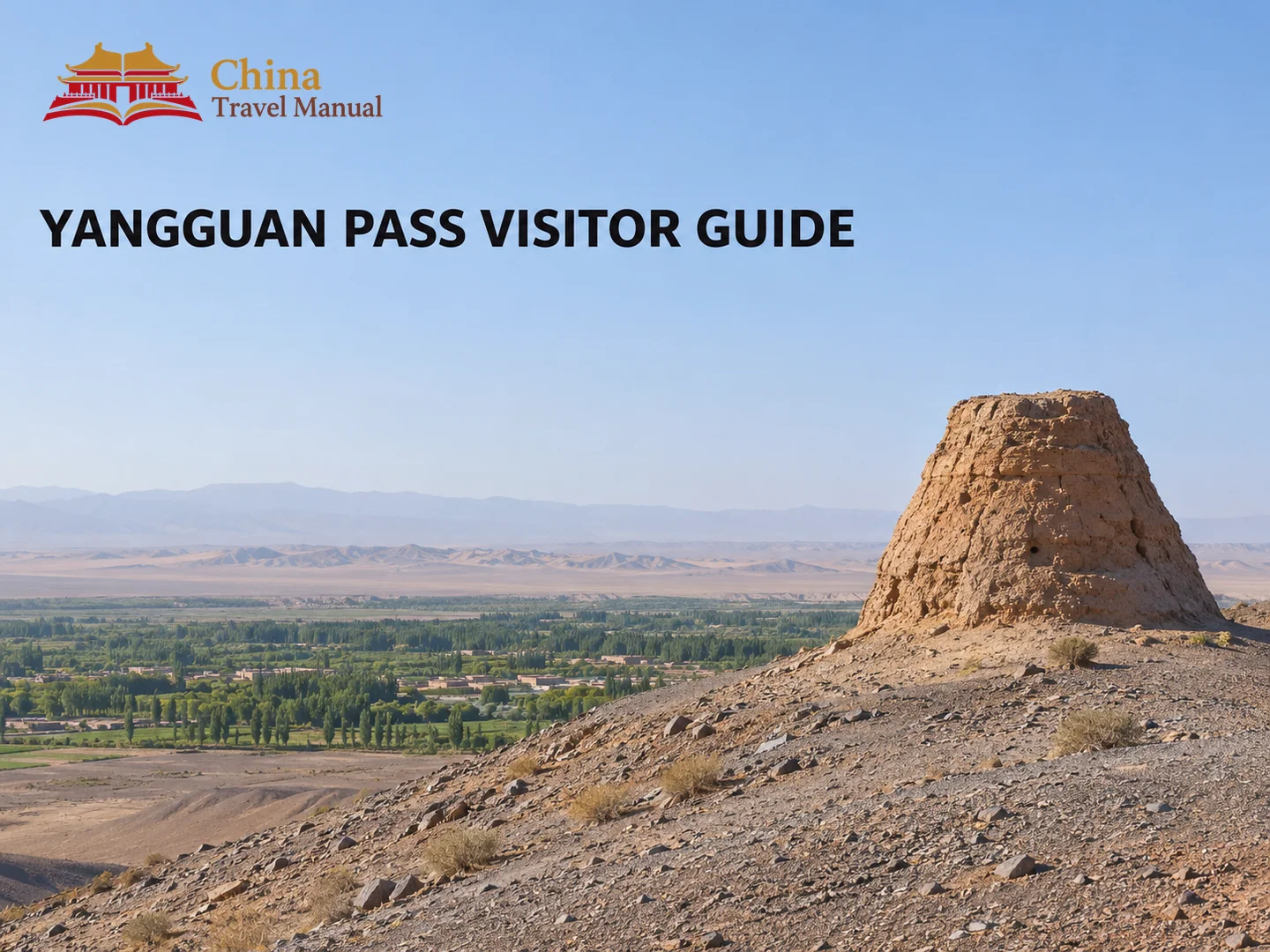
- Find the historic landmark: A surviving earthen beacon stands on Dundun Mountain (墩墩山, Dūndūn Shān), where you can look out across the desert and oasis.[2][3]
- Check the scenic vehicle: The museum lists a separate vehicle fee. Ask which ride goes to the open outdoor viewing area and when the last one leaves.[5][6]
If your main interest is archaeology or poetry, leave time at the exhibits before trying to add another stop.
Yangguan Pass (阳关, Yángguān) is a Silk Road site southwest of Dunhuang where an earthen beacon and the surrounding desert show what a frontier crossing meant. Begin with the museum, then go out to the viewpoint. The two stops make sense together, especially if you know the poem that turned the pass into a place associated with farewell.[1][2][3]
What to See at Yangguan Pass
The site illustrates one of the routes travelers used to head west during the Han era. Its visitor area combines modern presentation with traces of the historic frontier. Use the exhibits before the outdoor stop so the modest surviving beacon and broad landscape have meaning when you reach them.[1][2]
| Stop | What to see | How to use the time |
|---|---|---|
| Yangguan Museum | Artifacts and exhibits on routes, settlements and frontier life.[1][2] | Begin here if you are unfamiliar with the western routes. |
| Dundun Mountain beacon | A low, weathered remnant of an earthen signaling structure.[2][3] | Look from the marked area and respect the barriers. |
| Desert outlook | An open view of the Gobi and cultivated oasis terrain.[2][3] | Take time to compare the two landscapes. |
Look at the surrounding ground as much as the beacon itself. Standing above the plain shows why a high position mattered for a signal. A reconstructed display or ceremonial gateway is part of the modern visit and has a different role from the surviving archaeological fabric.[1][2][3]
Why Yangguan Appears in a Famous Farewell Poem
The Tang poet Wang Wei (王维, Wáng Wéi) wrote a farewell for a friend departing on official business to the west. In the closing idea, the speaker asks his friend to share one more cup because familiar friends will be scarce beyond Yangguan. The poem was later sung in versions that helped turn the pass into a widely understood image of departure.[3]
You can visit without knowing the poem. Knowing the story gives the bare landscape a connection to the person leaving. The pass in the poem is the threshold beyond the settlements and people the traveler knows. The exhibits and outlook show the physical setting behind that idea.[2][3]
Admission, the Scenic Ride and Transport
The museum website places the attraction about 70 kilometers southwest of central Dunhuang. It lists CNY 50 for full-price admission and CNY 10 for the sightseeing vehicle. Check the actual product before purchase, especially if you are comparing a seasonal offer with a regular museum and vehicle ticket. Bring your original passport and confirm the accepted document with the ticket seller if the booking flow is unclear.[4][5]
The operator published an 08:00–19:00 opening and ticketing window from October 3, 2026. The museum also lists general seasonal hours, so use the latest notice for your date. Allow time for the internal ride and return even if the gate remains open later than the last useful departure. See the Dunhuang travel budget for separating admissions from a per-car quote.[5][6]
The museum lists hired vehicles and a west-route bus. Confirm the schedule and Yangguan stop with the operator before relying on a shared ride. If you travel by hired car, ask it to wait or arrange a specific time to meet again.[4]
How to Fit Yangguan into a Dunhuang Day
- Choose a southwest departure. Arrange the round trip from your hotel or ask for the pickup point and the actual stops on a shared route.
- Put the museum and viewpoint together. Use indoor interpretation when you arrive and then follow the open visitor route to the beacon overlook.[1][2]
- Check the grotto cutoff if you want a second stop. The Western Thousand Buddha Caves have separate ticketing and seasonal hours. Give the caves the earlier slot if the last admission requires it.[7]
- Compare before adding a third site. The Dunhuang day trips guide explains how a pass-and-caves day differs from a northern pass and geopark day.
FAQs About Yangguan Pass
Is the ancient gate still standing?
The historic site is identified through its surviving remains and wider landscape. The most obvious outdoor remnant is the weathered beacon. Modern displays help visitors understand the former frontier.[1][2][3]
Can I combine Yangguan and Yumen in one trip?
Yes, with a route that serves the two separate entrances. Read the Yumen Pass guide to decide whether to add its wall and granary or keep the day focused on Yangguan. Check the last transport at both sites.[2][4]
How much time should I allow at Yangguan?
Allow a half day from Dunhuang for the museum and outdoor stops including the return transfer. Add a separate buffer if you also want the caves or are using a shared route with a fixed pickup.[4][7]
Sources
[1] Yangguan Museum. Overview, archaeological resources and collections
[2] Jiuquan Bureau of Culture, Sports, Radio, Television and Tourism. The two frontier passes and Yangguan’s beacon
[3] Xinhua. Yangguan in the landscape and farewell poetry
[4] Yangguan Museum. Transport, address and west-route service
[5] Yangguan Museum. Ticket, sightseeing vehicle and seasonal hours
[6] Yangguan Scenic Area operator. October 2026 opening and ticketing notice
[7] Dunhuang Academy. Separate Western Thousand Buddha Caves visitor information





