
Quick Answer: How Do You Visit Shanghai Jewish Refugees Museum?
Bring your original passport to Shanghai Jewish Refugees Museum at 62 Changyang Road in Hongkou. Adult admission is RMB 20. The museum usually opens Tuesday through Sunday from 9 am to 5 pm and stops selling tickets and admitting visitors at 4 pm. Check the museum’s notice for public holiday hours.[1][2]
- Metro: Take Line 12 to Tilanqiao, Exit 1.[2]
- What to see: Leave time for the 1927 Ohel Moshe Synagogue, the permanent exhibition and the Wall of Names.[3][6][7]
- Time to allow: Set aside about 90 minutes to two hours if you want to read the exhibition.
- Guided visits: The museum normally offers free Chinese-language tours at 10 am and 2 pm, with times subject to change.[2]
Arrive well before 4 pm if you want to read at your own pace, especially if you plan to look for a family name on the memorial wall.

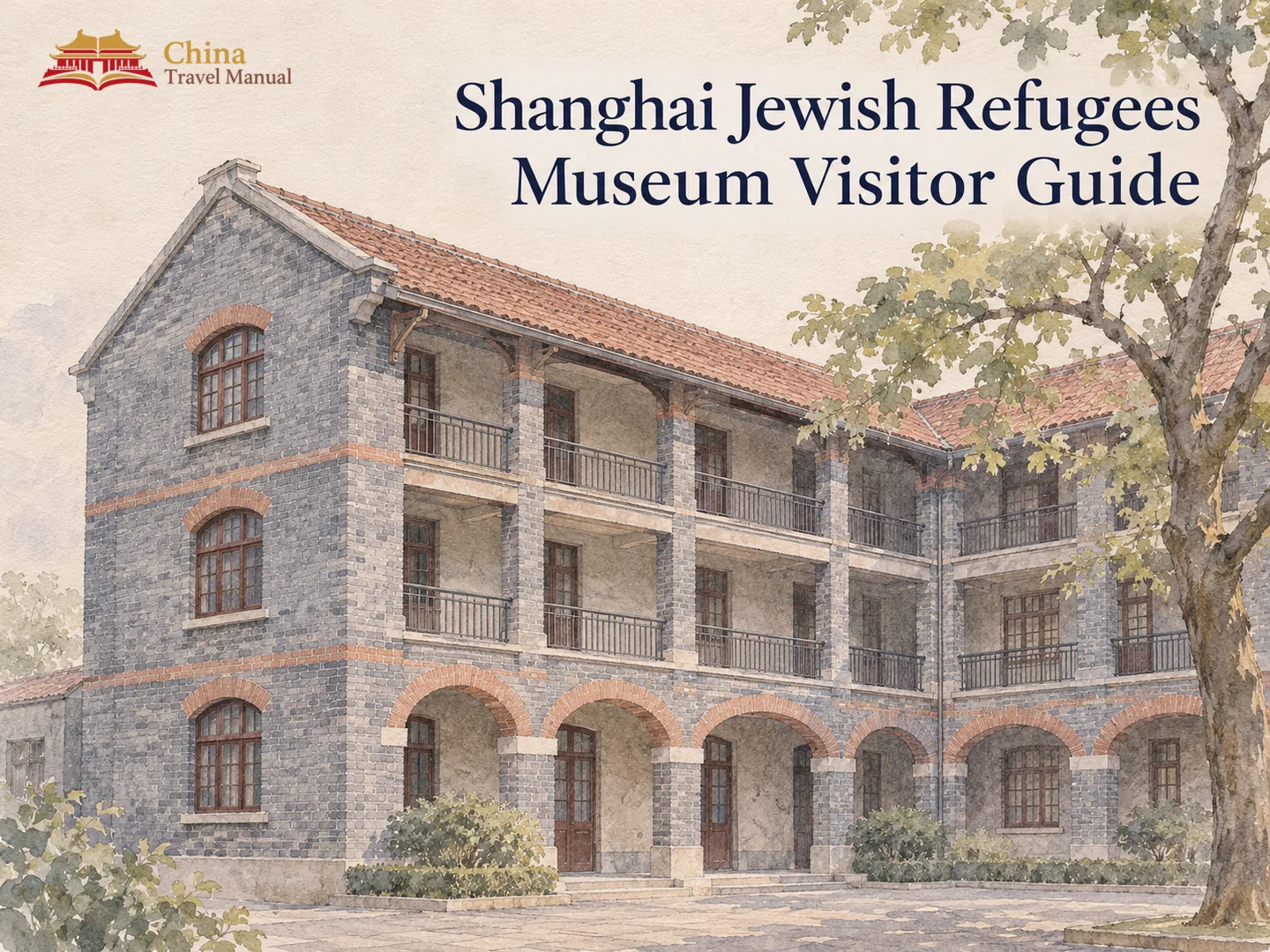
The museum preserves a former synagogue and documents the lives of Jewish refugees in wartime Shanghai. At this address, the history is tied to a particular building and neighborhood. The exhibition follows people who fled Nazi persecution, the communities they built in Shanghai and the restrictions the Japanese occupation authorities later imposed.[3][5][6]
Tickets, Opening Hours, and ID
Admission is registered by name. The museum’s English visitor page specifies a passport as valid ID, and the Chinese visitor page asks you to show identification when buying a ticket. Use the museum ticket window if you need to collect a free ticket. During holidays or special events, check the posted schedule before making the trip.[1][2]
| Visitor | Regular admission |
|---|---|
| Adult | RMB 20 |
| Eligible full-time student aged 23 or under, at undergraduate level or below | RMB 10 with proof |
| Visitor aged 60 or above | RMB 15 with valid ID |
| Child 1.3 meters tall or shorter | Free with an adult, up to two free children per adult |
The museum lists free lockers or storage and wheelchairs that can be borrowed with valid ID. Its English guide lists audio devices. Ask at the museum about available languages and equipment when you arrive. Some exhibition areas prohibit photography, and the museum asks visitors to follow the signs and keep food and drinks outside the galleries.[1][2]
The History Behind the Museum
Jewish refugees began arriving from Europe in the 1930s as Nazi persecution intensified. The United States Holocaust Memorial Museum records a sharp rise in arrivals from Germany and Austria after the November 1938 pogrom known as Kristallnacht. Shanghai was one of the few places refugees could enter without a visa until August 1939. Many settled in Hongkou, then often written as Hongkew, where housing was more affordable.[4]
On February 18, 1943, Japanese military authorities issued a proclamation establishing a restricted area for “stateless refugees.” The restriction belonged to a later phase of the war, after many refugees had already arrived. The exhibition puts the order in the context of everyday life, including how Chinese residents and refugees helped each other during those years.[5][6]
What to See at the Museum
Shanghai’s Russian Jewish community raised funds to build Ohel Moshe Synagogue in 1927. During World War II it became a place of worship and gathering for newly arrived Jewish refugees. The museum opened around the restored synagogue in 2007 and completed an expansion in 2020. Pause at the old building before continuing into the newer galleries.[3]
In the permanent exhibition, follow the story from departure and arrival to work, family life and the postwar years. Many of the records and objects came from former refugees and their descendants. If you have limited time, follow one family story through the early galleries and spend some time with the section on wartime life in Hongkou.[6]
The museum brought the number of names recorded on the Wall of Names to 19,672 in October 2025. The wall continues to grow as the museum verifies additional names. The museum’s website lets you search the list if you are looking for a particular person.[3][7]
Metro Access and a Walk Through Hongkou
Take Shanghai Metro Line 12 to Tilanqiao Station, Exit 1. Save the address 上海市虹口区长阳路62号 for a taxi or map search. The Shanghai Metro guide has advice on transfers and fares.[1][2]
If you have half an hour after the museum, walk along Zhoushan Road and Huoshan Road toward Huoshan Park. The museum identifies the park and the former premises of the American Jewish Joint Distribution Committee among the nearby historic sites. View residential streets and buildings respectfully from public spaces. With more time, the city suggests continuing to the North Bund waterfront. For a longer stay, the five-day Shanghai itinerary can help you give Hongkou its own morning.[3][8]
FAQs About Shanghai Jewish Refugees Museum
Do you need a passport to visit Shanghai Jewish Refugees Museum?
International visitors should bring their original passport. The museum requires valid identification for named admission.[1][2]
How long should you spend at Shanghai Jewish Refugees Museum?
Allow around 90 minutes to two hours for the synagogue, the main exhibition and the wall. Add time for reading documents or for a walk to Huoshan Park.
Can you search for a relative on the Wall of Names?
Yes. The museum has an online name search. Its Wall of Names page also gives a contact for families whose relatives took refuge in Shanghai and are missing from the list.[7]
Is Shanghai Jewish Refugees Museum the same as Ohel Moshe Synagogue?
Ohel Moshe Synagogue is the historic building at the center of the museum. Museum admission also covers exhibition areas that explain refugee life across the wider neighborhood.[3][6]
Sources
[1] Shanghai Jewish Refugees Museum. Plan your visit in English
[2] Shanghai Jewish Refugees Museum. Current Chinese-language visitor guide and ticket conditions
[3] Shanghai Jewish Refugees Museum. The museum, synagogue and historic sites nearby
[4] United States Holocaust Memorial Museum. German and Austrian Jewish refugees in Shanghai
[5] United States Holocaust Memorial Museum. Original 1943 proclamation establishing the restricted zone
[6] Shanghai Jewish Refugees Museum. Permanent exhibition
[7] Shanghai Jewish Refugees Museum. The Wall of Names and visitor search
[8] Shanghai Municipal Government. Walking Hongkou from Tilanqiao to the North Bund





