
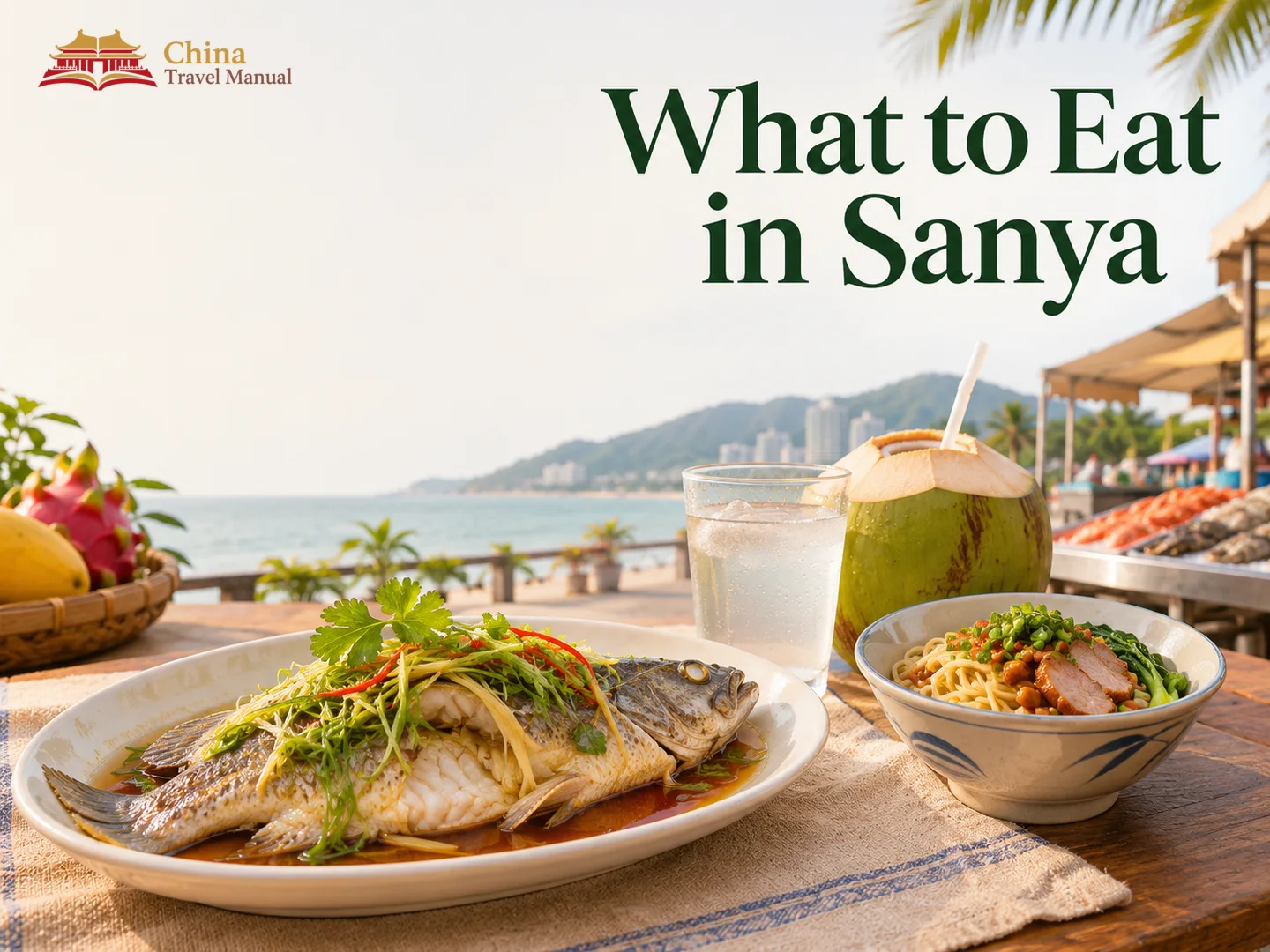
Quick Answer: What Should You Eat First in Sanya?
Try rice noodles in the morning, a shared hotpot or seafood meal at dinner, and a cold coconut dessert. First Market is a useful stop if you want to pick the seafood yourself. For an easier shared order, choose a hotpot restaurant with dishes and prices listed on the menu.[1][2][5]
- Breakfast: Order Gangmen rice noodles (港门粉, Gǎngmén fěn) for a local bowl with seafood-based broth and fish cakes.[1]
- Dinner: Try coconut chicken hotpot (椰子鸡火锅, yēzi jī huǒguō) for a lightly sweet broth, or choose a sour vinegar hotpot if you like sharper flavors.[2][3]
- Dessert: Ask for qingbuliang (清补凉, qīngbǔliáng), a chilled dessert that often pairs coconut milk with beans, fruit or chewy toppings.[1][2]
For seafood priced by weight, confirm the unit and the cooking fee before you commit to the order.[4]

To plan a day around Sanya’s food, make the noodle shop your early stop and save a sit-down meal for dinner. At a seafood market, agree on what you are buying and who will cook it before placing the first order.
What to Order at a Sanya Noodle Shop
Gangmen noodles are a good choice if you like mild seafood broth, fish cakes and a little crunch from peanuts. Taste the broth before adding yellow lantern chili sauce. If you prefer a tangier bowl, ask for the Lingshui style. Some shops sell several bowls with similar names, so point out the one you want from the menu or the counter.[1][2][7]
| Order | What to expect |
|---|---|
| Gangmen rice noodles | A seafood-infused bone broth, fish cakes and often peanuts. |
| Hou’an rice noodles | Thin noodles in a pork-based broth, often finished with pepper. |
| Lingshui sour rice noodles | A pronounced sour note, usually served as a dressed noodle bowl. |
| Baoluo rice noodles | A Hainan style with thick rice noodles and a choice of dry or soup preparations where available. |
Look for a noodle shop near your hotel if you plan to start early. For more choices across the island, see the Hainan food guide.[1][2][7]
Which Hainan Dishes to Try in Sanya
- Coconut chicken hotpot: Chicken cooks in young coconut water. Choose it if you like lighter broth, then ask what vegetables, noodles or side dishes come with the pot.[2][3][6]
- Sour vinegar hotpot: Zaopocu (糟粕醋, zāopòcù) gets its sour note from fermented rice-wine lees. Restaurants often use the broth to cook seafood. Check the base and fillings if you avoid seafood.[2][3]
- Wenchang chicken: Wenchang chicken (文昌鸡, Wénchāng jī) is often poached and chopped for sharing, with a citrus-forward dip. Ask for rice if it comes as a standalone plate.[1][3][6]
The traditional group of four notable Hainan dishes also includes Jiaji duck, Dongshan goat and Hele crab. Look for Tengqiao fried pork ribs for a Sanya specialty from the Tengqiao area.[1][3]
How to Buy Seafood and Have It Cooked
First Market (第一市场) is one place to see the market-to-table system. Check the tank signs and ask a nearby cooking shop for its rates if preparation is separate. If you prefer to order by the plate, choose a restaurant with posted prices and order directly from its menu.[4][5]
- Confirm the unit price: Ask whether the marked price is for a piece, a unit of weight or a finished dish. Use the same unit when comparing prices at different stalls.[4]
- Watch the weighing: Ask to see the scale zeroed with the container. Verify which item is being weighed and check whether the receipt gives the weight and unit price.[4]
- Price the cooking: Ask what steaming, grilling or another preparation costs and whether the shop charges per dish or by weight. Confirm extras before the seafood is prepared.[4][5]
- Check the final amounts: Compare the agreed seafood price and kitchen charges with the bill. Keep the receipt or payment record.[4]
Check the sign for 元/500克, which means yuan per 500 grams. For example, at ¥60 per 500 grams, a 750-gram fish costs ¥90 before cooking and sides. That is an illustration of the calculation. Check the current posted price for the fish you choose.[9]
Where to Eat From Breakfast to Late Night
- Morning: Start at a neighborhood noodle shop. For a slower break, try laoba tea (老爸茶, lǎobà chá), a Hainan teahouse tradition where people linger over tea and snacks.[2]
- Evening: Head to First Market for seafood restaurants and snack shops. Stroll through before deciding whether to sit down for a meal or try a few small items.[5]
- After dinner: Look for qingbuliang at a dessert shop or night market. Ask how the stall serves it and choose from its available toppings.[1][2]
See the Sanya evening guide for other neighborhoods to visit after dinner. If you are coming from a resort, check Sanya transport options and the likely return ride before you go. If ingredients are a concern, the guide to dining with food allergies in China covers how to explain what you need to avoid.
FAQs About Eating in Sanya
What is a good first meal in Sanya?
Try Gangmen rice noodles for a quick meal or share coconut chicken hotpot for dinner. Ask before ordering if you need to avoid the seafood in some noodle broths.[1][3]
Is the seafood price the same as the cooked meal price?
A live seafood seller may charge by weight and a separate restaurant may charge to prepare it. Ask how both parts are priced and compare them with the itemized bill.[4][5]
What is qingbuliang like?
It is served cold, often with coconut milk and toppings such as red beans, fruit or chewy pearls. The mix varies by shop.[1][2]
How can I order food if I avoid seafood?
Ask about the broth, sauce and toppings. If you have an allergy, tell the kitchen before ordering and ask whether shared equipment could bring your food into contact with the allergen.[8]
Sources
[1] Sanya City Government. Introduction to Sanya’s local dining
[2] Sanya Tourism Board. Rice noodles, hotpots, tea and late-night snacks
[3] Sanya Tourism Board. Sanya’s signature dishes and preparations
[4] Sanya Tourism Board. Seafood consumer guide to prices, scales and receipts
[5] Sanya Tourism Board. First Market night market and cooking shops
[6] Sanya Tourism Board. Island flavors and local dining
[7] Sanya Tourism Board. A guide to Hainan’s rice noodle styles
[8] Food Allergy Research & Education. Restaurant questions about cross-contact
[9] Sanya Development and Reform Commission. How Sanya lists units for live seafood prices





