
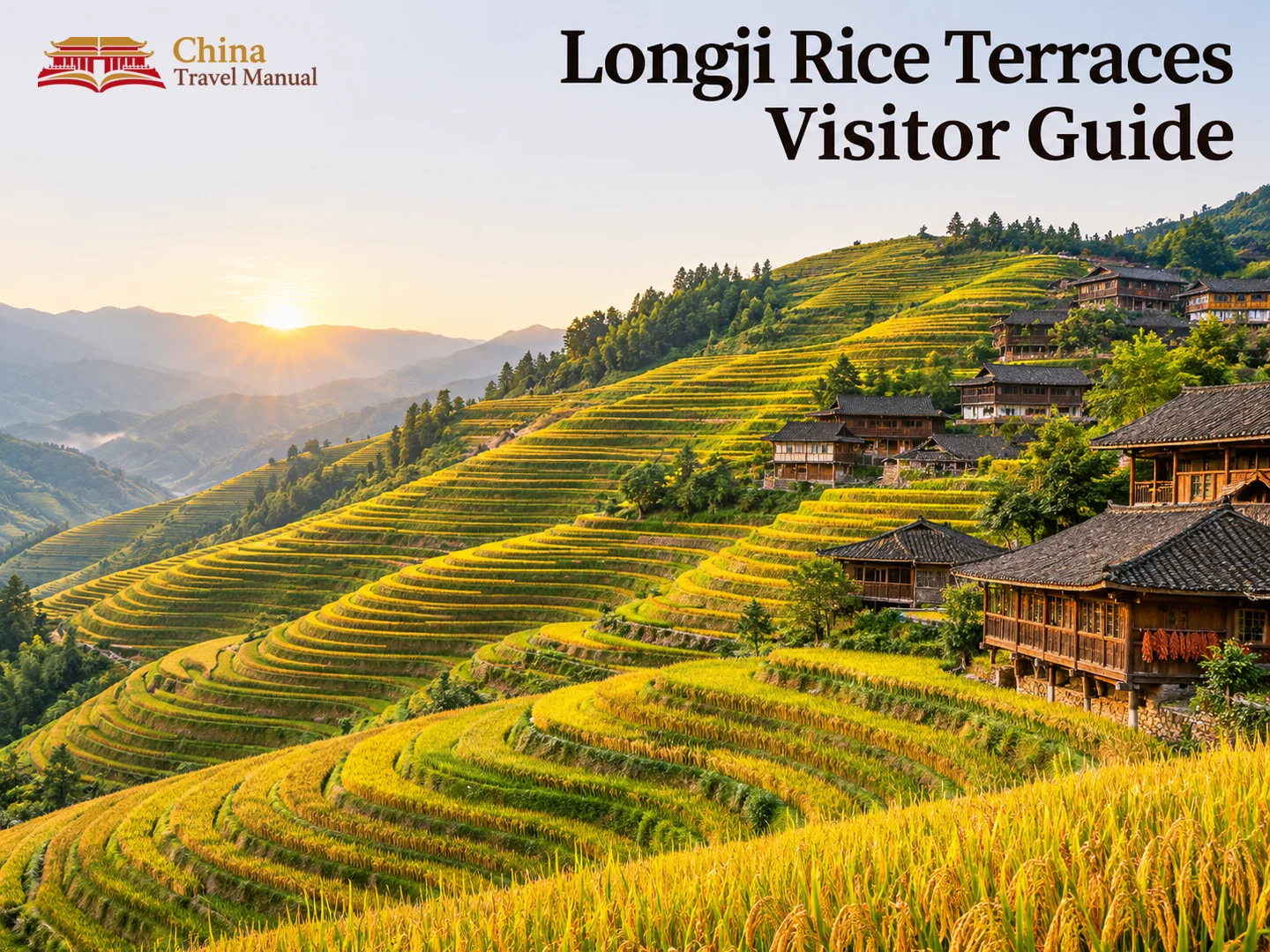
Quick Answer: How Do You Visit the Longji Rice Terraces?
Choose one village before booking transport to the Longji Rice Terraces (龙脊梯田, Lóngjǐ Tītián) in Guangxi. Start with Ping’an (平安, Píng’ān) for a village walk and two classic viewpoints. Choose Jinkeng–Dazhai (金坑大寨, Jīnkēng Dàzhài) for a larger basin and its cableway option, or the Ancient Zhuang Village (龙脊古壮寨, Lóngjǐ Gǔ Zhuàngzhài) for a quieter walk near traditional homes.[1][2][5]
- Admission: The 2026 operator notice confirms that standard entry covers the three core areas. Keep proof of purchase and check separate shuttle or cableway costs.[1][5]
- Arrival: Book to the specific village or parking area. It may take another road transfer after the common scenic gate.
- Time: Use a half day on site for one village, or stay overnight to visit two without rushing.
- Season: Check the state of the crop with your host. In 2026, the main harvest started on November 1. Future dates depend on the farming calendar.[3][4]
Do not plan the visit around every viewpoint in the scenic area. The views are broadest when you can stop and walk one hillside at a comfortable pace.

The terraces are working fields. In different months the same hillside can show standing water, growing rice, golden grain or harvested stubble. Choose the village based on the walking and transport that suit you, then check how its fields look close to your visit.[2][3][4]
Choose the Village Before Buying Transport
Ping’an is a straightforward choice for a classic walk between the village and signed viewpoints. Jinkeng–Dazhai spreads lodging and overlooks across a larger landscape. Its cableway can shorten part of a visit, but check where it starts and ends against your route. The Ancient Zhuang Village gives you a closer look at an older village layout. For a short outing, take the same approach back unless your onward path and pickup are confirmed.[1][5]
Time Your Visit to the Farming Calendar
Ask your host for a current photo from the village you have booked, especially near flooding or harvest. Flooded terraces can reflect the sky around the start of the farming cycle. Growing rice changes from bright green to gold as it matures. After harvest, the lines of the terraces remain visible, while colors can change sharply across different slopes. The scenic area’s 2026 calendar also describes winter irrigation in parts of Ping’an. Ask which fields are affected instead of assuming all villages look the same.[2][3][4]
Check the Gate, Drop-Off and Steps to Your Room
Use Guilin to Longsheng to plan the journey from the city and have the accommodation confirm the last stop. Confirm how far you will carry your bags from the actual drop-off, and ask about a pickup if you need one. If you are continuing from Yangshuo, the Guilin, Yangshuo and Longji itinerary helps you fit the extra road leg in without arriving after dark.
FAQs About Longji Rice Terraces
Which village is easiest for a first visit?
Ping’an works well for one main village walk. Choose Dazhai if a cableway and broader amphitheater are more important to you.[5]
Is one admission valid for the main villages?
The operator’s 2026 notice lists Ping’an, Jinkeng–Dazhai and the Ancient Zhuang Village under one general admission. Check local transport fees and keep your entry receipt.[1]
Can I walk across villages?
Some walks link terrace areas, but conditions and access vary. Ask locally about the open route, actual walking time and how to get back, especially in wet weather.
Sources
[1] Longji Rice Terraces Scenic Area. 2026 notice on shared admission and parking
[2] Food and Agriculture Organization. Rice terraces in southern Chinese mountain communities
[3] China News Service. November 2026 Longji rice harvest
[4] Guangxi News. 2026 field and festival calendar
[5] Haoliday Guilin visitor listings. Longji village approaches, viewing areas and transport





