
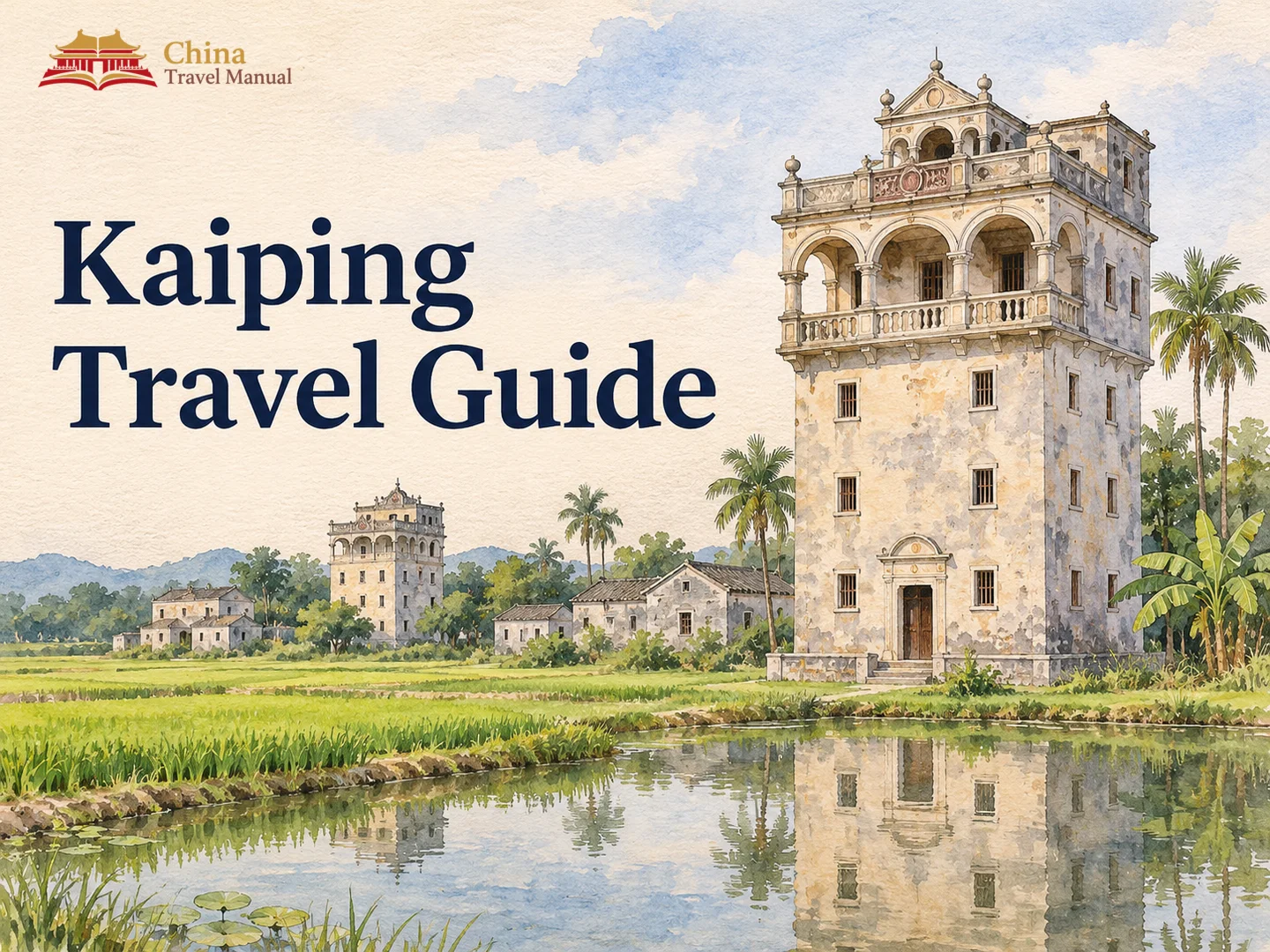
Quick Answer: Where to Start in Kaiping
Start at Zili Village for a first look at Kaiping’s fortified diaolou towers. Pair it with Li Garden for one day, or stay overnight to add the wooded Majianglong village cluster and the riverside arcades at Chikan.[1][3][4][5]
- For the towers: Choose Zili Village first and allow time to walk between the buildings and fields.
- For a different setting: Add Majianglong for lanes and bamboo groves.
- For an easier arrival: Search for Kaiping South and arrange the ride to your first village.[3][4][6]
The villages, Li Garden and Chikan use separate entrances. Check each stop’s admissions and the ride between them before trying to see all of them in one day.[4][5]

Kaiping (开平) is a county-level city in the Jiangmen area. Its famous towers stand in villages beyond the urban core. A visit works best when you choose a few places that show different parts of the story of migration, architecture and village life.
What the Diaolou Tell You About Kaiping
Diaolou (碉楼) are multi-storey fortified buildings. Some served as residences, while others provided shared shelter or lookout points. In Kaiping, returning emigrants helped bring architectural motifs from overseas into the local building tradition. Look for the contrast between the defensive lower levels and the details at the top, from columns to decorative balconies.[1]
The UNESCO property comprises four components. They include Sanmenli’s Yinglong Lou, Zili Village with the Fang Clan Watch Tower, the Majianglong cluster and Jinjiangli. When comparing tickets, check which specific villages and garden entrances they include.[2][4]
Which Villages and Sites to Visit
- Zili Village (自力村): The strongest first stop for an open village landscape. Walk the paths beside rice fields and ponds, then look back at how the towers sit above the lower houses. Ask which interiors are open on the day of your visit.[1][3]
- Li Garden (立园): Pair it with Zili for a look at how a family estate used canals, bridges and gardens. The historic villa complex belonged to an overseas Chinese family and combines Lingnan garden spaces with Western architectural influences.[4][7]
- Majianglong (马降龙): Choose it for a walk through a group of villages and stands of bamboo. The narrower lanes and vegetation make the towers appear gradually. Allow more time if you want to explore several paths and return to the same entrance.[2][4]
When to Add Chikan
Chikan (赤坎) suits a visitor who wants a riverside townscape with long arcade rows, restored streets and a cultural resort. Search for 赤坎华侨古镇 or confirm the official resort name when buying admission. Allow several hours for its covered arcades, riverfront and a meal. Keep an eye on show or activity schedules if you want a particular experience.[5]
Chikan is a separate visit from the four UNESCO components. It pairs well with a village on an overnight trip. If you have one day and mainly want village architecture, spend the time at Zili and Li Garden.[2][4][5]
Getting to Kaiping and Between Stops
Search the railway timetable for Kaiping South (开平南). The station is in Sanbu, so allow for a separate drive to Tangkou, Chikan or Majianglong. Pick the correct entrance as your drop-off and arrange your return. A municipal bus route links several of the main sites. Check its current loop, boarding points and last service if relying on it.[5][6]
Use the Guangzhou to Kaiping Diaolou guide for the long-distance leg. Stay near Tangkou for an early Zili or Li Garden visit, or choose the Chikan area for the arcade streets. If your priority is onward rail or easier access to late meals, compare hotels in central Kaiping.
One Day or Two in Kaiping
- One day: Arrive at Kaiping South, visit Zili Village, eat lunch and see Li Garden before returning. Swap the garden for Majianglong if an extended countryside walk matters more to you.
- Two days: Use one day for Zili and Li Garden. Give the other to Chikan or Majianglong, depending on whether you want an arcade town or bamboo paths before your train.
Continue to central Jiangmen for the Overseas Chinese Museum and its stories of migration. See the Guangdong travel guide for places to connect on a longer trip.
FAQs About Visiting Kaiping
Can I visit the Kaiping diaolou as a day trip?
Yes. Pick two stops and arrange the rides between them. A third stop can leave little time to enjoy the villages if you also have a train to catch.
Which village should I choose if I have time for one?
Choose Zili Village for towers set among ponds and farm fields. Choose Majianglong if you prefer a quieter village walk with bamboo paths.[3][4]
Does Chikan count as one of the UNESCO components?
The inscribed components are Sanmenli’s Yinglong Lou, Zili Village with the Fang Clan Watch Tower, Majianglong and Jinjiangli. Chikan’s historic arcade streets are a separate visit.[2][5]
Sources
[1] UNESCO World Heritage Centre. Kaiping Diaolou and Villages
[2] UNESCO World Heritage Centre maps. The four inscribed components
[3] Guangdong Foreign Affairs Office. Zili Village’s diaolou and landscape
[4] Jiangmen Culture and Tourism Bureau. Kaiping Diaolou Cultural Tourism Area
[5] Kaiping Municipal Government. Tourism transport between Zili, Li Garden, Chikan and Majianglong
[6] Kaiping Municipal Government. Local history and Kaiping South Station
[7] Jiangmen Municipal Government. Li Garden estate and architecture





