
Quick Answer: Which Traditional Music Should You Hear in China?
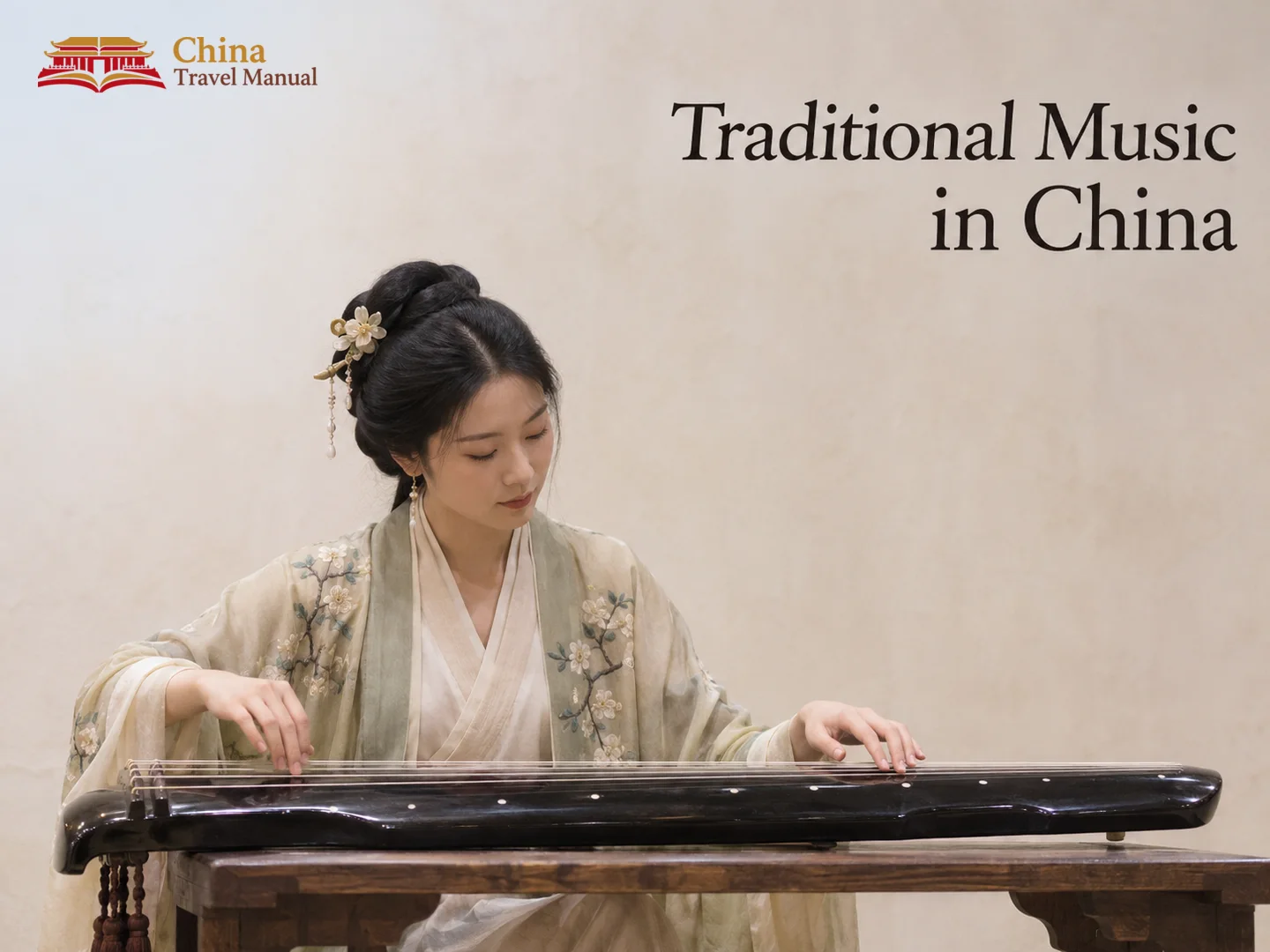
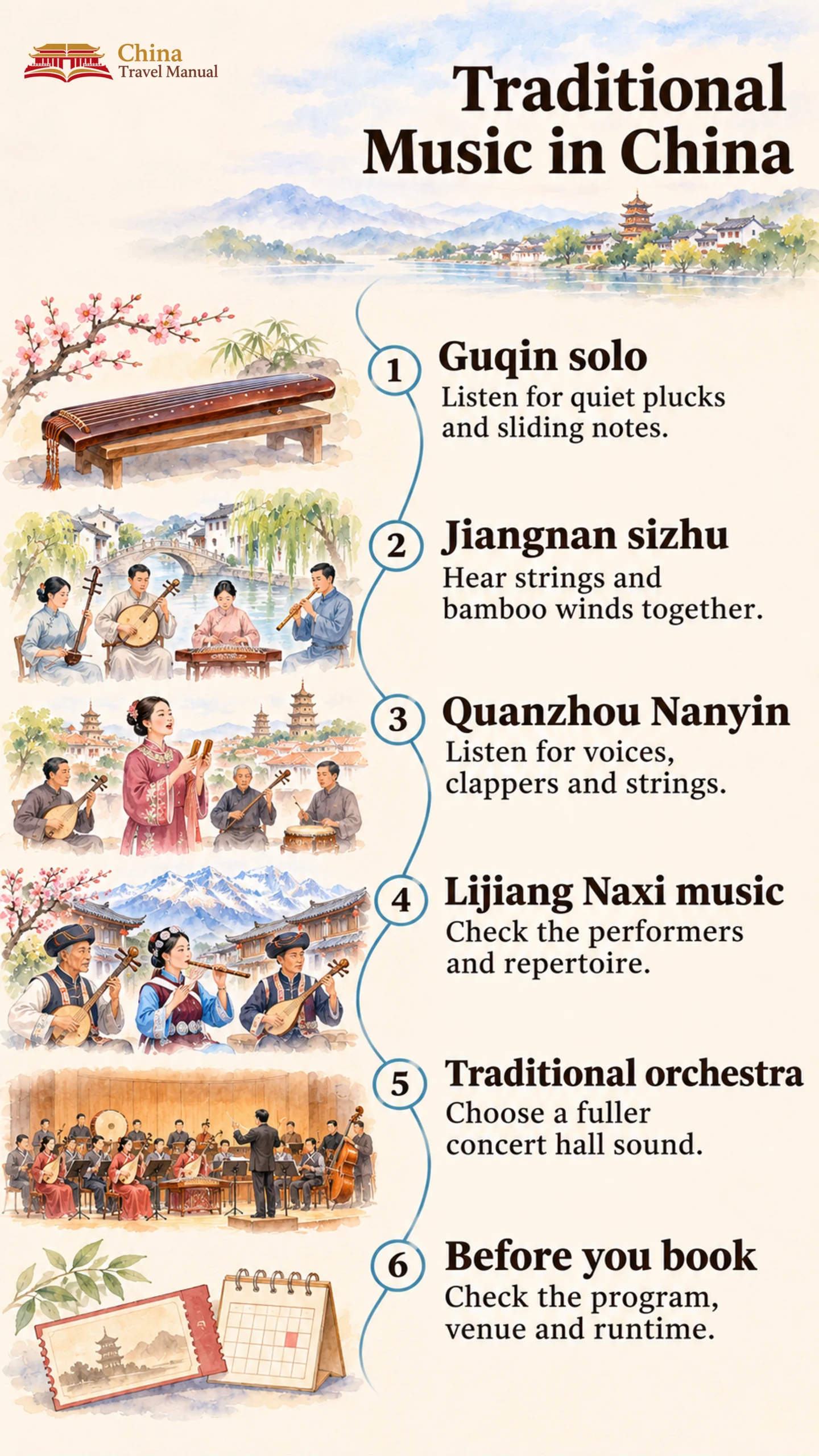
Choose a guqin (古琴, gǔqín) recital if you want a quiet solo instrument, a regional ensemble if you want to hear local voices and playing styles, or a traditional instrument orchestra for a larger concert. Let the listed performers and repertoire guide the choice.[1][2][3][7]
- For a quiet performance: Look for a small-room recital with a short program or an introduction.[1]
- For strings and bamboo winds: Try Jiangnan sizhu (江南丝竹, Jiāngnán sīzhú) around Shanghai or in the lower Yangtze region.[2]
- For local song and instruments: Look for Nanyin (南音, nányīn) in Quanzhou, Fujian.[3][4]
- Before booking: Check the actual date, program, venue, running time and any translation.
Pick a performance that fits the city and evening you already have available.
Traditional music in China covers many sounds and settings. The instruments matter, but so does the room. A small recital makes it easier to watch the player’s hands, whereas a concert hall lets you hear the balance of a larger ensemble.
Choose a Performance by Sound and Setting
| What interests you | Look for | Listen for |
|---|---|---|
| Quiet solo playing | A guqin recital or a musician-led demonstration. | Plucks, slides and pauses between notes.[1] |
| Small instrumental group | A Jiangnan silk-and-bamboo ensemble. | Strings and bamboo winds sharing a melody in different ways.[2] |
| A local vocal tradition | A Nanyin recital or ensemble program. | The singer, clappers, strings and the spaces between phrases.[3] |
| A full concert hall sound | A program by a traditional instrument orchestra. | How groups of strings, wind instruments and percussion combine.[7] |
The word “traditional” can also describe opera or a large stage show with a different format. If costume, singing and stage movement matter most to you, compare Peking opera performances with a music recital.
Where to Hear Traditional Music in China
Beijing: Concert Halls and Small Recitals
Check the National Centre for the Performing Arts calendar while planning your Beijing visit. A past concert by the China National Traditional Orchestra shows the kind of larger ensemble program you might find. To hear the guqin in a smaller setting, look for a program listing the instrument or artist as the main focus, and check if it is a recital or a brief demonstration.[1][6][7]
Shanghai and Jiangnan: Silk-and-Bamboo Ensembles
In Shanghai, arts and heritage calendars may list this regional ensemble tradition, named for the materials historically associated with strings and bamboo instruments. Listen for differences in phrasing as more than one player works around a tune. Ask whether a program concentrates on this music or includes several unrelated genres.[2]
Quanzhou: Nanyin Voices and Instruments
Use the Quanzhou Nanyin guide to fit an evening into a southern Fujian trip. A dedicated show can include instrumental pieces and singing, with some vocal repertoire sung in the local Quanzhou dialect. The city calendar has listed specific shows with a named venue, running time and ticket details. Use the listing for your date to check which local ensemble is performing.[3][4]
Lijiang: Naxi Music
Naxi music (纳西古乐, Nàxī gǔyuè) appears in visitor listings in Lijiang, but programs can feature different performers and traditions. The Lijiang Naxi music guide helps you compare a music-focused performance with other shows. Ask the venue which group is on, whether a host introduces the pieces and what the evening includes.[5]
How to Read a Listing and Book a Seat
- Read the program first. Check whether the event is a performance, demonstration or workshop. Look for the lead musician or ensemble and whether the program names any of the pieces.
- Check the service details. Verify venue, date, runtime, age limit if applicable and any late-entry instructions. Large performing arts centers may use several different halls.[4][6][7]
- Ask about language support. For vocal pieces, an English program summary can help. For instrumental music, try finding a recording of one piece or reading the name of the lead instrument before you go.
- Choose seats for the room. Sit closer for a small ensemble if you want to see the players. At a larger hall, check the seating chart and your sightline.
At a quiet recital, arrive before the first piece and check the venue’s photography policy. If the ticket uses real-name entry, ask whether it accepts the ID you will carry.
FAQs About Traditional Music Experiences in China
Do I need to understand Chinese to enjoy the music?
You can follow instrumental pieces by listening for the lead instrument, the rhythm and changes in volume. For sung music, ask for a program synopsis or translation before booking.[1][2][3]
What is the difference between a guqin recital and an orchestra?
A guqin recital can focus on one quiet plucked instrument and the detail in each note. An orchestra can use many sections to create a bigger dynamic range and sound.[1][7]
Can I combine a concert with a music workshop?
Ask the venue whether the event includes audience participation or offers a separate class. A concert ticket ordinarily indicates admission to the show, so confirm the lesson and its availability separately.
Sources
[1] UNESCO Intangible Cultural Heritage. Guqin and its music
[2] Shanghai Municipal Government. Shanghai Jiangnan sizhu tradition
[3] UNESCO Intangible Cultural Heritage. Nanyin of southern Fujian
[4] Quanzhou Municipal Government. Example of a Quanzhou Nanyin calendar entry
[5] China State Council Information Office. Naxi music and cultural traditions
[6] National Centre for the Performing Arts. National Centre for the Performing Arts calendar
[7] National Centre for the Performing Arts. Example China National Traditional Orchestra program





