
Quick Answer: Where should you go for industrial heritage in China?
Choose a site based on what you want to see and how much of the original plant is accessible.
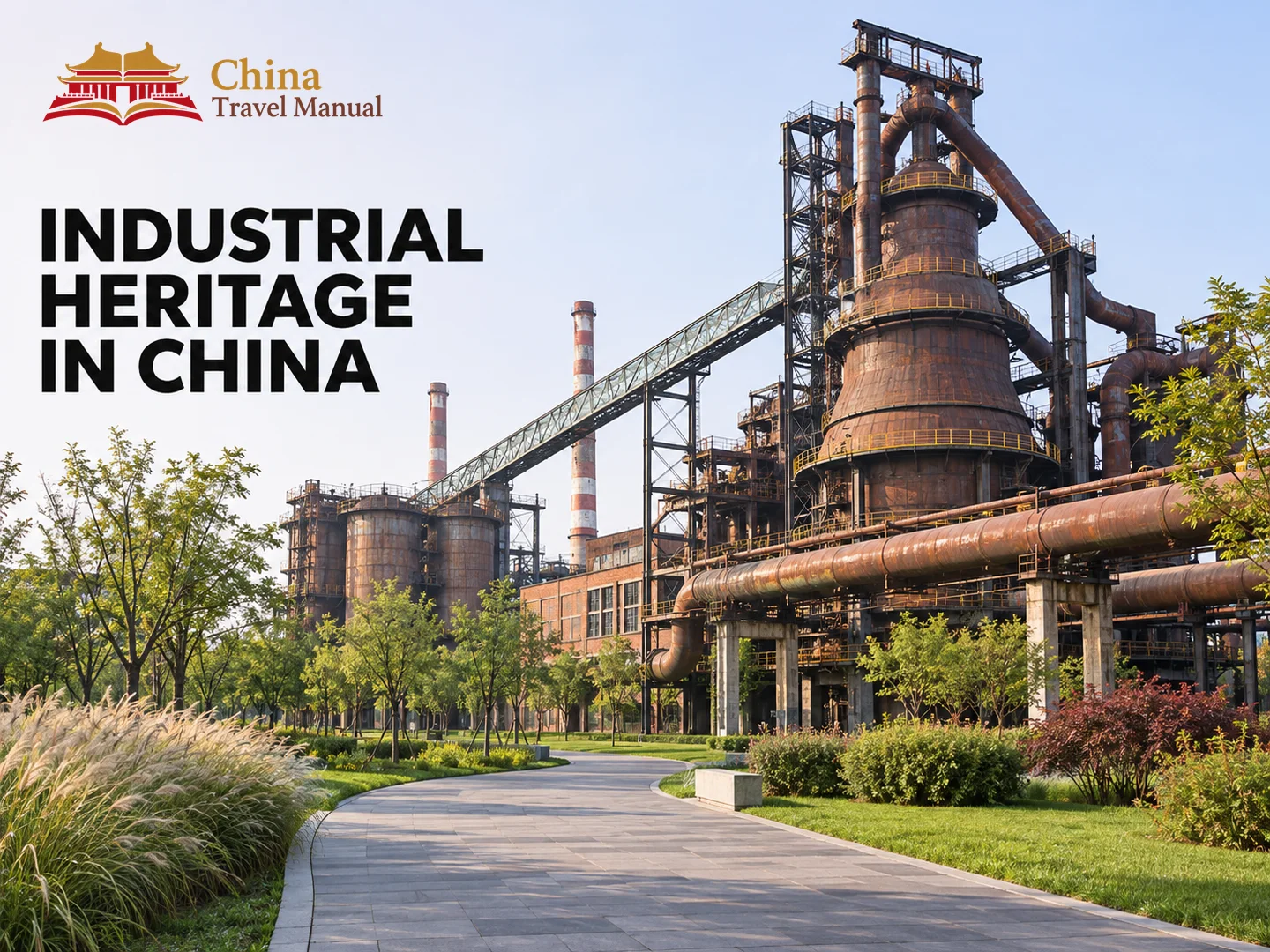
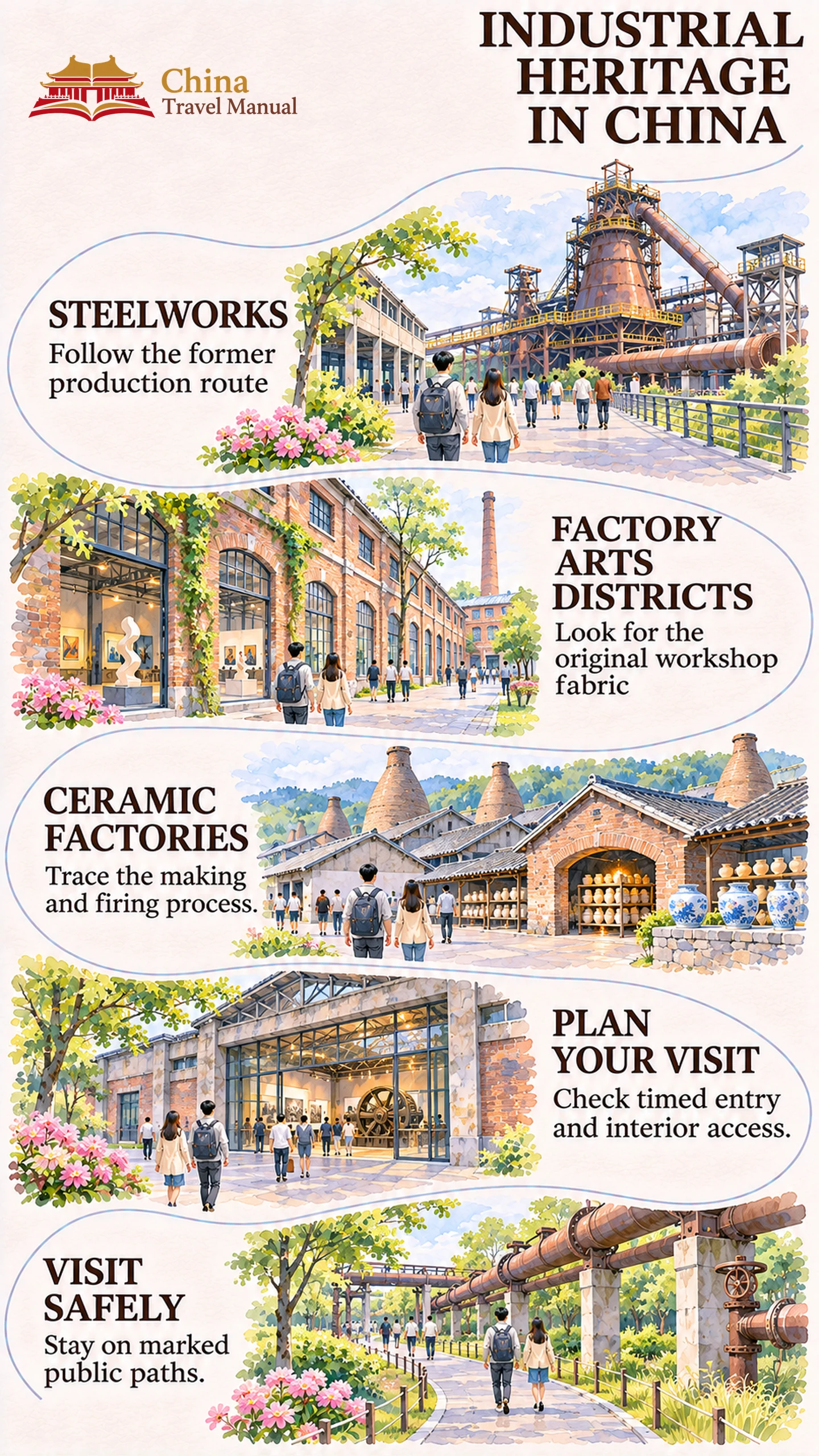
- Steel making: Start at Shougang Park (首钢园, Shǒugāng Yuán) in western Beijing for a former steelworks, public paths and views of the No. 3 Blast Furnace.[1]
- Factory architecture and exhibitions: Compare 798 Art District (798艺术区, Qī Jiǔ Bā Yìshùqū) in Beijing with the Power Station of Art in Shanghai. Both adapt former industrial space for the arts.[2][3]
- Ceramics production: Visit Taoxichuan (陶溪川, Táoxīchuān) in Jingdezhen to see how former porcelain factory buildings have been given new public uses.[4]
Check the hours and tickets for the specific building or exhibition you want to enter. Open public grounds and indoor admissions can follow separate schedules.
The most rewarding industrial heritage visits give you two things to look at: the place people once worked and the way it is used now. A former steelworks lets you read an industrial landscape at outdoor scale. A converted factory gallery shows how a building designed for production can serve a new public purpose. Start by deciding which of those experiences you want, then check what the site opens on your visit date.
Compare four industrial heritage sites
| Site | What was made or done here | What to look for |
|---|---|---|
| Shougang Park, Beijing | Iron and steel production | Compare the scale of the furnace and its surrounding pipes, platforms and public greenways.[1] |
| 798 Art District, Beijing | Industrial production in a factory complex | Look up from the galleries to see the large workshop volumes and roof profiles.[2] |
| Power Station of Art, Shanghai | Electricity generation in a former power station | Look for how the large hall and chimney relate to the building’s new use as a contemporary art museum.[3] |
| Taoxichuan, Jingdezhen | Production in a porcelain factory | Look for the retained industrial buildings and how exhibition, studio and public spaces fit among them.[4] |
Read a former workplace before you visit the exhibitions
Look for an overview panel, a site model or a public viewpoint near your entrance. At Shougang, identify the blast furnace from ground level and look at the adjacent structures before taking the elevated walkway. Compare the length of the industrial corridors with the newer walking route. The 2026 city guide identifies a 2 km elevated walkway and a 3.2 km lakeside section. They give you different perspectives without requiring entry to the furnace.[1]
At 798, pick one exhibition, then spend time outside comparing the reused buildings. Use the 798 Art District guide to place your chosen gallery, then choose an entrance for that side of the district. In Shanghai, choose a current exhibit at the Power Station of Art and leave time to look at the hall beyond the show. Open factory grounds can be a worthwhile visit in their own right, while a museum visit gives you access to particular interior spaces during its operating hours.[2][3]
In Jingdezhen, pair the Taoxichuan visitor guide with a separate pottery workshop visit if you want to connect the old factory landscape to a process you can try yourself. Ask what you will do during the class and whether firing happens after you leave. Evidence of the industrial workflow and a chance to work with clay give you two reasons to spend time in the city.[4]
How to plan a visit to a former industrial site
- Choose the public entrance: Save the exact gate or museum name. In Beijing, a city route lists Line 6 to Jin’anqiao Exit K for the north gate of Shougang and Line 11 to Xinshougang Exit C for the south approach.[1]
- Book the interior separately: Check the admission for your museum or viewpoint. At Shougang, the city specifies a separate ticket for access to the top of the No. 3 Blast Furnace. Plan an outdoor walk if the interior is unavailable.[1]
- Check accessibility for your route: Ask the venue about ramps, lifts, surfaces and opening hours for the particular path you need. Large factory sites can involve long outdoor walks between buildings.
- Stay within public areas: Follow marked paths and barriers, including around retained rail tracks, tanks or platforms. Ask about tripods and interior photography at the venue.
Keep the stop within your broader city plan. For a Beijing trip, pick either the west-side steelworks or the Chaoyang arts district as the main focus of a half day. For Shanghai, add the museum to your Shanghai itinerary after checking the exhibition calendar.
FAQs About Industrial Heritage Travel in China
Which site is best for seeing large industrial equipment?
Start at Shougang Park if you want to see the scale of a blast furnace and related infrastructure. Confirm which viewpoint and indoor areas are open for your date.[1]
Can I visit a former factory without taking a tour?
At sites with public streets, greenways or galleries, you can often assemble your own visit. Check whether the specific interiors on your list require a ticket, tour or timed entry.[1][2][3]
Can I combine a factory visit with a pottery class?
Yes. Taoxichuan and a booked pottery workshop make sense on the same Jingdezhen trip. Leave time to get between the venues and ask how firing or shipping is handled.[4]
Sources
[1] Beijing Municipal Government. Shougang greenway, transport and blast furnace access
[2] Beijing Municipal Government. The factory buildings and art spaces of the 798 Art Zone
[3] Shanghai Municipal Administration of Culture and Tourism. Power Station of Art and its former industrial site
[4] Royal Institute of British Architects. Taoxichuan Ceramic Culture Industrial Park and factory adaptation





