
Quick Answer: Should You Book a Hotel or an Apartment in China?
Choose a hotel for a short stay when you value a staffed desk and convenient arrival. Compare an apartment when you need more space, laundry or a place to cook.
- Hotel: Confirm desk hours, breakfast and how quickly you can check in.
- Serviced apartment: Verify the unit’s layout, kitchen and cleaning schedule.
- Private rental: Confirm key collection, building access and who helps with registration.
- Price: Compare the full stay, including services, transport and any mandatory fees.
- Location: Check the actual entrance and route from your arrival point.
Ask how the property is operated before assuming what the room price or booking label covers.
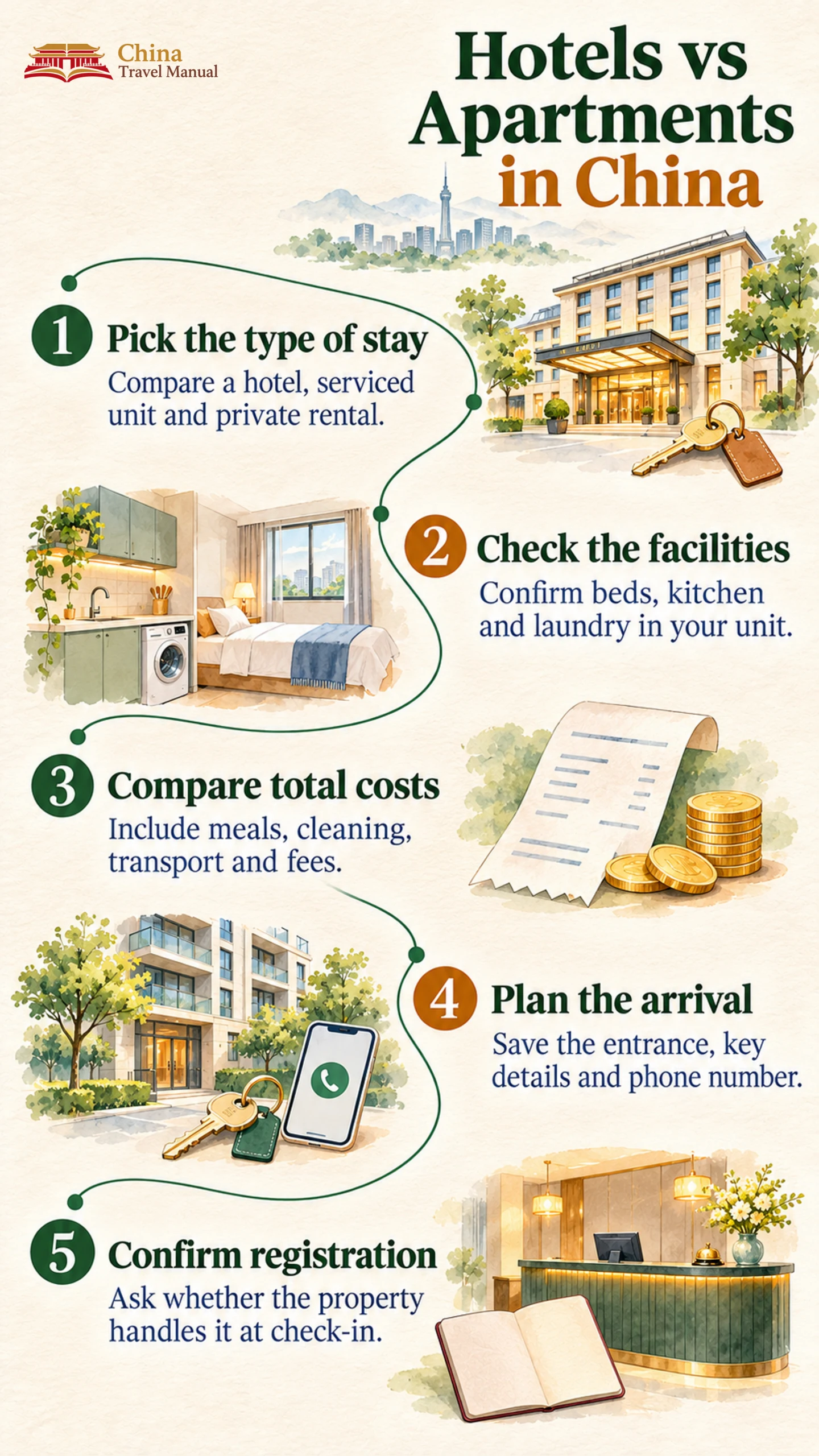
The choice between a hotel and an apartment in mainland China depends on how much time you will spend inside, how you will arrive and what you need each day. Compare the individual hotel room or unit. A week with several laundry loads, for example, calls for a different setup from one night before an early train.
Compare the Three Operating Models
A conventional hotel can be convenient when you arrive late, need luggage storage or want breakfast before leaving. Check the property rather than relying on the hotel category. Some desks have limited hours, and breakfast and extra beds may depend on the rate. Start with the China accommodation types guide if you are considering different kinds of hotels.
A serviced apartment combines a private unit with some property services. It can suit a longer stay or a family that wants separate sleeping and eating areas. Check the specific staffing and cleaning schedule. Marriott Executive Apartments Shanghai, Zhangjiang lists twice-weekly housekeeping, while its Tianjin TEDA property’s rooms page describes daily housekeeping and 24-hour staff assistance.[1][2] Ask which services the property provides on your actual dates.
A private rental can offer more privacy and a different neighborhood, with a host or manager handling access. Find out whether you meet someone in person, get a door code or collect keys elsewhere. Ask who to contact if the code fails after hours. See the guesthouses and homestays guide when you are considering a hosted room or smaller independent property.
Check the Actual Layout and Facilities
Ask whether a listing marked “one bedroom” has a room with a door, and where everyone will sleep. If the sofa is used for a bed, check whether the kitchen and bathroom remain easy to reach with it open. Confirm that the booked unit allows all adults and children in your party. See hotel room and bed types in China for layout and occupancy questions.
For cooking, distinguish a furnished kitchen from a kitchenette. Ask about the hob, microwave, fridge, utensils and whether you can prepare the meals you expect. For laundry, ask whether the machine is in your unit, shared or part of a paid service, and whether there is a dryer. Citadines Lujiazui Shanghai publishes washing and drying equipment and a kitchen on its apartment page.[3] Confirm such features for your exact type of unit. The China laundry guide covers alternatives if the property lacks a machine.
Compare the Total Cost and Transport Time
Put the hotel and apartment totals next to each other for the same dates and guests. Include cleaning charges, meals you will pay for, extra bedding and transport. Ask whether any deposit is refundable, how it is collected and when it is returned. Treat a refundable deposit as money you may need on arrival rather than a final stay cost, and check the reasons the operator can keep it. Use the hotel booking guide to compare payment and cancellation terms.
Imagine a six-night apartment that costs ¥240 more than the hotel before meals. If it saves you ¥60 per day in meals and laundry over four days, you break even before considering fees and trips. Use your own expected costs. For a property farther out, check how many extra rides you need and how long you will spend on them, especially in the morning or on departure day.
Confirm Registration and How You Get In
Hotels are responsible for registering foreign guests. If your stay is in a private residence or other non-hotel accommodation, you or your host must register within 24 hours of arrival. The National Immigration Administration provides online registration nationwide for those stays, with in-person registration also available.[4] Ask the operator how your property handles check-in and which process applies. The word apartment alone does not determine who files registration.
Save the entrance pin, Chinese address, access instructions and official contact offline. Confirm whether there is a reception desk and whether the apartment entrance is in a different tower or compound. For a late arrival, ask who can open the building or reset the code if you cannot get in. See hotel check-in in China for arrival and registration details.
FAQs About Hotels vs Apartments in China
Does a Serviced Apartment Work Like a Hotel?
Some have a reception desk and regular housekeeping. Ask which services are available, when staff are present and whether the property registers foreign guests through hotel check-in.
Is an Apartment Always Cheaper for a Week?
Compare the weekly total, cleaning, meals, laundry and transport. An apartment makes financial sense when you actually use its facilities and can reach your destinations conveniently.
Who Registers My Stay in a Rented Apartment?
Ask how the property is operated. Hotel accommodations register their guests. For a private stay, arrange registration with your host within 24 hours of arrival.
Sources
[1] Marriott. Shanghai Zhangjiang executive apartments amenities
[2] Marriott. Tianjin TEDA executive apartments and services
[3] The Ascott Limited. Citadines Lujiazui Shanghai unit types and equipment
[4] National Immigration Administration. Accommodation registration notice





