

Quick Answer: When Is the Best Time to Visit Shanxi?
Choose May or September for a first trip through Shanxi. In May, Taiyuan is already mild and its monthly rainfall is lower than in midsummer. September gives you a good window for Pingyao and Datong before the National Day holiday. October works well for architecture after the holiday if you pack for cold mornings.[1][2][5]
- For city walls and temples: Pick May or September and give the most exposed visit a flexible half-day.
- For Mount Wutai: Start with a summer date and check the high-elevation forecast separately.
- For smaller crowds: Try weekdays after the October holiday, with a warm layer for Datong.
- For a winter trip: Build around museums and short outdoor visits near midday.
Once you know whether a mountain visit is essential, compare the two best windows for your route.
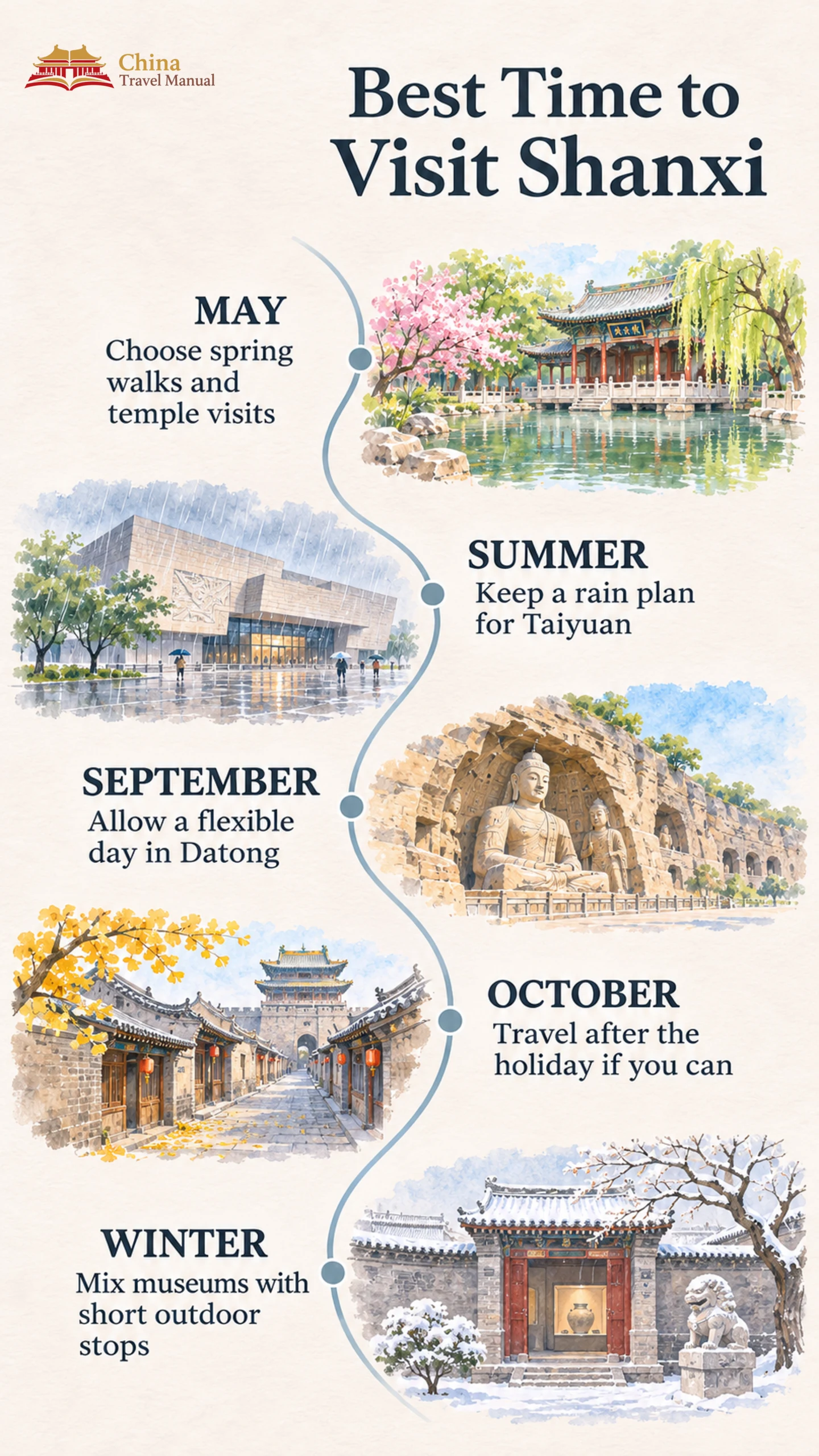
In Shanxi, a pleasant afternoon in a Taiyuan courtyard can coincide with an exposed morning at Datong’s cliff temples or cold conditions high on Mount Wutai. Choose the month for the part of the trip that will be hardest to reschedule. For a first visit focused on architecture, build around the Shanxi seven-day itinerary and keep the two outdoor days in Datong interchangeable.
Shanxi Travel Seasons at a Glance
| Period | Best fit | What to account for |
|---|---|---|
| April to May | Jinci courtyards, cave art and Pingyao on foot | Pack for cool starts, particularly in northern Shanxi |
| June to August | Mountain temples or a trip built around summer leave | Keep an indoor option for wetter July and August days |
| September to October | The Datong–Taiyuan–Pingyao heritage route | Check the holiday calendar and bring layers for October |
| November to March | Taiyuan museums, noodles and short daytime outings | Leave fewer daylight hours for walls and cliffside visits |
Spring and Autumn: Which Window Is Better?
May is the stronger spring choice for a route with multiple outdoor stops. At the Taiyuan weather station, normal monthly temperatures rise from about 13°C in April to 19°C in May. May has about 32 mm of precipitation in the station series, well below July and August. Start with Jinci and other Taiyuan stops if your first morning is colder than expected.[1]
September has a warmer Taiyuan monthly mean than October, about 18°C versus 11°C. In Datong, however, a large share of annual rain falls from July through September. Use the forecast to choose your Yungang Grottoes day, then move to the Hanging Temple when conditions and tickets align. If you prefer October, book after the published National Day holiday and plan to be outside around midday.[1][2][5]
Summer: Plan Around Rain and Altitude
July and August are Taiyuan’s wettest months in the station series, both normally above 100 mm. For a July or August visit, pick a longer indoor stop, such as the Shanxi Museum, and move walls or courtyards to a drier spell. Check alerts from the Hengshan scenic area separately. Its closure notices apply to the site, regardless of whether central Datong is accessible.[1][4]
Mount Wutai needs its own plan. The temple valley and the surrounding peaks have different exposures, and UNESCO describes the high peaks as snow-covered for much of the year. For a summer visit, check road access and the forecast for the specific temple or viewpoint you want. In uncertain weather, stay with the temple cluster in the valley instead of relying on a high-terrace visit.[3]
Winter: Choose One Main Outdoor Stop Per Day
January’s normal monthly mean in Taiyuan is about −5°C. Build your day around the museum or a long lunch and use the brighter part of the afternoon for one outdoor stop. In Pingyao, use the town’s seasonal guide to plan time on the walls, and keep a courtyard or indoor merchant-history site as your second choice. A bowl from the Shanxi food guide makes a practical break on a short winter day.[1]
FAQs About the Best Time to Visit Shanxi
Is early October a good time to visit Shanxi?
The weather can work for outdoor heritage sites, but travel during the National Day break takes more booking effort. Check the holiday calendar for the year you are visiting and try the following week if your dates are flexible.[5]
Does Taiyuan’s forecast apply to Mount Wutai?
Use a separate mountain forecast and check access for the route you want. The exposed high terraces can have very different conditions from Taiyuan.[3]
Which month works best for an outdoor and museum mix?
May is the easiest choice for most first trips. Plan one main outdoor visit a day and keep Taiyuan’s museums as a fallback if conditions deteriorate.[1]
Sources
[1] Japan Meteorological Agency. Taiyuan monthly normal temperatures and precipitation
[2] Datong Municipal Government. Datong annual precipitation and seasonal concentration
[3] UNESCO World Heritage Centre. Mount Wutai landscape and high peak conditions
[4] Hengshan Scenic Area Management Center. Example of a temporary scenic-area closure notice
[5] State Council of China. National Day holiday dates and tourism campaign, 2026 example





