
Quick Answer: When to Visit Shangri-La
Choose October after the national holiday if you want time outdoors and a better chance of dry paths. Pack a warm layer even when the forecast looks sunny.
- For flowers: Look at May or early June and ask which local sites are blooming before you go.
- For green scenery: Visit in summer, with a day you can move around the rain forecast.
- For birdwatching: Consider late autumn or winter at Napa Lake (纳帕海, Nàpà Hǎi).
- For a short visit: Book at least one flexible day and choose a town walk that works in light rain.
Start with the things to do in Shangri-La guide when you know which activities matter most.
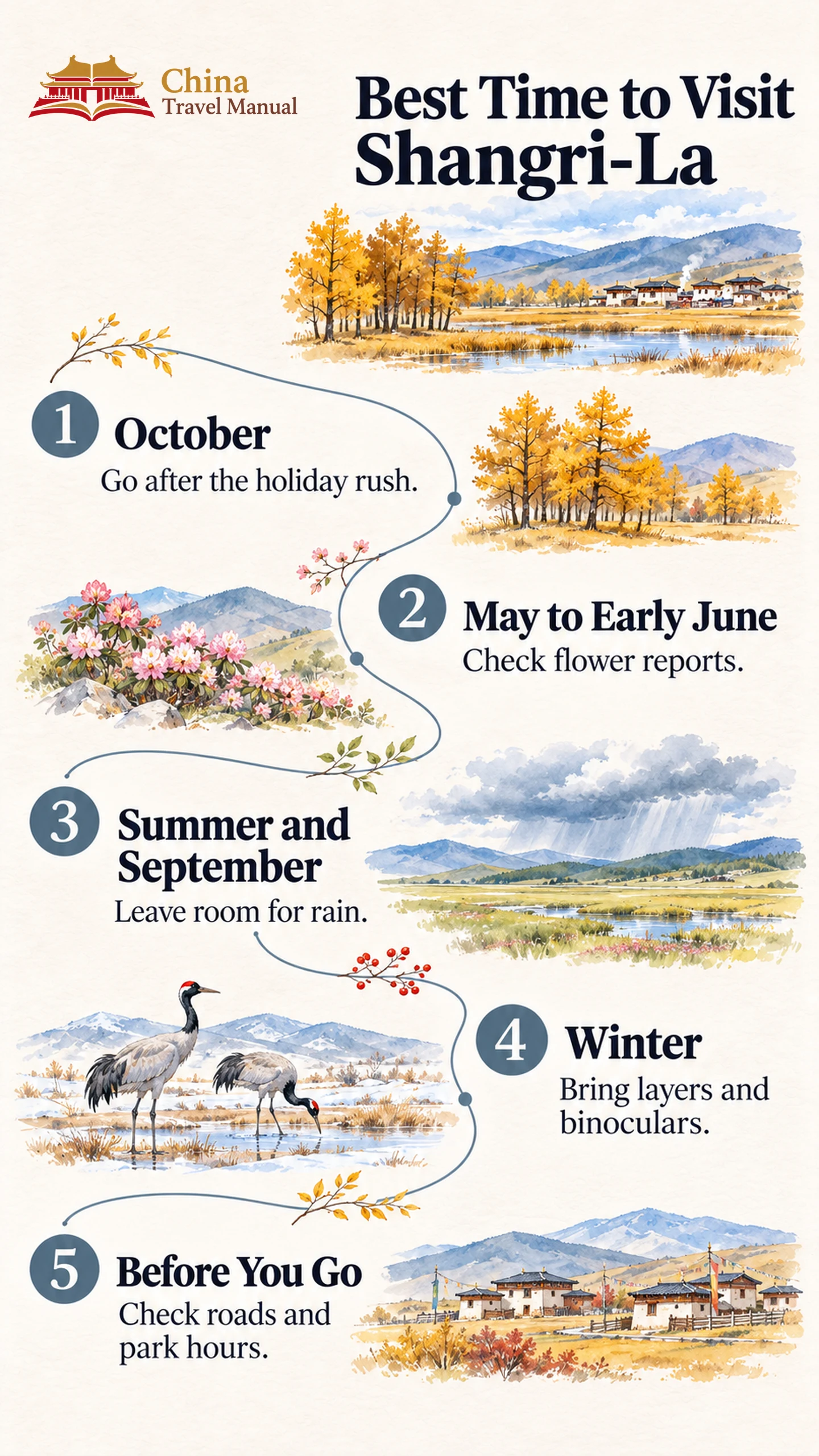
For a first trip to Shangri-La, look at October after the National Day holiday. It generally offers less rain than summer and early autumn, with cold mornings and evenings.[1][2] May is a better starting point if you are coming for rhododendrons. Summer rewards a flexible itinerary, and winter suits visitors who are happy to trade long walks for shorter stops and a chance to watch migratory birds.
Late September and October for a First Visit
September is usually milder during the day, but the monthly climate pattern is still wetter than October. In October, a long outdoor visit is easier to schedule, though you will want a warmer layer early in the day.[1][2] Pick late September if you prefer milder conditions and can rearrange your outing. Pick October for a visit built around outdoor sightseeing.
China’s National Day falls on October 1 and the official holiday dates are published for each year.[3] If dates are flexible, arrange your stay after the holiday period. For the trip itself, use the clearest window for the monastery or park. Leave a later morning for lanes and museum stops in Dukezong Old Town.
May and Early June for Flowers
Diqing’s spring flower program places its Shangri-La rhododendron routes in May.[4] Use that as a starting window, then confirm the timing at the site you plan to visit. A flower report from a sheltered hillside may tell you little about a higher trail.
If flowering is the reason for your trip, ask your host or the visitor center which accessible spot is in bloom that week. Bring a jacket for the early outing and pair the visit with a short local stop if the weather changes.
June to September for Green Landscapes
Summer’s trade-off is green hills and more water in seasonal wetlands, with rain more often interrupting the day. July and August are typically the wettest months in the monthly climate comparison.[1][2] Put Pudacuo National Park on a date you can move and check the operator’s notice for current shuttle routes and trail access.[5]
If the morning is wet, take the museum or an old-town lunch first and reassess the forecast. Keep an outer layer that will handle rain and wind. Arrange a ride back in advance for out-of-town stops, especially if you are traveling in the afternoon and the weather is changing.
Winter for Birdwatching
Migratory birds, including black-necked cranes, use the Napa Lake wetland from late autumn into winter.[6] Bring binoculars and follow local directions for designated viewing points. Sightings depend on conditions and where the birds are feeding.
Choose accommodation with confirmed room heating. Check morning road conditions before planning a wetland visit, and leave time to return to town before it gets dark. If a long lakeside walk is the main reason for your trip, book in October for milder conditions.
Plan Around Weather and Holidays
| If this is your priority | Start with | Keep flexible |
|---|---|---|
| Town walks and a park outing | October after the National Day holiday | Give the park your clearest day |
| Spring blooms | May to early June | Confirm the viewing site the same week |
| Green plateau scenery | June to September | Shift the outing around rain |
| Migratory birds | Late autumn or winter | Use a permitted viewing point and check roads |
Weather is one part of the decision at about 3,300 meters (10,800 feet).[1] Use the Shangri-La altitude planning guide to plan your arrival and the Shangri-La travel guide to connect your dates with the rest of Yunnan.
FAQs About Visiting Shangri-La by Season
Is September or October better for Shangri-La?
October typically has less rain. Choose September if a warmer afternoon matters more to you and you have room for a weather change.
What month is best for flowers in Shangri-La?
May is a good starting point for rhododendrons. Ask about the current bloom at your intended elevation and viewing area.
Can you visit Shangri-La in winter?
Yes. Base yourself near town, pack for freezing nights and confirm the day’s road and park conditions before leaving. Late autumn and winter are good windows for birdwatching at the wetland.
Sources
[1] China Weather. Zhongdian climate background
[2] Weather2Travel. Shangri-La monthly climate patterns and data sources
[3] State Council General Office. Annual public holiday notice example
[4] Diqing Prefectural Government. Regional seasonal flower routes
[5] Pudacuo National Park. Operator notices and visitor updates
[6] National Forestry and Grassland Administration. Black-necked cranes and other winter migrants at Napa Lake





