
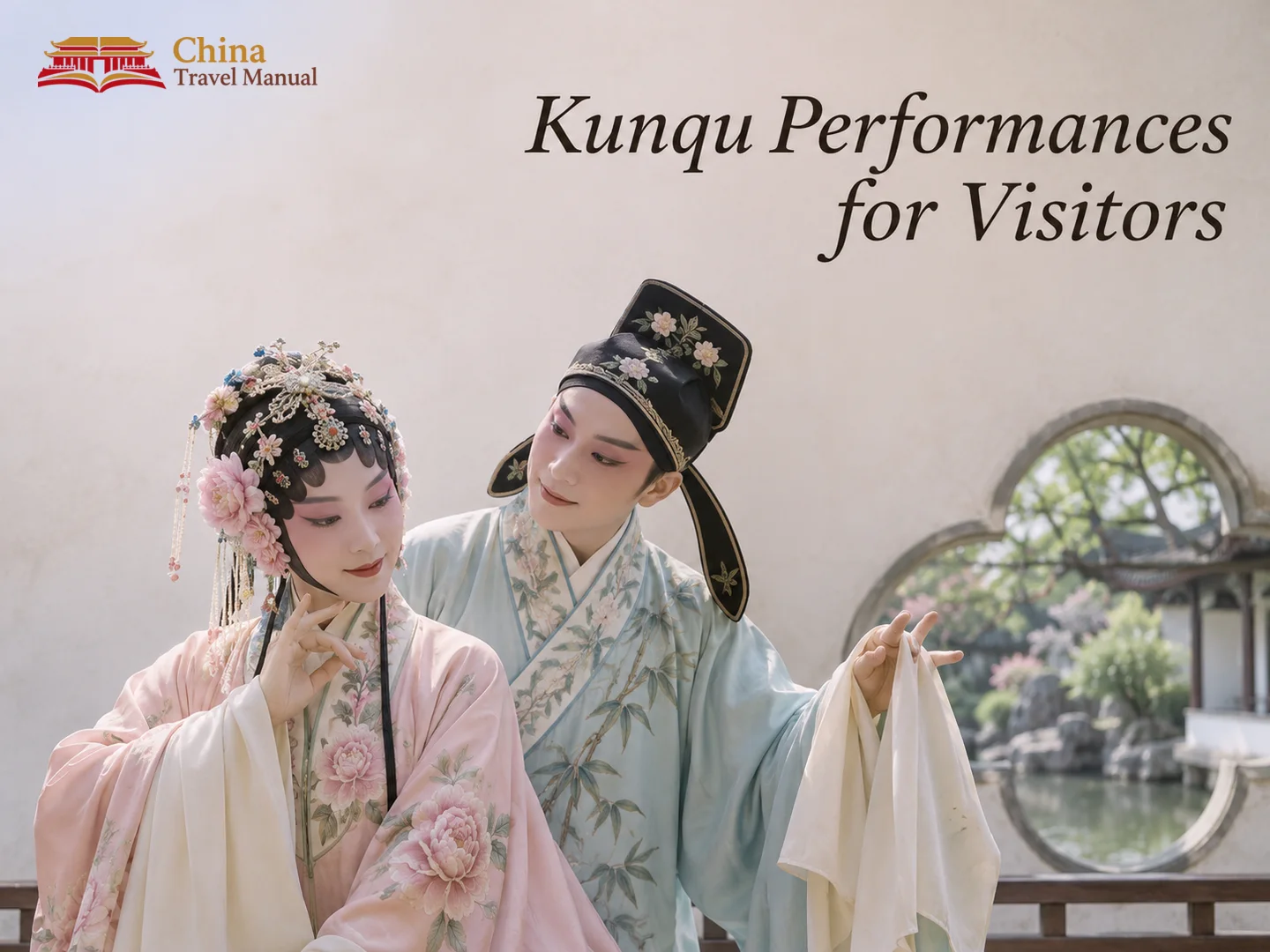
Quick Answer: Which Kunqu Performance Should You Book?
Choose a short Kunqu (昆曲, kūnqǔ) excerpt for your first performance, ideally with a synopsis or English surtitles. In Suzhou, look for a garden program if the setting interests you. Book a full work when you want a longer story and can commit to its schedule.[1][2][3][6]
- Best place to start: Look for one scene from The Peony Pavilion (牡丹亭, Mǔdān Tíng) and read the synopsis first.[2][6]
- Best for the setting: Choose a garden or historic theater show and check how the audience is seated.[3][5]
- Best for the complete story: Confirm which acts or evenings a full-production ticket covers.[6]
- Most useful detail to confirm: Ask what English support is available for the exact performance.
A short performance is enough to hear the flute and see how the actors move.

Kunqu can feel different in a courtyard, a small wooden theater and a large theater. Start by choosing what you want to see from your seat, then choose whether you want a scene or the whole story.
Choose an Excerpt, Garden Show or Full Production
| Format | What to expect | What to confirm |
|---|---|---|
| Short excerpt | One or several scenes, sometimes from different works. | Titles, runtime and explanation of each scene. |
| Garden or historic-venue performance | Small-scale or site-specific staging, depending on the program. | Exact meeting point, seating and weather plan.[3][5] |
| Full production or several linked parts | Longer scenes and more narrative context. | Which parts your ticket covers, dates and intermissions.[6] |
| Mixed traditional arts event | Kunqu may share the bill with other local forms. | How much Kunqu is included and when it starts.[4] |
A past Beijing listing for the Youth Edition of The Peony Pavilion showed three parts on separate evenings. Use dated examples like this to check how the format is described. The title alone may appear on both excerpts and full productions.[6]
Where to Look for Kunqu Performances
Suzhou. Kunqu developed around Kunshan in the Suzhou region. The city has documented a performance of The Peony Pavilion at the Humble Administrator’s Garden and a separate mixed-arts program in the Pingjiang Road area. Use the Suzhou Kunqu performance guide and check the program for your date. Treat ordinary garden admission and an evening show as separate bookings unless the venue confirms otherwise.[1][2][3][4]
Shanghai. Look for the Shanghai Kunqu Opera Troupe when checking theater and festival calendars. Search by the troupe and the individual title, then confirm the actual hall because programs can move between venues. Use the Shanghai travel guide to plan around your other stops.[7]
Beijing. Zhengyici Theatre is a historic venue where a close-range version of The Peony Pavilion has been staged. The National Centre for the Performing Arts is another place to check title-by-title listings. Check which theater the company will use and choose a performance that fits your Beijing evening plans.[5][6]
What to Watch and Listen for in Kunqu
Listen for the bamboo flute accompanying the singer and changes in the small percussion cues. Watch the performer’s hands, sleeves and steps as the voice carries the melody. Spare staging often gives those movements room to suggest emotion, distance or a change of place.[1]
If you choose The Peony Pavilion, start with the scene where Du Liniang visits a garden and dreams of meeting Liu Mengmei. Read the synopsis for the version on your ticket so you know where that scene falls in their story. Ask whether you will see the garden and dream scenes or a later part of the work.[2][6]
What to Confirm Before You Buy a Ticket
- Program: Check the troupe, title, which scenes or parts are performed, runtime and date.
- Seat and language: Ask whether there are English surtitles, Chinese surtitles or a printed synopsis. Pick a position where you can see both the stage and the display, if one is used.
- Venue and arrival: Save the name and map pin. For an outdoor program, ask about rain and cancellation. Check late entry and which gate to use for a garden or historic building.
FAQs About Kunqu Performances
Is The Peony Pavilion a good first Kunqu performance?
Yes. Choose an excerpt and read the scene summary if time is short. A longer edition is a good choice if you want to see how the story develops over several acts.[2][6]
Can I follow Kunqu without speaking Chinese?
Yes, especially if you know the scene beforehand. Ask whether English surtitles or a synopsis are provided and use the gestures, melody and pacing to keep track of the action.[1]
Is Kunqu the same as Peking opera?
Kunqu has its own repertoire, singing styles and instrumental cues. The Peking opera visitor guide is useful if you also want to see another performance tradition on the same trip.[1][2]
Sources
[1] UNESCO Intangible Cultural Heritage. Kun Qu opera tradition
[2] Suzhou Municipal Government. Suzhou introduction to Kunqu
[3] Suzhou Municipal Government. Example of garden Kunqu in Suzhou
[4] Suzhou Municipal Government. Example of Kunqu and other arts near Pingjiang Road
[5] Beijing Municipal Government. Kunqu performance at Zhengyici Theatre
[6] National Centre for the Performing Arts. Peony Pavilion Youth Edition scenes and schedule
[7] Shanghai Municipal Government. Shanghai Kunqu Opera Troupe





